
Some people cancel a dental appointment three times before they finally walk in. Others sit in the waiting room with sweaty palms, heart racing, rehearsing excuses to leave. If that sounds familiar, you are far from alone. Dental fear is one of the most common reasons adults put off care, and it often means a small, simple problem grows into a painful, complicated one.
Managing dental anxiety is not about "being brave" or forcing yourself through a visit. It is about understanding where the fear comes from, choosing the right dental team, and using practical techniques before, during and after your appointment so that each visit feels a little easier than the last.
This guide is written for nervous patients and the people who care about them. We cover the common causes of dental fear, how to tell anxiety from phobia, proven coping techniques, what a supportive clinic does differently, how to help anxious children, and how modern dentistry has made many treatments far more comfortable than people expect.
Why Dental Anxiety Is So Common
Dental anxiety rarely appears out of nowhere. It usually has a clear starting point, even if you have not thought about it in years. Understanding your own trigger is the first step in managing dental anxiety, because different triggers respond to different solutions.
Common triggers
- A painful or frightening dental experience in childhood.
- Fear of needles or injections.
- The sound of the drill or the smell of the clinic.
- Feeling a loss of control while lying back with your mouth open.
- Embarrassment about the condition of your teeth or about not having visited for a long time.
- Worry about the cost of treatment.
- A strong gag reflex or difficulty breathing through the nose.
- Stories from family or friends about bad experiences.
Dental anxiety vs dental phobia
Mild to moderate dental anxiety is a feeling of nervousness or unease before or during a visit. Most people with anxiety still attend appointments, even if they find them stressful. Dental phobia is more intense. People with a phobia may avoid the dentist completely for years, even when they are in pain, and may feel panic just thinking about an appointment. Both are real and both can be helped, but a phobia may need more time, gradual exposure and sometimes support from a mental health professional.
The Hidden Cost of Avoiding the Dentist
Avoidance feels like relief in the short term, but it usually makes things harder later. A cavity that could have been treated with a quick tooth-coloured filling can deepen until it needs a root canal treatment or even an extraction. Untreated gum inflammation can progress to gum disease and loose teeth.
This creates a cycle. Fear leads to avoidance, avoidance leads to bigger problems, bigger problems lead to more complex treatment, and complex treatment feeds the fear. Breaking that cycle early, with small and manageable visits, is one of the most effective ways to regain control. If you are unsure how serious a problem is, read how to know if your tooth needs a root canal or a filling.
Practical Tips for Managing Dental Anxiety Before Your Visit
Much of the work happens before you sit in the chair. These steps help you walk in feeling more prepared and less overwhelmed.
Choose a dentist who takes anxiety seriously
The right dental team makes the biggest difference. When you call, tell the clinic that you are nervous and ask how they help anxious patients. A good clinic will welcome the question, offer a longer first appointment if needed and never make you feel judged. Our guide to the best dentist in Faridabad for fast pain relief explains what to look for.
Start with a "no-treatment" visit
Ask for a first appointment that is only a conversation and a gentle look. No drilling, no injections, just getting to know the dentist and the room. Knowing that nothing will happen that day takes a great deal of pressure off.
Book the right time
Morning appointments work well for many anxious patients because there is less time to build up worry during the day. Avoid booking on days when you are already stressed, rushed or tired.
Write down your questions and concerns
Anxiety can make your mind go blank. Write down what worries you most, any past bad experiences and the questions you want answered. Handing the dentist a note is perfectly acceptable.
Bring support
A trusted friend or family member in the waiting room, or even in the treatment room if the clinic allows, can make you feel much safer.
Avoid caffeine before your appointment
Tea and coffee can increase jitteriness and a racing heart. Choose water or a calming herbal drink instead, and eat a light meal beforehand unless you have been told otherwise.
Techniques That Help During Treatment
Once you are in the chair, a few simple techniques can help your body and mind stay calmer.
Agree on a stop signal
Before treatment starts, agree on a signal, such as raising your left hand, that means "please stop". Knowing that you can pause at any time restores the sense of control that many anxious patients lose when they lie back in the chair. A good dentist will respect this signal every time.
Controlled breathing
Slow, deep breathing tells your nervous system that you are safe. Try breathing in through your nose for a count of four, holding for a moment, then breathing out slowly for a count of six. Repeat several times before and during treatment.
Distraction
Listening to music or a podcast through headphones can block out clinic sounds and give your mind something else to focus on. Some patients like to count ceiling tiles, squeeze a stress ball or mentally plan a trip.
Muscle relaxation
Anxiety makes us tense our shoulders, hands and jaw without realising. Gently tense and then release one muscle group at a time, starting with your feet and moving up. Keep your hands resting loosely on your lap rather than gripping the chair.
Ask for "tell, show, do"
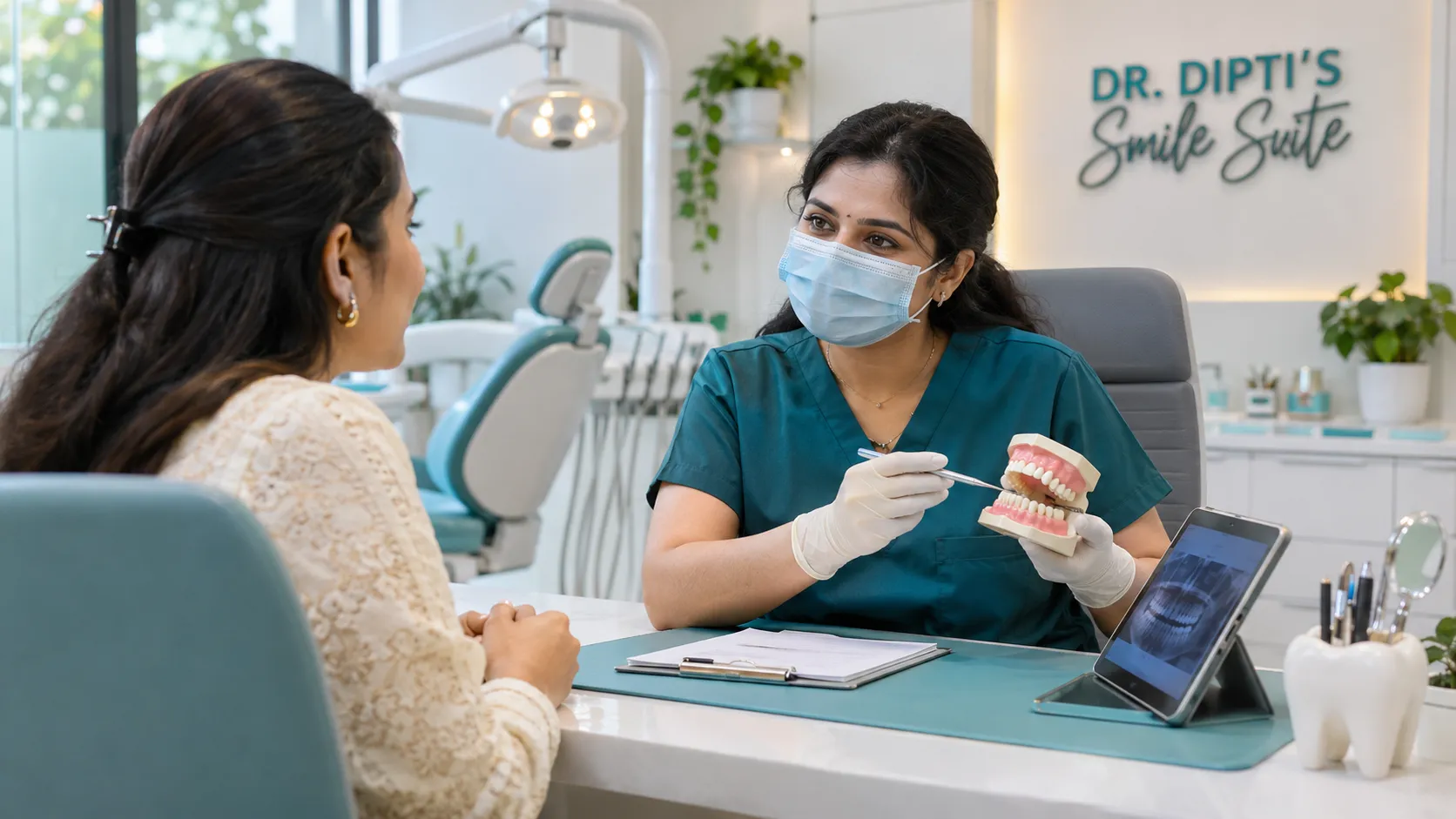
Many nervous patients feel better when the dentist explains each step before doing it, shows the instrument, and then begins. Others prefer to know as little as possible. Tell your dentist which you prefer.
How Modern Dentistry Makes Treatment More Comfortable
Many people's dental fears were formed years ago. Dentistry has changed a great deal since then, and many treatments are now much gentler than patients expect.
- Topical numbing gel is applied before injections so that the needle is felt very little, if at all.
- Modern local anaesthetics work quickly and reliably for most treatments.
- Rotary instruments have made root canal treatment faster and more comfortable. Read why more people are choosing root canal treatment in Faridabad.
- Digital X-rays are quick and require only a small sensor in the mouth.
- Longer treatments can be split into shorter appointments to make them easier to manage.
- For some patients and procedures, sedation options may be discussed. Ask your dentist whether they are suitable and available for your situation.
If you are worried about a specific procedure, such as tooth removal, read getting oral surgery in Faridabad without fear and our guide to wisdom tooth removal: procedure, recovery and cost.
A Quick Guide to Matching Fears With Solutions
| If you fear... | What usually helps |
|---|---|
| Pain | Numbing gel, effective local anaesthesia, regular check-ins during treatment |
| Needles | Numbing gel first, not looking at the syringe, slow and gentle injection |
| The drill sound | Headphones with music, knowing in advance when it will be used |
| Loss of control | Agreed stop signal, step-by-step explanations, short sessions |
| Gagging | Sitting more upright, breathing through the nose, small sensors and trays |
| Embarrassment | A non-judgemental dentist who focuses on solutions, not blame |
| Cost | A written estimate and treatment plan before anything starts |
Helping Children Who Are Nervous About the Dentist
Children often pick up fear from the adults around them. The way parents talk about dental visits has a big influence on how children feel.
- Start dental visits early, ideally by the first birthday, so the dentist becomes familiar.
- Use positive, simple language. Avoid words like "hurt", "pain" or "injection".
- Do not use the dentist as a threat ("if you eat sweets, the dentist will pull your tooth").
- Read picture books or play pretend dentist at home.
- Praise your child for being brave, regardless of how the visit went.
Our pediatric dentistry team uses gentle, child-friendly methods. Read more about your child's first dental visit and how to prevent cavities in kids' teeth.
What to Say to Your Dentist
Many nervous patients find it hard to put their fear into words, especially once they are in the chair. It helps to have a few simple phrases ready. Saying them out loud at the start of the appointment sets the tone for the whole visit.
- "I get very anxious at the dentist. Can we go slowly?"
- "Please tell me what you are going to do before you do it."
- "I would rather not know the details. Just tell me when it is nearly finished."
- "If I raise my left hand, please stop for a moment."
- "I had a bad experience before, and injections are my biggest worry."
- "Can we split this treatment into shorter visits?"
A caring dentist will adjust their approach to suit you. If you ever feel rushed, dismissed or embarrassed, that is a sign to look for a different clinic, not a reason to give up on dental care.
After the Visit: Building Confidence Step by Step
What you do after an appointment matters as much as what you do before it. The goal is to help your brain remember the visit as manageable rather than frightening.
Reward yourself
Plan something you enjoy after each appointment, such as a walk, a favourite meal (once any numbness has worn off) or time with a friend. Linking dental visits with something positive gradually changes how you feel about them.
Notice what went better than expected
Most anxious patients find that the anticipation is worse than the visit itself. Take a minute afterwards to note what was easier than you feared. Next time, that memory becomes evidence that you can cope.
Book the next visit before you leave
It is easier to book a follow-up while you are already at the clinic and feeling relieved. Waiting until later gives anxiety a chance to talk you out of it.
Seek extra support if you need it
If your fear is severe, causes panic attacks or has kept you away from the dentist for years, talking to a counsellor or psychologist can help alongside a supportive dental team. Techniques such as cognitive behavioural therapy are often effective for dental phobia.
Prevention: The Best Long-Term Anxiety Reducer
The less treatment you need, the less there is to be anxious about. Good daily habits and regular check-ups keep most visits short, simple and comfortable.
- Brush twice a day with fluoride toothpaste and clean between your teeth daily. See our complete guide to daily oral hygiene.
- Book a check-up and cleaning every six months. Read how often you should get scaling and polishing.
- Do not ignore early warning signs such as sensitive teeth or bleeding gums.
- Limit sugary snacks and drinks between meals.
Each routine visit that goes smoothly also retrains your brain to see the dental chair as a safe place. Over time, many anxious patients find that their fear shrinks considerably.
When Dental Pain Can't Wait
Sometimes anxiety keeps people away until a toothache becomes severe. If you are in pain, swelling or have a broken tooth, please do not wait. A good clinic will treat you calmly and focus first on relieving pain. Our guides on toothache at night and emergency dental services in Faridabad explain what to do in the meantime.
Gentle, Judgement-Free Dental Care at Dr. Dipti's Smile Suite
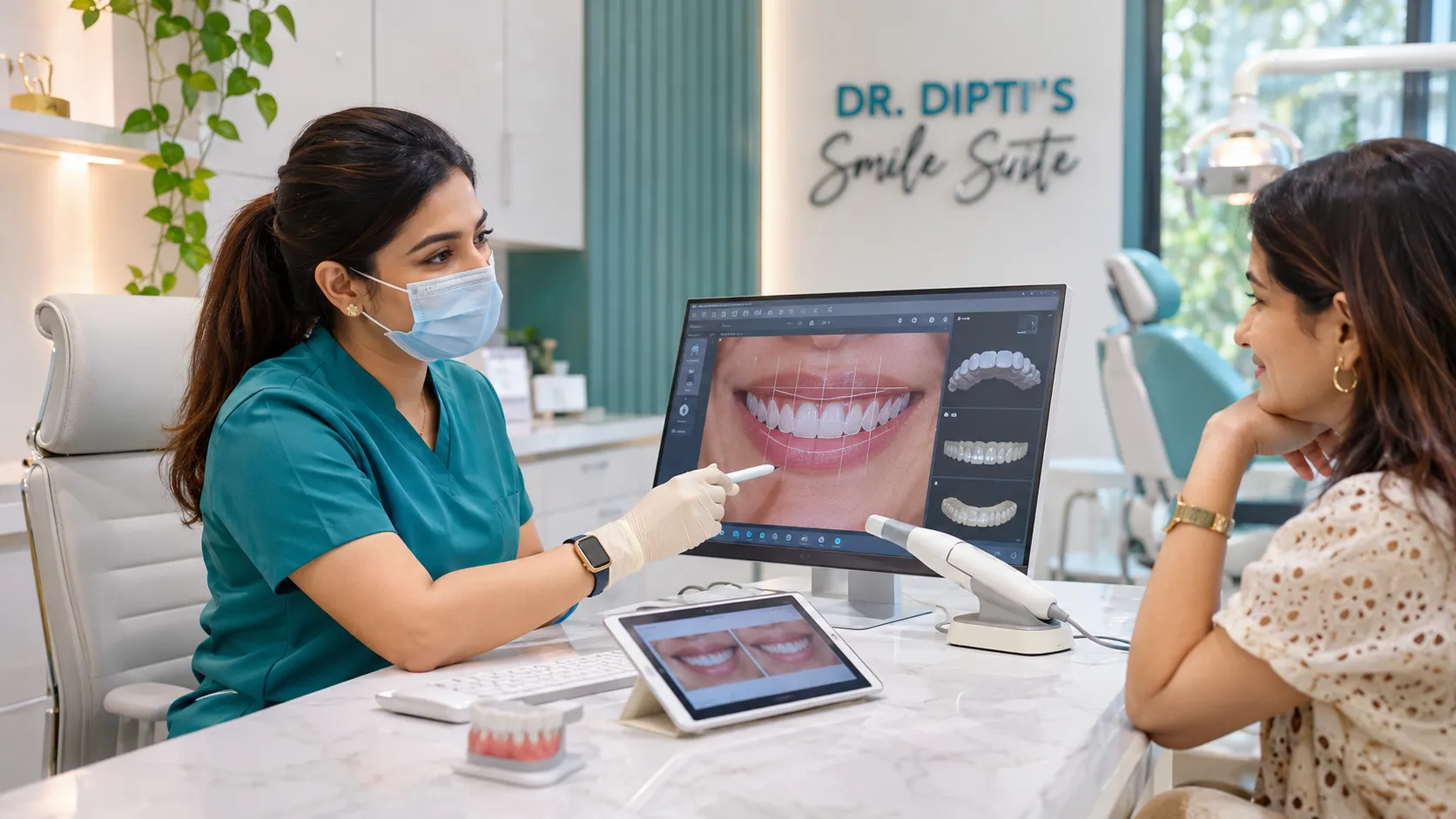
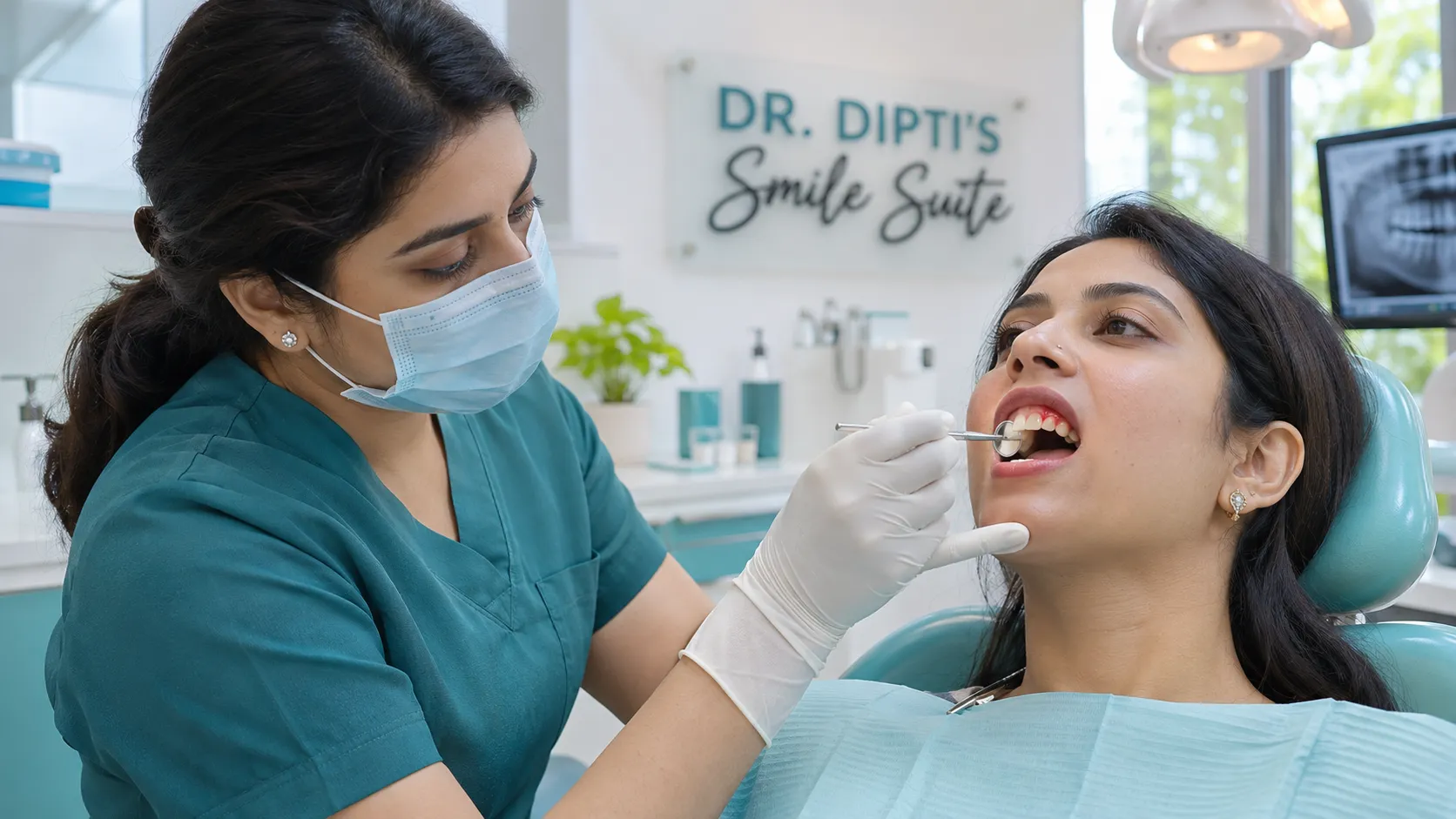
At Dr. Dipti's Smile Suite in Faridabad, we see nervous patients every week, including many who have not visited a dentist in years. We take time to listen, explain every step, agree on a stop signal and move at your pace. There is no lecture about how long it has been, only a clear plan to help you feel better.
Once you feel comfortable, our clinic offers complete care for the whole family, including root canal treatment, composite fillings, dental implants, crowns and bridges, tooth extraction, oral surgery, teeth whitening, veneers, smile makeovers, Invisalign, orthodontics and professional cleaning (see our teeth cleaning cost page).
If fear has kept you away, start with a simple conversation. Call us, tell us you are nervous, and we will plan your first visit around you.
Dr. Dipti's Smile Suite
SCF 142, Sector 14, HUDA Market, Faridabad, Haryana 121007
Call or WhatsApp: +91 88828 50066
Book a Relaxed First Visit