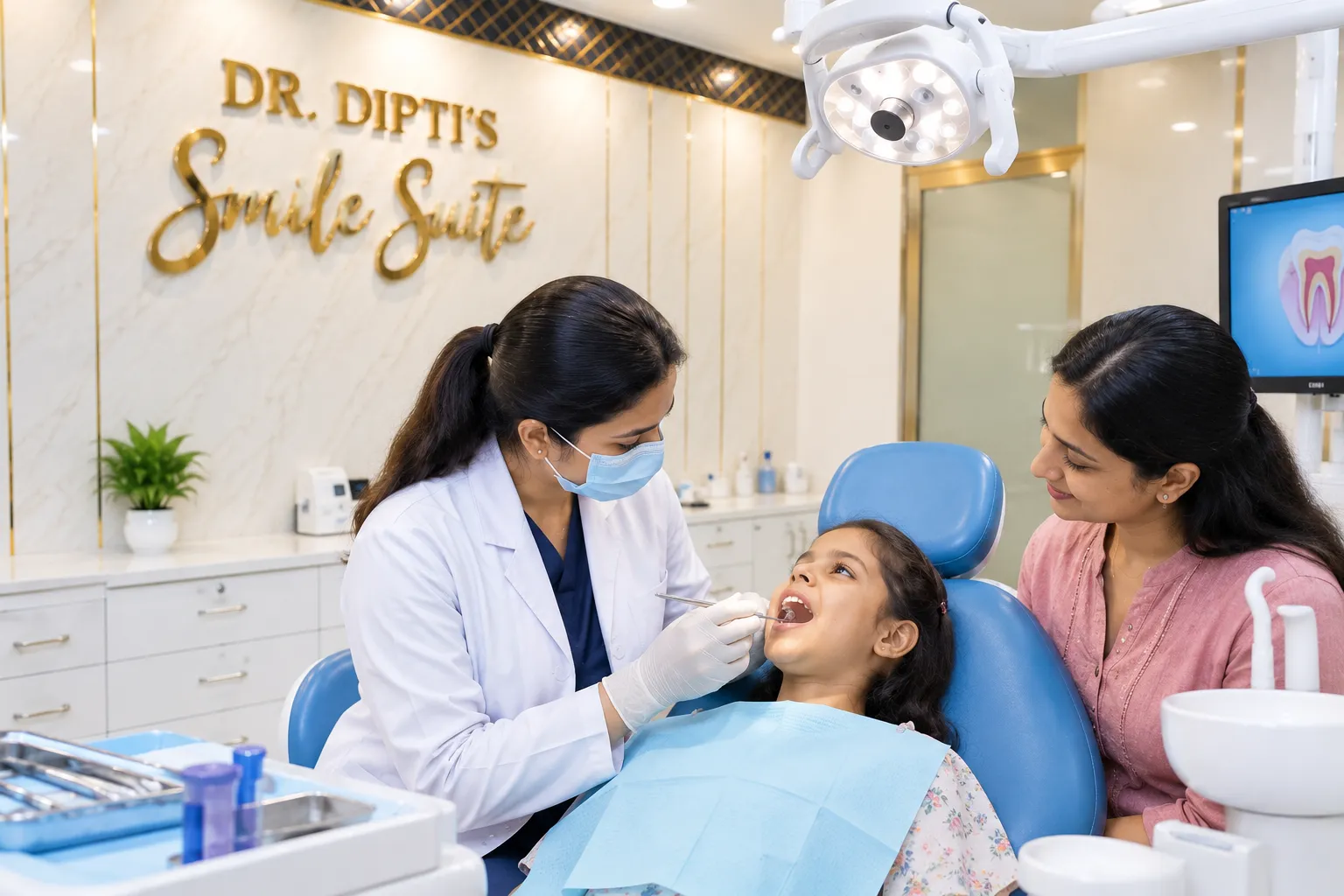
Ten years ago, if someone told you they were getting a root canal, the room would go quiet. People would wince. Someone would say something like "oh that is the worst one." And the person getting it done would spend the next few days dreading the appointment.
Today that conversation looks completely different.
Patients who have had root canal treatment in Faridabad at modern clinics come back and say things like "it was honestly not that bad" and "I wish I had done it sooner." The procedure has changed dramatically. The experience has changed. And more people are finally choosing to save their natural teeth instead of pulling them out.
This blog explains why that shift is happening, what root canal treatment actually involves, and what you can expect if you need one.
The Tooth That Would Not Stop Hurting
Sandeep was a 38-year-old businessman from Faridabad who had been ignoring a dull ache in his back molar for almost four months. He took painkillers when it got bad and avoided chewing on that side. He told himself it would go away.
It did not go away. One Tuesday morning he woke up with his face swollen and pain that made it impossible to concentrate on anything. He came to Dr. Dipti's Smile Suite the same day.
The diagnosis was a severely infected tooth with an abscess forming at the root. Without root canal treatment in Faridabad, the tooth would have needed extraction and the infection could have spread further.
Sandeep had his root canal done over two appointments. By the end of the week the pain was gone. The tooth was saved. He has been chewing normally on both sides ever since.
His story is not unusual. We hear versions of it almost every week.
What Is Actually Happening Inside That Painful Tooth
To understand why root canal treatment works, it helps to understand what is actually going on inside an infected tooth.
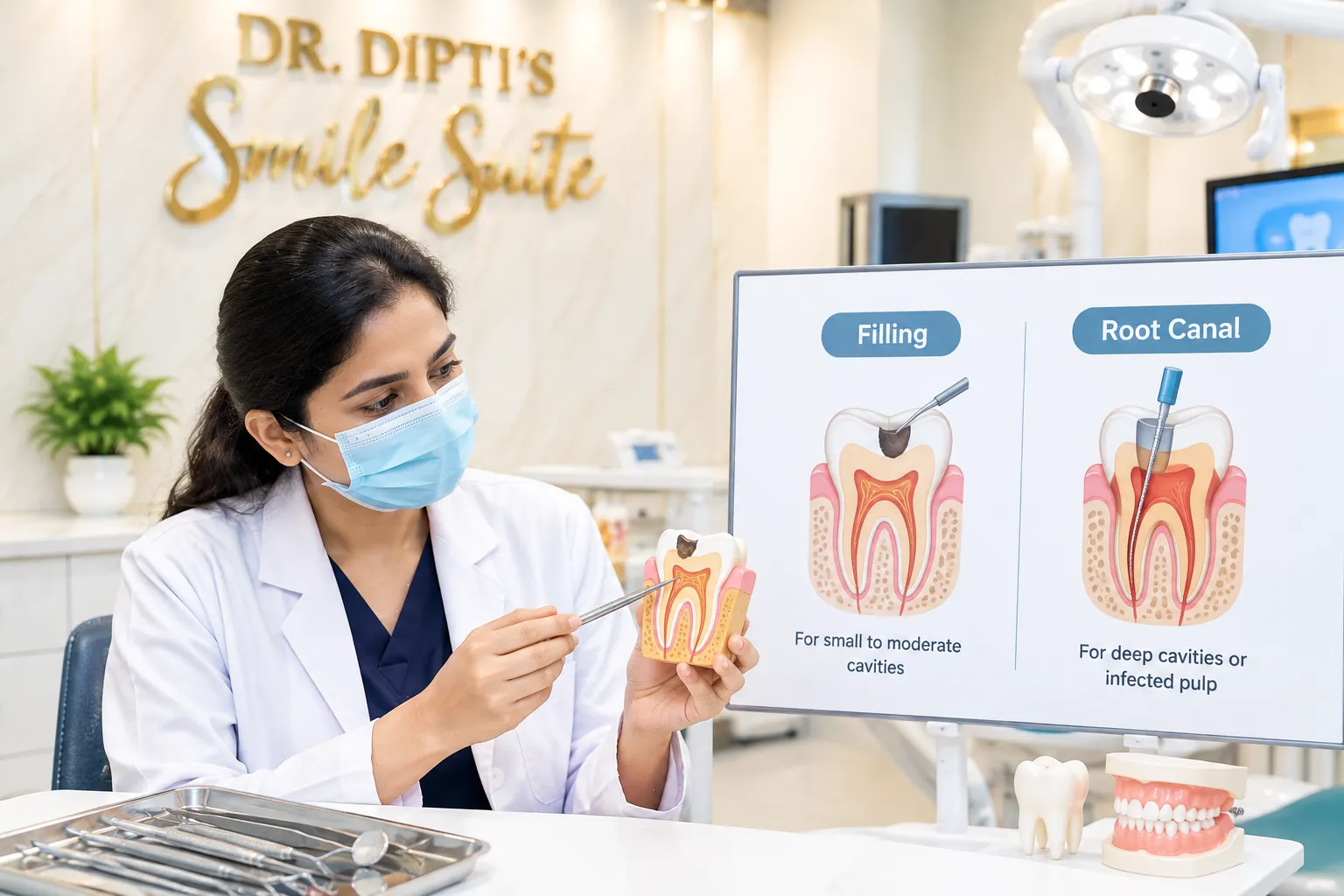
Every tooth has a soft inner core called the pulp. This pulp contains nerves, blood vessels, and connective tissue. It runs from the crown of the tooth down through the root canals into the jawbone.
When decay reaches deep enough, or when a tooth cracks or gets injured, bacteria enter the pulp and cause an infection. The pulp becomes inflamed. Pressure builds inside a space that has no room to expand. That is where the intense, throbbing pain comes from.
Left untreated, the infection spreads through the root tip into the surrounding bone, forming an abscess. The bone begins to deteriorate. Neighbouring teeth can be affected. In serious cases the infection can spread beyond the jaw.
Root canal treatment removes the infected pulp, cleans and disinfects the canals, fills them to prevent reinfection, and seals the tooth with a crown. The tooth is saved. The pain is eliminated. The infection is stopped.
Symptoms That Tell You Something Is Wrong
Many patients come to us saying they had no idea their tooth was this infected. The truth is, the signs were there. They just did not know what to look for.
Here are the symptoms that mean you should see a dentist immediately and not wait for things to improve on their own.
Persistent toothache that does not fully go away even with painkillers is the most common sign. Pain that gets worse when you bite down or apply pressure suggests the infection has reached the root. Prolonged sensitivity to hot or cold that lingers after the source is removed is a warning sign most people miss. Swelling in the gum near the affected tooth, or swelling in the face or jaw, means infection is spreading. A small pimple-like bump on the gum that sometimes releases fluid is an abscess and needs immediate attention. Tooth discolouration where one tooth appears darker than its neighbours can indicate that the pulp inside has died.
If you recognise any of these symptoms, do not delay. Root canal treatment in Faridabad is significantly simpler when the infection is caught early.
Root Canal vs Extraction: The Comparison Most Patients Never Get
One of the most common questions we hear is whether it is better to just pull the tooth out and avoid the whole thing. It feels like the simpler option. It is often cheaper upfront. But the long term consequences tell a very different story.
What Happens When You Extract Instead
When a tooth is removed and not replaced, the jawbone beneath it begins to shrink. This is called bone resorption. The neighbouring teeth start to tilt into the gap over time. The tooth above the gap has nothing to bite against and begins to over-erupt, meaning it grows downward out of its normal position.
This leads to bite problems, changes in facial appearance, difficulty chewing, and eventually the need for more expensive treatments like implants, bridges, or dentures.
What Happens When You Save the Tooth
A tooth that has had root canal treatment and been properly restored with a crown functions exactly like a natural tooth. It looks natural. It chews normally. It maintains the bone around it. And with proper care it can last the rest of your life.
The upfront cost of a root canal plus crown is higher than an extraction. But when you factor in the cost of replacing the extracted tooth with an implant or bridge, saving the tooth almost always works out to be the smarter financial decision as well.
The Root Canal Treatment Process at Dr. Dipti's Smile Suite
This is the part that most patients want explained clearly before they commit to treatment. Here is exactly what happens, step by step.
Step 1: Diagnosis and X-Ray Assessment
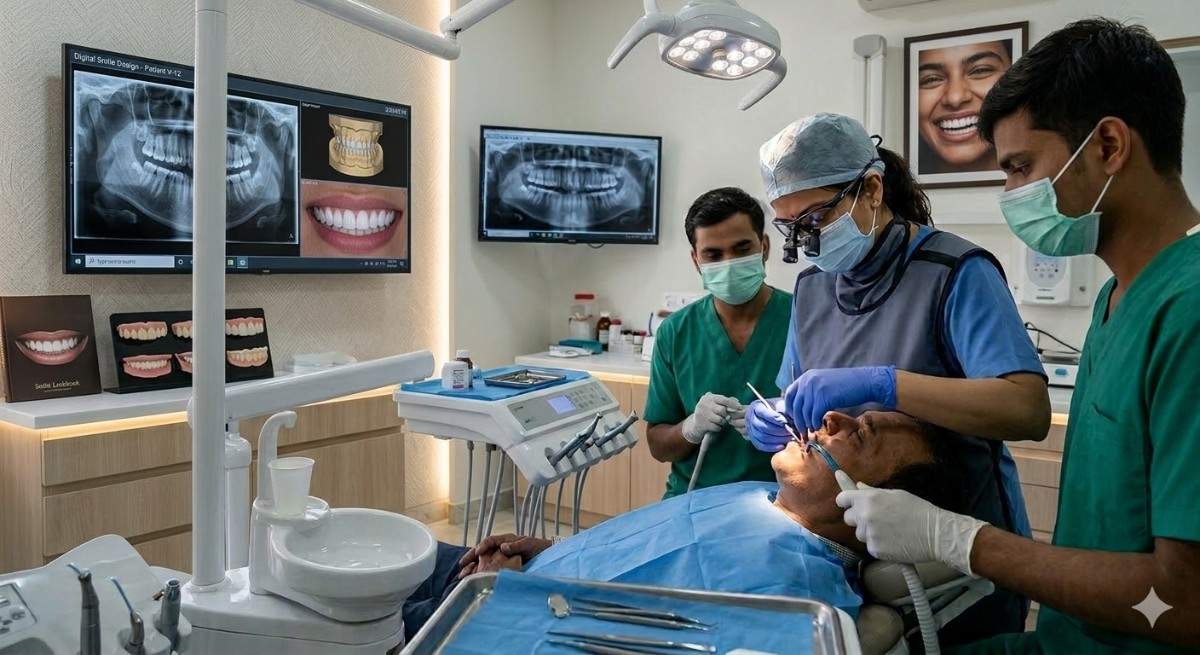
Before any treatment begins, a thorough examination is done. Digital X-rays or a 3D cone beam CT scan shows the full extent of the infection, the number of root canals in the tooth, and the condition of the surrounding bone. This information is essential for planning precise treatment.
Step 2: Local Anaesthesia
The area around the tooth is completely numbed with local anaesthesia before anything begins. This is the step that most patients are most anxious about. In reality it involves a brief sting from the injection and then complete numbness within a few minutes. You will feel pressure during the procedure but not pain.
Step 3: Removing the Infected Pulp
A small opening is made through the top of the tooth. Using very fine instruments, the infected pulp tissue is carefully removed from the pulp chamber and each root canal. This is done with precision and takes time to do properly.
Step 4: Cleaning and Shaping the Canals
Each canal is cleaned, shaped, and disinfected using a combination of instruments and antibacterial irrigation. This step eliminates bacteria and prepares the space for filling. At Dr. Dipti's Smile Suite this is done with modern rotary endodontic instruments that make the process faster, more thorough, and more comfortable than older manual methods.
Step 5: Filling and Sealing
Once the canals are clean and dry, they are filled with a biocompatible material called gutta-percha and sealed to prevent any bacteria from re-entering.
Step 6: Crown Placement
A root canal treated tooth loses some of its structural strength. A dental crown is placed over the tooth to restore its full strength and appearance. This is usually done in a separate appointment after the tooth has settled. The crown is matched to the colour of your surrounding teeth and looks completely natural.
The entire treatment typically takes 2 to 3 appointments depending on the severity of the infection and the complexity of the root canal system.
How Much Does Root Canal Treatment Cost in Faridabad
Cost is one of the first things patients want to know and they deserve a clear answer.
Root canal treatment cost in Faridabad varies based on which tooth needs treatment, front teeth have fewer canals and are generally less complex than back molars, the severity and extent of the infection, whether a single appointment or multiple appointments are needed, and the type of crown placed afterward.
At Dr. Dipti's Smile Suite we provide a complete cost breakdown after your initial assessment. You know exactly what the treatment will cost before it begins. There are no hidden fees and no last-minute additions to your bill.
One thing worth knowing is that delaying root canal treatment almost always increases the cost. A simple early-stage infection requires less treatment time and fewer appointments than an advanced infection with bone involvement. Acting early saves both your tooth and your money.
Why Root Canal Treatment Has Improved So Dramatically
The reason more patients are choosing root canal treatment in Faridabad today compared to even five years ago comes down to genuine advances in how the procedure is done.
Modern rotary endodontic instruments have replaced older manual files. These instruments are flexible, precise, and significantly reduce treatment time. Digital X-rays and 3D imaging allow the dentist to see the full root canal system clearly before beginning, which means the treatment is planned accurately rather than estimated.
Improved local anaesthesia techniques mean that even severely inflamed teeth can be numbed effectively. And better irrigating solutions clean the canals more thoroughly, reducing the risk of reinfection.
The result is a procedure that is faster, more comfortable, and more predictable than it used to be. The reputation root canals earned decades ago no longer reflects the reality of modern treatment.
What the Recovery Actually Looks Like
Patients are often surprised by how quickly they feel better after root canal treatment.
In the first 24 to 48 hours some mild soreness around the treated tooth is normal. This is tissue soreness from the procedure itself, not the original infection pain, and it is easily managed with over-the-counter pain relief. Most patients find it significantly more manageable than the pain they had before treatment.
By day three most patients are back to normal eating and daily activity. The treated area continues to settle over the following week.
After your crown is placed you are back to full function. Chewing, speaking, smiling, none of it is affected.
Caring for Your Tooth After Root Canal Treatment
Once your root canal and crown are complete, the tooth needs the same care as any other tooth in your mouth. Brush twice daily, floss daily, and visit your dentist regularly for checkups and professional cleaning.
Avoid using the crowned tooth to bite into extremely hard items like bones, hard candy, or ice. While the crown is strong, no restoration is completely indestructible.
If you grind your teeth at night, let Dr. Dipti know so a night guard can be recommended to protect both your crown and your other teeth.
Why Patients Choose Dr. Dipti's Smile Suite for Root Canal Treatment in Faridabad
Patients from across Faridabad and the Delhi NCR region come to Dr. Dipti's Smile Suite for root canal treatment for specific reasons.
Dr. Dipti has over 15 years of experience in restorative dentistry with hundreds of successful root canal procedures completed. The clinic uses modern rotary endodontic instruments and digital imaging for precise, comfortable treatment. Every procedure is done under proper anaesthesia with patient comfort as a priority.
The sterilisation standards at the clinic meet international protocols. Every instrument used is autoclaved. The treatment environment is maintained to clinical hygiene standards.
Patients consistently describe feeling genuinely informed at every stage. Before the procedure begins they know what is happening and why. After the procedure they receive clear aftercare instructions and have direct access to the team if any questions come up during recovery.
If you have been told you need root canal treatment and have been putting it off out of fear or confusion, a conversation with our team will change how you feel about it.
Do Not Wait Until the Pain Becomes Unbearable
The single most common regret patients express is that they waited too long. What starts as a manageable ache becomes an abscess. What could have been a straightforward two-appointment procedure becomes a complex case requiring more time and more treatment.
If you have tooth pain that is not going away, sensitivity that lingers, or swelling around a tooth, come in now. Root canal treatment in Faridabad at Dr. Dipti's Smile Suite is more comfortable than you expect and more important than you might realise.
Call or WhatsApp us at 8882850066 or visit us at SCF 142, Sector 14, Huda Market, Faridabad. We are open Monday to Saturday, 10am to 3pm and 5:30pm to 8pm.
Your natural tooth is worth saving. And we are here to help you save it.