Rohit is 34. He has worked in construction his whole life. Every day for the past several years he has spotted a little blood in the sink when he brushed his teeth. He figured he just brushed too hard. He bought a brush with softer bristles and continued to ignore the issue. Recently his gums have been swollen and his breath has been bad. Worse still, one of his back molars has a foul-smelling, loose seperate piece.
One of the main issues with gum disease is that it is essentially painless in the beginning. This leads to a lot of people being unaware that it has infected them. In this article we discuss this issue, other signs of the disease, what causes it, and the procedure to fix it. The goal here is to be straightforward and less alarmist.
Rohit, after some time, came in and started following treatment. He says that the main thing he regrets is not coming to get help sooner.
What Gum Disease Actually Is
Gum disease is when bacteria causes inflammation in the tissue that helps anchor your teeth. Each day dental plaque (bacteria) builds up on your teeth. If the plaque is not removed, it turns to tartar. Only a dental professional can remove tartar. The plaque and tartar buildup cause inflammation of the gums and your body’s defense system attacks the bacteria.
You may hear people use other words to describe this condition, such as having “gum problems” or “decay.” These are synonyms, or alternate ways to say the same thing. Dentists will sometimes describe the two more advanced stages of this condition using other terms.
Gingivitis
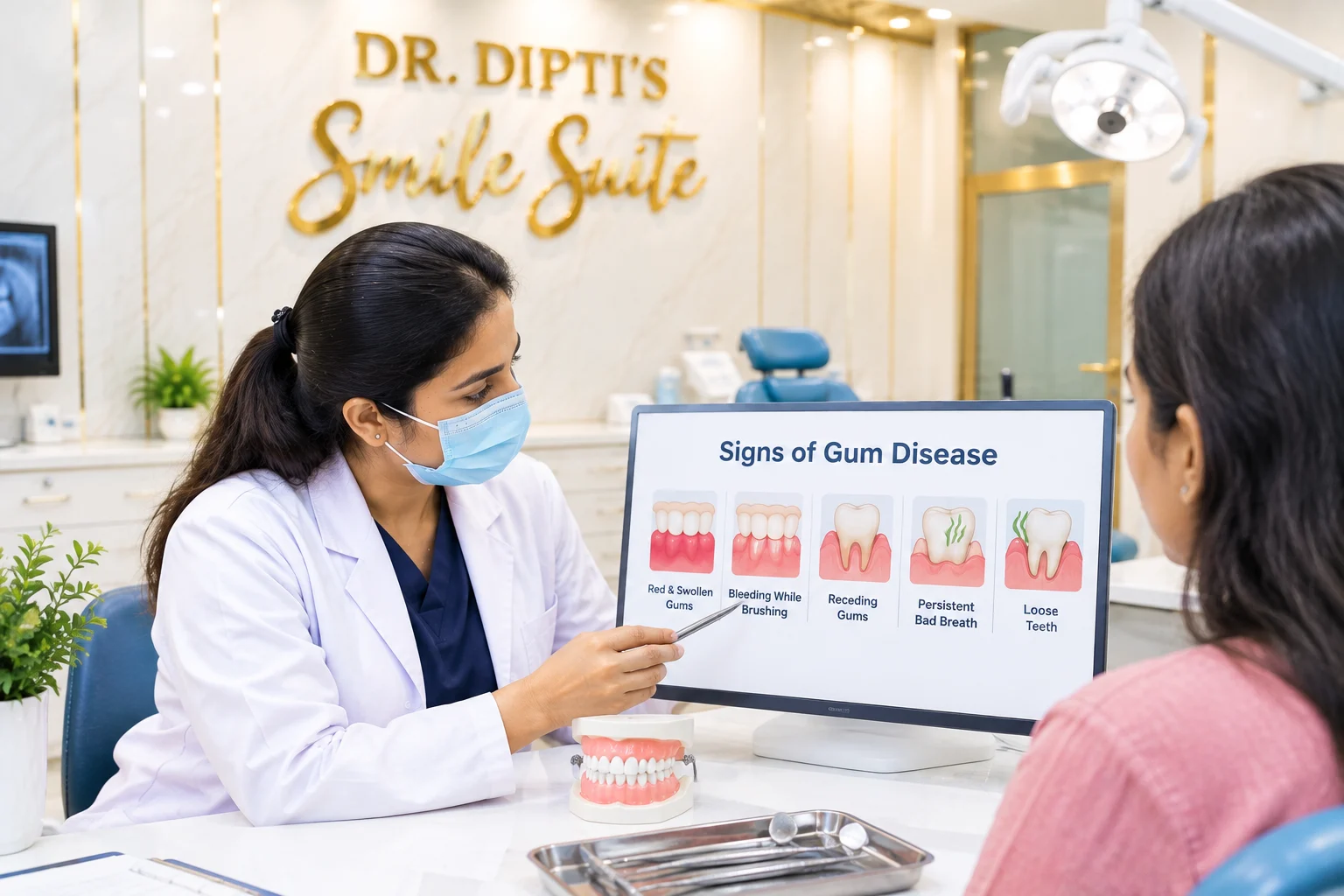
The early stage of periodontal disease is called gingivitis. Gums become red, swollen, and tender. In this stage, gums may bleed easily, especially while brushing and flossing. At this point, the damage is reversible and the gums may be healed to their normal condition with professional cleaning and proper oral care.
Periodontitis
When gingivitis is not treated, it can lead to periodontitis. This is an advanced stage of periodontal disease. In this stage, the infection is below the gum line. Bacteria start to destroy the bone that supports the teeth. Once the bone is destroyed, it is not reversible. The only way to control it is by oral treatment and bone support removal.
Gum Infection Symptoms Checklist
Read over the list and put a check by each symptom you’ve experienced.
Bleeding when Brushing or Flossing.
Gums should not bleed, and if they do, it warrants further investigation.
Puffy, Red or Shiny Gums
Healthy gums are firm and slimy, which makes them light pink and snug to each tooth.
Recurring Bad Breath.
Although bad breath may be caused by something you ate, it can also be caused by bacteria that has taken up residence under your gums.
Receding Gums.
Teeth look longer when gums shrink, and the areas around the teeth may also be sensitive.
Symptoms when Chewing on One Side.
Pain and Discomfort when chewing may be caused by an infection.
Lingering Bad Taste in Mouth
A buildup of bacterial plaque or food may cause a bad taste in your mouth.
Inflamed Gum with a Pimple
An infected gum may look like an pimple.
Loosening or Shifting Teeth
New spaces in your bite may also be caused by gum infections.
Dentures that no Longer Fit
If you have experienced any of the above, contact your dentist. Many of the symptoms of gum infections are painless and may have already progressed to an advanced stage.
A Two Minute Gum Check You Can Do Tonight
Make sure you have good light and face a mirror. Check each step individually.
Step one. Look for inflammation (redness, swelling, shiny) gum areas. Healthy gums are thin and tight.
Step two. Pull your lip up and check if your teeth are longer (mee’ing) than they were a year ago.
Step three. Gently push your gums against your bottom tooth and see if it bleeds or hurts.
Step four. Floss your back teeth. Does it bleed or does the floss have a bad odor?
Step five. Ask your friend or family member to check your breath.
This test can help determine if you may have issues with your gums. You should see your dentist for an exam for an official diagnosis. Only an x-ray and an in-depth examination can fully diagnose and explain what is happening.
Gum Disease Myths That Keep People Waiting
Myth. Bleeding gums are not a big deal, probably just the result of brushing too vigorously.
Fact. Bleeding gums is typically a symptom of gingivitis, which is inflammation of the gums. Plaque buildup can lead to this inflammation and wearing of the gums. Therefore, switching to a soft brush is only partially helpful.
Myth. For dental problems to be considered serious, they have to be painful.
Fact. Pain is not always associated with gingivitis and other dental problems. This is the case until the later and more serious stages of the diseases.
Myth. Gingivitis is mainly a problem for older people.
Fact. Gingivitis can begin during adulthood. It can be worsened and more readily developed by other conditions such as diabetes, stress, and smoking.
Myth. Gingivitis can be treated by the use of mouthwash.
Fact. Mouthwash has no effect on the buildup of tartar, which can only be removed by brushing and flossing.
Myth. Teeth that have been infected by gingivitis will have to be removed.
Fact. It is only in the most advanced stages where the disease has not been treated for a long time that all of the teeth will have to be removed.
How Gum Disease Grows Over Time
This is an approximation of what happens if nothing is done about your dental health.
Weeks. Plaque causes your gums to be irritated and bleed. Your gums may become swollen, and this is reversible.
Months. Plaque turns into tartar and causes your gums to pull away from your teeth and creates space between the tooth and gums.
Months to years. The bacteria causes the bone to be resorbed and creates a space between the tooth and gums. This causes your teeth to become mobile.
Years. Causes your teeth to become deeply mobile and causes your bite to be unstable.
It is typically faster in people who smoke or have poor control of their blood sugars.
Gum Disease and Tooth Decay Are Not the Same Thing
There are differences between tooth decay and gum disease, and because of this, many confuse the two.
Tooth decay or dental decay is the deterioration of the hard surface of the tooth. This is caused by the buildup of bacteria, and as a result, tooth acid is produced. Acid attacks and decay occur when acid is not neutralized.
Gum disease is caused when the gums become infected. The bone that supports the teeth can also become infected, and as a result, weaken.
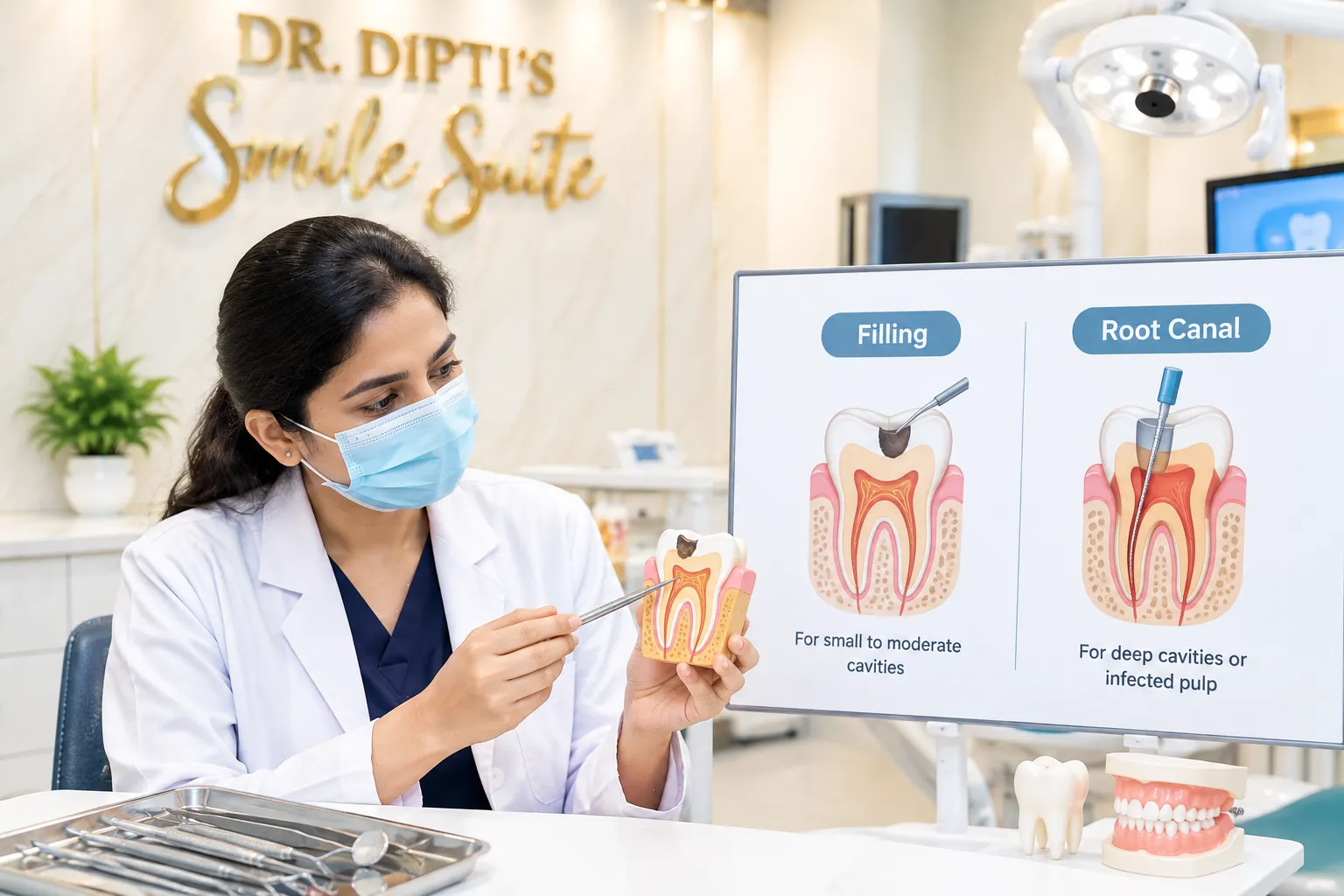
One can experience gum disease and tooth decay at the same time, or experience neither and yet still have the other. Treating one will not remedy the other. For example, gum disease will not be treated by a cavity filling and vice versa. Therefore, a medical evaluation should assess all structures of the tooth, including the bone.
What Treatment Really Feels Like
Treatment should not be something to be fearful of. Here is what you can expect.
For your first appointment expect an exam. Here we will review your symptoms and the reason you have scheduled your appointment. Expect us to review your medical and social history including any habits or conditions such as diabetes and review your smoking or tobacco use. Expect us to take some measurements around your teeth and take xrays if needed.
For your second appointment expect a routine cleaning. If you have bleeding and tender gums you can expect these symptoms to last no more than a few days.
If you have deeper pockets and plaque and tartar have formed, expect a different procedure called scaling and root planing. This procedure is often done while numb and can cause some discomfort and soreness while the numbness wear off. For a few weeks you can expect your teeth to be sensitive to hot and cold.
About a month later, we'll have you come in for a follow-up appointment to see how your gums are healing and if the pockets have decreased in size. At this point, many patients report having less bleeding and a better sense of fresh breath.
Control, not Cure. We can keep gum disease in control with regular cleanings, however, there is a strong possibility it can return. The frequency of recommended cleanings will be determined by your individual case.
In more extreme cases, surgery or even seeing a Periodontist for further treatment would be recommended. If this is the case for you, we will be sure to let you know.
Costs will vary depending on how severe your case of gum disease is and how many cleanings will be needed to help treat it. We always go over your treatment options and expected costs with you.
Do's and Don'ts After Gum Treatment
Do
Brush your teeth with a soft bristle brush at a 45 degree angle toward the gums, and do so at least twice a day.
Floss and use interdental cleaners to clean between your teeth on a daily basis.
Rinse with salt water as directed.
Eat and drink very cold and soft foods on the first day.
Take the medications as prescribed.
Don't
Avoid cleaning around a particular area because it increases the risk of infection in that area.
Smoke and chew tobacco.
Poke and irritate your gums.
Not address an increase in swelling, fever, and/or bleeding.
Gum Disease Prevention Habits That Protect Your Dental Health
Prevention requires consistency. The main recommendations are to brush and floss daily, visit your dentist regularly, and maintain your health. The rest of the recommendations are to stop/avoid behaviors.
- Brush for 2 minutes, 2 times a day.
- Floss at least once a day.
- Replace your toothbrush every 3 months.
- Limit the amount of sugary foods and drinks.
- Avoid using tobacco.
- Keep your blood sugar levels under control.
- Go to your dentist for an exam and cleaning every 6 months.
There are a few other points I want to make. Many people are afraid of the dentist and, understandably, put off visiting for years at a time. During those years, gum problems can and do develop and worsen. You may be unaware of it, but gum problems can also change how you smile. Gum problems can cause bad breath, and they can also cause your gums to pull back and exit their normal position, thus exposing the roots of your teeth and causing tartar to develop. Bad gums can also make you feel uncomfortable because of all of the reasons listed above. It is very important that you take good care of your gums. Great gum health leads to great oral health in general.
Why Patients Choose Dr. Dipti Smile Suite
Dr. Dipti’s dental clinic is owned and operated by Dr. Dipti Goyal, a prosthodontist and implantologist in Faridabad. Dr. Goyal trained in India, the United States and France and has 15 years of clinical experience.
Some of the things that our patients feel differentiates us from other clinics are:
- Experience with complicated cases such as restoration of dentistry and smiles because of gum disease and subsequent bone and dental loss.
- Use of recent advances indiagnosis and planning as well as digital means.
- Use of strict standard operating procedures and guidelines for the sterilization of medical and dental instruments.
- Striving to ensure the comfort of our patients of all ages by providing thorough explanation of treatment and procedures and encouraging patients to interrupt us at any point in time.
- Providing patients with treatment options and our true professional opinion based on what we feel is in the best interest of the patient.
What makes a dental clinic the best? Many patients say it’s how well the clinic staff listens, explains, and follows up with them. Our patients come from all across the Delhi NCR region because they believe our dentists are the best in the region and take the time to ensure our patients are comfortable.
Contact us to book a consultation. Our dental clinic in Faridabad is located at SCF 142, Sector 14, Huda Market and is open from 10 am to 3 pm and 5:30 pm to 8 pm from Monday to Saturday. You can also reach us by phone at 8882850066.
Take the First Step Toward Healthier Gums
Your gums are often the first to tell you something is wrong. If you have noticed bleeding, swelling or breath that will not improve, do not wait for pain. Book your consultation today and let us take a look.