At our clinic in Faridabad, we regularly meet patients whose bleeding or loose teeth turn out to be linked to diabetes, sometimes before they even know they have it. We also see patients with well-known diabetes who are surprised to learn that treating their gums can help their sugar control.
Diabetes is extremely common in India. The ICMR-INDIAB study, published in The Lancet Diabetes & Endocrinology in 2023, estimated that 101 million people in India have diabetes, about 11.4% of the population. Another 136 million (15.3%) have prediabetes. Almost every family is touched by it.
This guide explains:
- How diabetes affects oral health
- The two-way link between diabetes and gum disease
- Which warning signs to watch for
- How to get dental treatment safely when you have diabetes
How Does Diabetes Affect Your Teeth and Gums?
High blood sugar affects the mouth in several ways. It weakens the body’s ability to fight infection, slows healing, reduces saliva, and raises sugar levels in saliva and gum fluid. Together, these changes make people with diabetes, especially when sugar is poorly controlled, more prone to:
- Gum disease (gingivitis and periodontitis)
- Dry mouth
- Tooth decay
- Fungal infections such as oral thrush
- Slow healing after extractions and gum treatment
- Mouth infections and abscesses
- Loose teeth and tooth loss
The good news: with good sugar control and good dental care, people with diabetes can keep healthy teeth and gums for life.
The Two-Way Link Between Diabetes and Gum Disease
Why diabetes increases gum disease
Gum disease starts when plaque bacteria irritate the gums. In people with diabetes, especially with high HbA1c, the body’s inflammatory response to these bacteria is stronger and more damaging, while healing is slower. Gum infections progress faster, and the bone that supports the teeth can be lost more quickly.
Gum disease is already very common in India. A 2020 meta-analysis found that 51% of Indian adults have some form of periodontal disease. For people with diabetes, the risk and severity are higher.
How gum disease makes diabetes harder to control
The link works in the other direction too. Long-standing gum infection keeps the body in a state of low-grade inflammation, which can make it harder for insulin to work well. Severe gum disease can push blood sugar up.
Treating gum disease can help lower blood sugar
This is one of the most practical findings in dental research. A 2022 Cochrane systematic review, combining 35 randomised trials with more than 3,200 participants, found moderate-certainty evidence that treating gum disease with deep cleaning below the gumline lowered HbA1c by an average of 0.43% three to four months after treatment. A reduction of 0.30% was still seen at six months. The reviewers described this improvement as clinically significant.
To put that in context, it is a meaningful improvement on top of your usual diabetes care, achieved simply by treating your gums. It does not replace medicines, diet or exercise, but it supports them.
Common Oral Health Problems in Diabetes
Gum disease (gingivitis and periodontitis)
What you may notice: bleeding gums when brushing, red or swollen gums, bad breath, receding gums, pus, teeth that feel loose or start shifting, and gaps appearing between teeth.
Read more: Bleeding Gums Causes: Why Your Gums Bleed and What It Means
Dry mouth (xerostomia)
High blood sugar, frequent urination, dehydration and some diabetes and blood pressure medicines can reduce saliva. Saliva protects the teeth by washing away food and neutralising acids, so a dry mouth raises the risk of decay, gum problems and infections.
What you may notice: a sticky or dry feeling, frequent thirst, difficulty swallowing dry food, cracked lips, and bad breath.
Tooth decay
Higher sugar levels in saliva, combined with dry mouth, feed decay-causing bacteria. Decay at the gumline and on exposed root surfaces is especially common in older adults with diabetes.
Oral thrush and other fungal infections
Candida, a yeast, thrives when blood sugar is high and saliva is low, especially in denture wearers and smokers.
What you may notice: white or red patches on the tongue, cheeks or palate, soreness or burning, cracks at the corners of the mouth, and redness under dentures.
Slow healing and infections
After an extraction, gum treatment or minor surgery, healing can take longer when sugar is high. Dental infections can also spread more quickly and need prompt attention.
Burning mouth and taste changes
Some people with diabetes notice a burning sensation in the mouth, or changes in taste. Nerve changes and dry mouth can contribute.
Tooth loss
Untreated gum disease is a leading cause of tooth loss in adults, and the risk is higher with poorly controlled diabetes. Missing teeth then make healthy eating more difficult, which can affect diet and diabetes control.
Warning Signs: When to See a Dentist
If you have diabetes or prediabetes, book a dental check-up if you notice:
- Gums that bleed when you brush or floss
- Red, swollen or tender gums
- Gums pulling back from the teeth
- Persistent bad breath or a bad taste
- Loose teeth, or changes in your bite
- White patches or soreness in the mouth
- Dry mouth that doesn’t improve
- A sore or ulcer that hasn’t healed in two weeks
- Swelling, pus or pain around a tooth or gum
See a dentist the same day for facial swelling, fever with dental pain, or rapidly spreading infection. People with diabetes should not wait for these to settle on their own.
If you don’t have diagnosed diabetes but notice repeated gum infections, slow healing, frequent thirst and urination, or unexplained tiredness, ask your doctor about a blood sugar test. Your dentist may sometimes be the first to suggest it.
Getting Dental Treatment Safely When You Have Diabetes
Dental treatment is safe and important for people with diabetes. A little planning makes it smooth.
Before your appointment
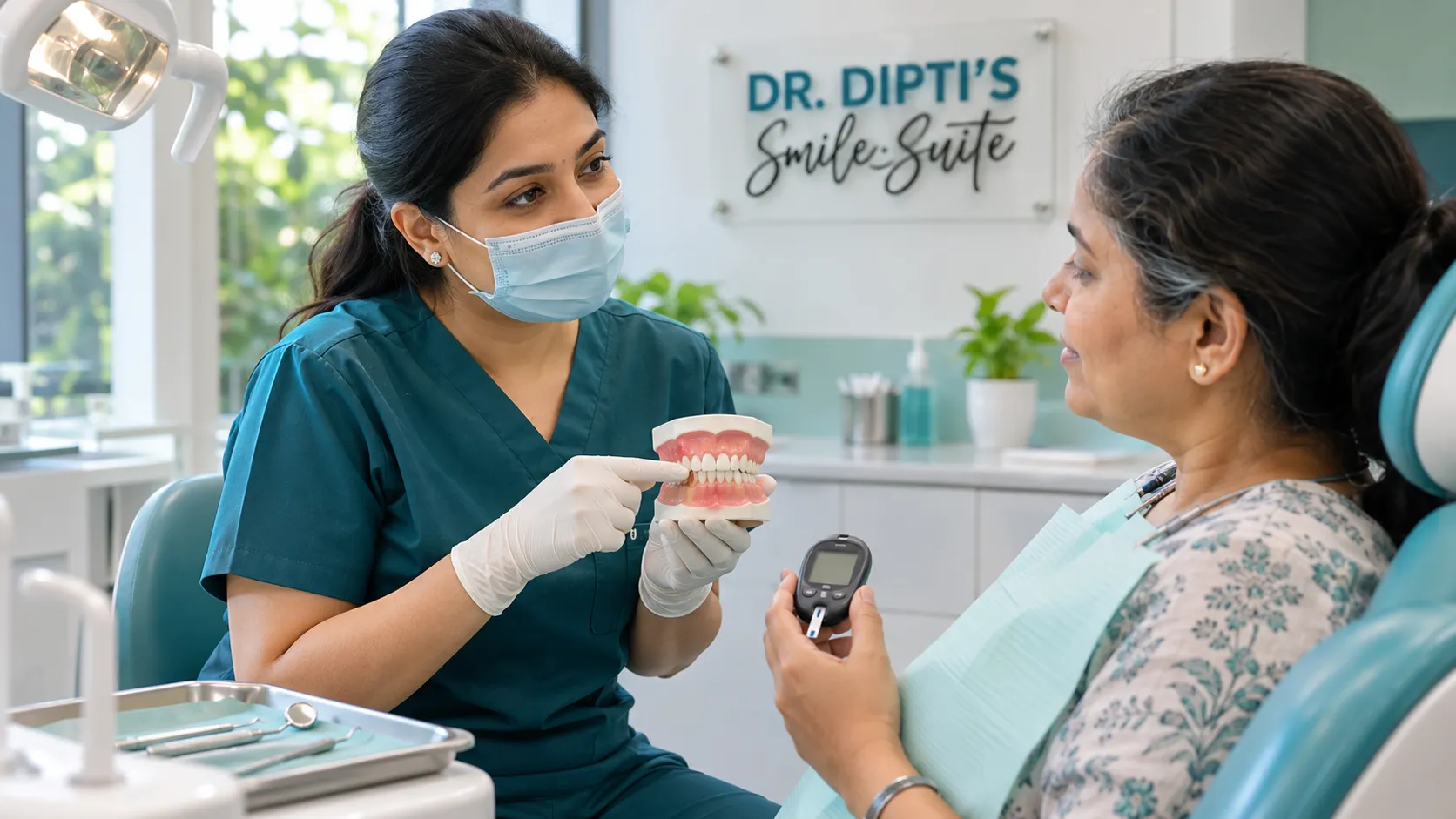
- Tell us you have diabetes, and share your type, latest HbA1c if known, and all medicines, including insulin, tablets, blood thinners and blood pressure medicines
- Eat your normal meal and take your diabetes medicines as usual, unless your doctor advises otherwise. Do not skip meals before a dental visit
- Book a morning appointment if possible, when blood sugar is often more stable and you are less tired
- Bring your glucometer and a quick sugar source, such as glucose tablets or juice, in case your sugar drops
During your appointment
Tell the dental team immediately if you feel shaky, sweaty, dizzy, confused or unusually hungry. These are signs of low blood sugar (hypoglycaemia), and treatment will be paused so it can be corrected.
After treatment
- Follow aftercare instructions carefully, especially after extractions or gum treatment
- Check your blood sugar more often if you are eating less than usual because of soreness
- Keep sugar well controlled to support healing
- Contact us if swelling, pain or fever develops
How We Help Patients with Diabetes at Dr. Dipti’s Smile Suite
We work closely with each patient’s diabetes care, and with their physician or diabetologist when needed.
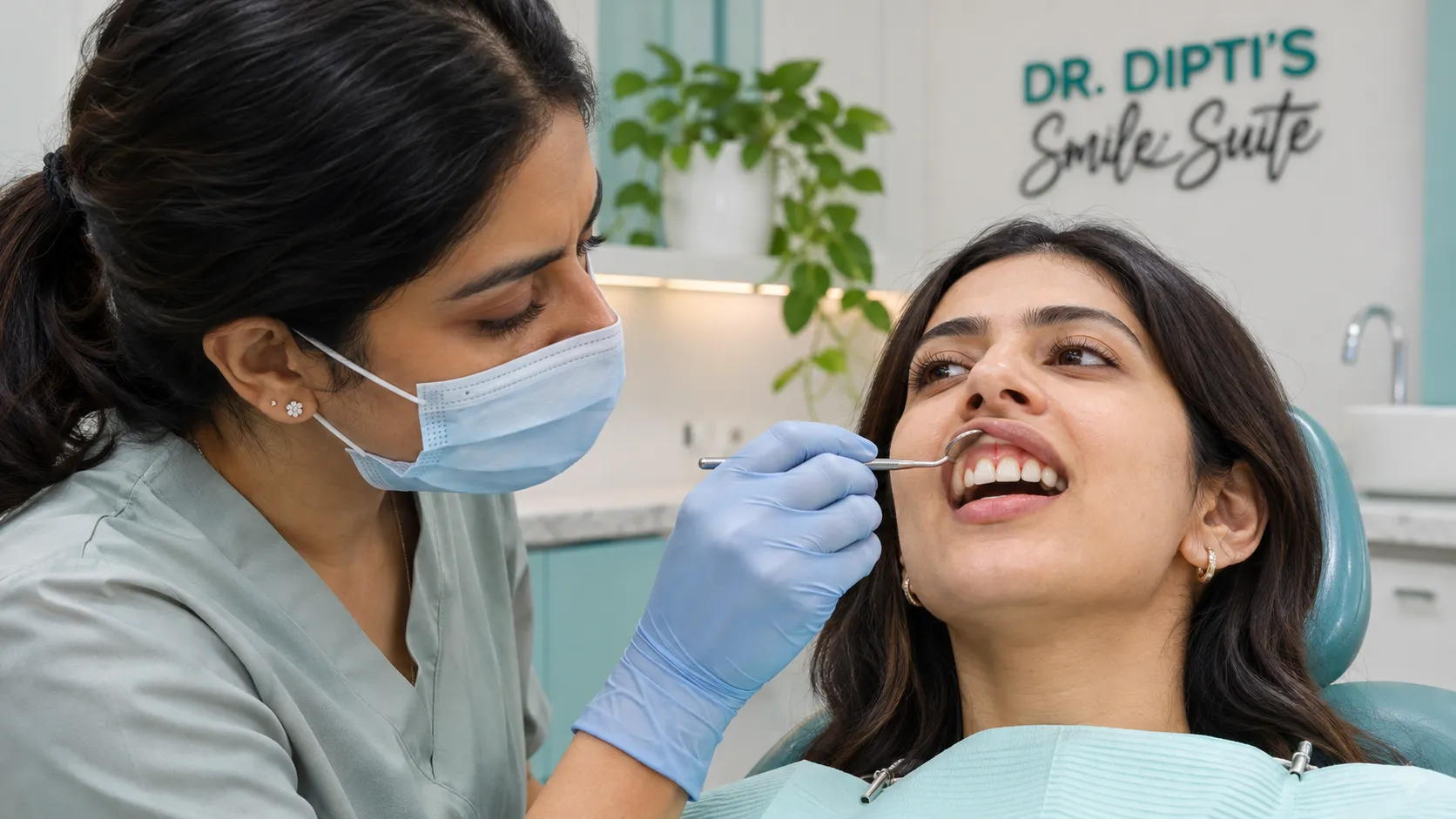
Thorough gum examination
We gently measure the space around each tooth, record bleeding points, check for recession and loose teeth, and use digital X-rays to assess the bone that supports the teeth.
Scaling and polishing
Removing plaque and tartar above and just below the gumline is the first step for gingivitis, and an essential part of ongoing care.
Read more: How Often Should You Get Teeth Scaling and Polishing
Deep cleaning (scaling and root planing)
For periodontitis, we clean below the gumline and along the root surfaces under local anaesthesia. This is the treatment shown in the Cochrane review to improve HbA1c.
Regular gum maintenance
People with diabetes and a history of gum disease usually benefit from professional cleaning every three to four months rather than every six. This keeps the gums stable and supports sugar control.
Treating decay and infection early
We treat cavities with tooth-coloured composite fillings, and infected teeth with root canal treatment, to remove sources of infection promptly.
Explore: Composite Filling in Faridabad | Root Canal Treatment in Faridabad
Extractions and oral surgery
When a tooth cannot be saved, we plan the extraction around your sugar control and give detailed healing instructions.
Explore: Oral Surgery in Faridabad
Replacing missing teeth: implants, bridges and full mouth rehabilitation
Replacing missing teeth helps you chew properly and eat a healthy, diabetes-friendly diet. For people with well-controlled diabetes, dental implants are often a reliable option, with careful planning, good gum health and regular follow-up. Crowns and bridges, and full mouth rehabilitation for multiple missing teeth, are other options. As a prosthodontist and implantologist, Dr. Dipti plans each case around the patient’s overall health and sugar control.
Explore: Dental Implants in Faridabad | Dental Crowns and Bridges in Faridabad | Read more: Full Mouth Dental Implant Cost in Faridabad
Children and teenagers with type 1 diabetes
Children with type 1 diabetes need regular dental check-ups, preventive care such as fluoride varnish and sealants, and guidance for parents on managing snacks and hypo treatments without harming the teeth.
Explore: Pediatric Dentistry in Faridabad
Quick guide: problem, signs and what helps
| Problem | Typical signs | What helps |
|---|---|---|
| Gingivitis | Bleeding, red or swollen gums | Better cleaning, scaling and polishing |
| Periodontitis | Recession, bad breath, loose teeth | Deep cleaning and 3–4-monthly maintenance |
| Dry mouth | Sticky, dry feeling, thirst | Sip water, sugar-free gum, review medicines with doctor |
| Tooth decay | Sensitivity, holes, dark spots | Fillings, fluoride, diet changes |
| Oral thrush | White or red patches, burning | Antifungal treatment, denture hygiene, sugar control |
| Slow healing | Sore sockets, lingering pain | Good sugar control, careful aftercare |
| Missing teeth | Difficulty chewing | Implants, bridges or full mouth rehabilitation |
Daily Oral Care Routine for People with Diabetes
- Brush twice a day for two minutes with a soft-bristled brush and fluoride toothpaste, angled towards the gumline.
- Clean between your teeth every day with floss, interdental brushes or a water flosser.
- Clean your tongue gently to reduce bacteria and bad breath.
- Rinse with water after meals and snacks, especially if you can’t brush.
- Clean dentures daily and remove them at night. Leave them out to rest your gums and reduce fungal infection.
- Check your mouth regularly for bleeding, swelling, white patches or sores.
- See your dentist at least every six months, or every three to four months if you have gum disease.
Diet Tips That Protect Both Teeth and Blood Sugar
Many choices that help diabetes control also protect your teeth:
- Reduce sugar in chai and coffee, and avoid sipping sweetened drinks through the day
- Limit frequent snacking, since every snack exposes teeth to sugar and acid
- Choose tooth-friendly snacks: roasted chana, makhana, nuts, paneer, curd, cucumber and fresh fruit in sensible portions
- Drink plenty of water to fight dry mouth
- Chew sugar-free gum after meals to boost saliva, if your doctor approves
- Avoid tobacco in all forms. Smoking and diabetes together sharply increase the risk of gum disease and tooth loss
- Treat low sugars sensibly: use glucose tablets or juice when needed, then rinse with water afterwards to protect your teeth
Your Dentist and Diabetologist Work Better Together
Diabetes care works best as a team effort. We encourage patients to:
- Share their latest HbA1c and medicine list with their dentist
- Tell their physician or diabetologist about gum disease or dental infections
- Plan major dental procedures when sugar levels are reasonably controlled
- Keep regular dental visits as part of their diabetes routine, alongside eye, foot and kidney checks
Protect Your Smile and Support Your Sugar Control in Faridabad
Diabetes and oral health are closely connected. Keeping your gums healthy is not just about your teeth; it is part of managing diabetes well. Small daily habits, regular cleanings and early treatment of gum problems can protect your smile and support better sugar control.
At Dr. Dipti’s Smile Suite in Sector 14, Faridabad, we provide careful, unhurried dental care for patients with diabetes, from gum treatment to implants and full mouth rehabilitation, planned around your health.
Dr. Dipti’s Smile Suite
SCF 142, Sector 14, HUDA Market, Faridabad, Haryana 121007
Call / WhatsApp: +91 88828 50066
Monday to Saturday: 10:00 AM – 3:00 PM and 5:30 PM – 8:00 PM