Grinding teeth during sleep, known in Hindi as neend mein daant peesna, is called sleep bruxism. It is common, often harmless in mild forms, but in some people it slowly wears teeth down, cracks fillings and crowns, and strains the jaw joints.
This guide covers:
- What causes teeth grinding at night
- How to tell whether it is damaging your teeth
- The fixes that actually work, and the ones that don’t
What Is Teeth Grinding (Bruxism)?
Bruxism is repeated jaw muscle activity that involves clenching or grinding the teeth, or bracing or pushing the lower jaw. Experts describe two types:
- Sleep bruxism: clenching or grinding during sleep, often in short rhythmic bursts
- Awake bruxism: clenching or bracing the jaw during the day, often without noticing, usually while concentrating, stressed or driving
Both are very common. A 2024 meta-analysis in the Journal of Clinical Medicine estimated that about 22% of people worldwide have some form of bruxism, with sleep bruxism at around 21% and awake bruxism at around 23%. The same review found that awake bruxism affects about one in four people in Asia.
Is bruxism a disease?
Not necessarily. An international expert consensus published in 2018 concluded that, in otherwise healthy people, bruxism should be seen as a behaviour that can be a risk factor for certain problems rather than a disorder in itself.
In simple terms, some grinding is not automatically a problem. Treatment is needed when it starts causing consequences such as worn or cracked teeth, jaw pain, headaches, broken dental work, or disturbed sleep.
What Causes Teeth Grinding at Night?
The causes of bruxism are multifactorial and not fully understood. Researchers now believe sleep bruxism is mainly controlled by the brain and nervous system, rather than by the way the teeth fit together. Several factors increase the likelihood.
1. Stress and anxiety
Work pressure, exams, financial worries, relationship stress and anxiety are among the most common triggers. Many people notice they grind more during stressful periods, and clench during the day while concentrating on a screen or driving.
2. Sleep arousals and sleep disturbances
Sleep bruxism episodes often happen during “micro-arousals”, very brief shifts towards lighter sleep lasting a few seconds. Anything that fragments sleep can increase grinding, including irregular sleep, late-night screens and noise.
3. Snoring and sleep apnoea
Researchers have examined links between sleep bruxism and other sleep-related problems, including obstructive sleep apnoea. Loud snoring, gasping during sleep, daytime sleepiness and morning headaches together with grinding should be discussed with a doctor.
4. Caffeine, alcohol and smoking
Coffee, strong tea, energy drinks, alcohol and nicotine, especially in the evening, are associated with more grinding. Smoking has long been studied as a risk factor for sleep bruxism.
5. Acid reflux
Gastro-oesophageal reflux has been identified as a risk factor for sleep bruxism. Some researchers believe grinding may help stimulate saliva to protect against acid. Reflux also erodes enamel, so the two together can wear teeth quickly.
6. Certain medicines and substances
Some antidepressants (particularly certain SSRIs), stimulant medicines for ADHD, and recreational stimulants can increase clenching and grinding. Do not stop any prescribed medicine on your own; discuss concerns with your doctor.
7. Neurological and other medical conditions
Grinding is more common in some neurological conditions and in certain sleep disorders. In these cases, bruxism is a sign of another condition rather than a problem on its own.
8. Bite and teeth: less important than people think
Many people believe a “high” filling or a misaligned bite causes grinding. Current evidence does not support bite problems as a main cause of bruxism. A newly placed filling or crown that feels high should still be adjusted for comfort, but grinding down healthy teeth to “correct the bite” is not an evidence-based way to treat bruxism.
Signs and Symptoms of Teeth Grinding at Night
Look for these clues:
- Grinding or clicking sounds during sleep, noticed by someone else
- Jaw stiffness, tightness or pain on waking
- Dull headaches, especially at the temples, in the morning
- Ear ache or fullness without an ear infection
- Flattened, worn or chipped teeth, or teeth that look shorter
- Tooth sensitivity to cold, as the enamel wears thin
- Cracked teeth, or repeatedly broken fillings and crowns
- Enlarged, firm jaw muscles at the angle of the jaw
- Ridges or scalloped marks along the sides of the tongue, or a line inside the cheeks
- Clicking, popping or locking of the jaw joint
- Tiredness, or unrefreshing sleep
How Grinding Damages Teeth and Jaws
Tooth wear
Grinding forces are far stronger than normal chewing. Over years, they can flatten the biting surfaces, shorten the front teeth and expose the softer dentine underneath, which then wears even faster.
Cracks and fractures
Constant heavy loading can cause tiny cracks that grow over time. A cracked tooth may cause sharp pain on biting and may eventually split.
Read more: What to Do If You Chip or Break a Tooth
Sensitivity
Worn enamel and tiny cracks expose dentine, causing sensitivity to cold, sweet and air.
Read more: Sensitive Teeth: Causes and Treatment Options
Broken fillings, crowns, veneers and implants
Grinding is a common reason dental work chips or fails early. For patients with veneers, crowns or implants, protecting them from night-time forces is essential.
Jaw joint (TMJ) and muscle pain
Clenching and grinding overload the jaw muscles and joints. A 2025 meta-regression found a high prevalence of temporomandibular disorders (TMD) among people with bruxism. Symptoms include jaw pain, clicking, limited opening, and pain spreading to the ears, temples and neck.
How We Diagnose Bruxism at Dr. Dipti’s Smile Suite
Diagnosis is based on your story, a careful examination, and sometimes further tests:
- History: reports from a partner or family member, morning symptoms, stress, sleep quality, snoring, caffeine and alcohol use, reflux and medicines.
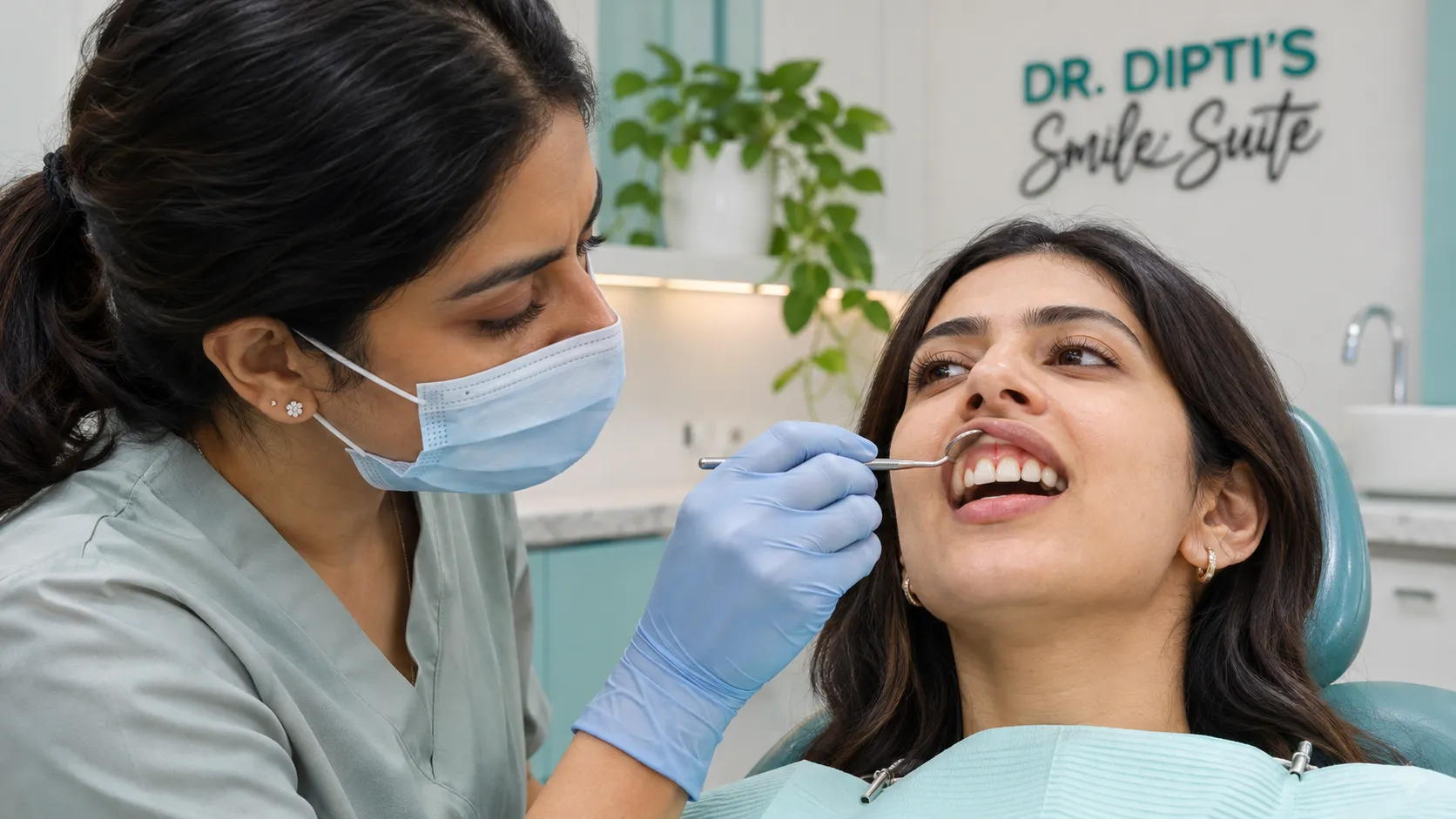
- Tooth examination: wear facets, chips, cracks, and broken or worn dental work.
- Jaw and muscle examination: tenderness of the chewing muscles, jaw joint sounds, how wide and smoothly you open, and the bite.
- Digital scans and photographs: to record wear and monitor progress over time.
- Referral for a sleep study when needed: if snoring, breathing pauses or significant daytime sleepiness suggest a sleep disorder.
Dr. Dipti has special clinical interest and training in TMJ disorders and complex bite rehabilitation. As a prosthodontist, she regularly treats patients whose teeth and dental work have been damaged by grinding.
How to Fix Teeth Grinding at Night
Bruxism usually cannot be “switched off” completely. Treatment focuses on three goals:
- Reducing the triggers
- Protecting the teeth and jaw
- Repairing any damage
Custom night guard (occlusal splint)
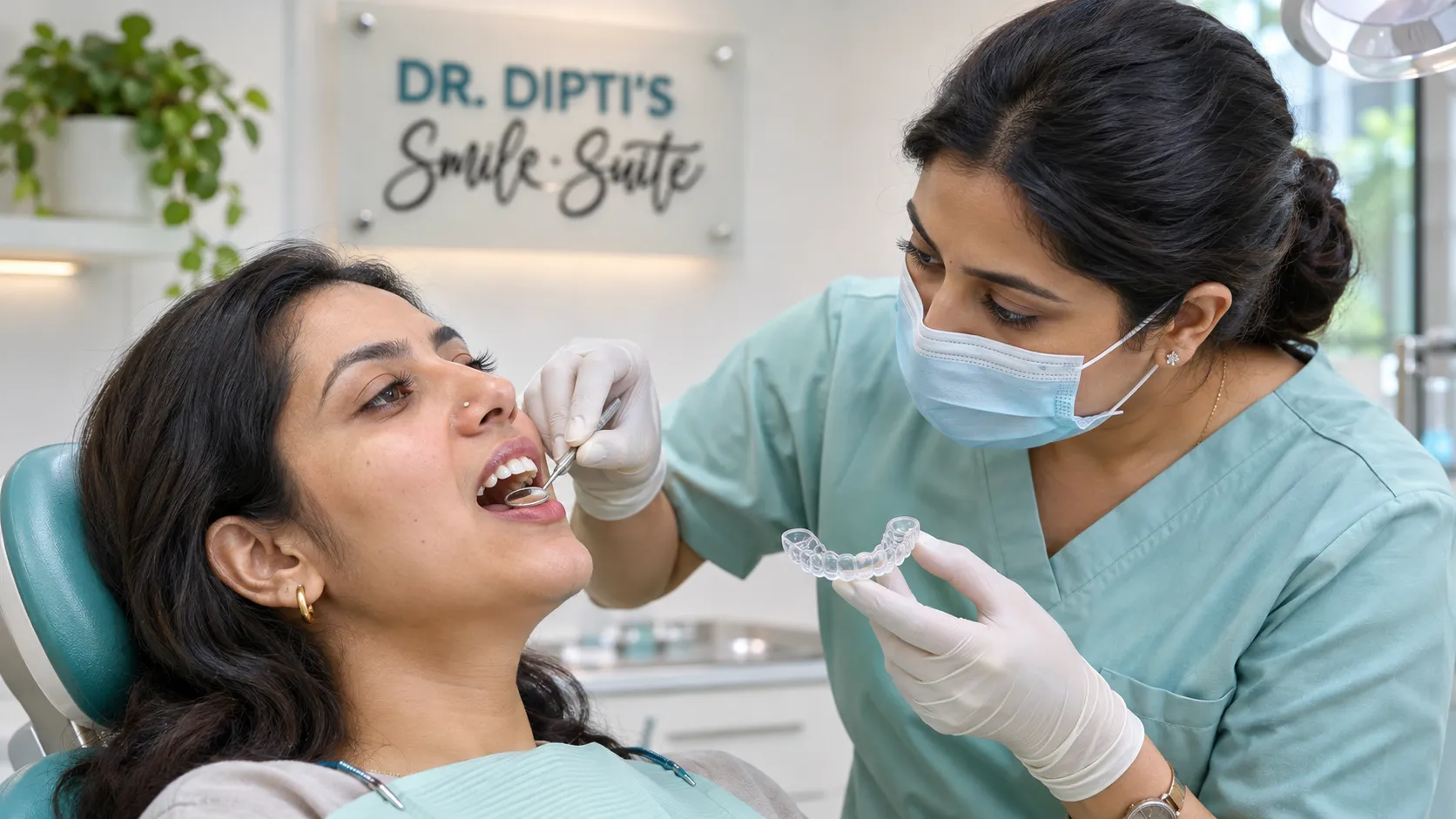
A custom-made night guard is the most widely used and effective way to protect the teeth during sleep. It is a thin, precisely fitted appliance, usually worn over the upper teeth, that:
- Takes the grinding forces instead of your teeth
- Spreads the load evenly across the teeth and jaw
- Protects crowns, veneers, bridges and implants
- May reduce jaw muscle strain and morning discomfort for many patients
Clinical reviews note that night guards mainly protect the teeth from damage, and may also reduce muscle activity.
Custom vs store-bought guards: Boil-and-bite guards from shops are bulky, fit poorly, can shift during sleep, and may make clenching worse for some people. A custom guard made from a precise digital scan of your teeth is thinner, more comfortable and adjusted to your bite. Its fit and bite are checked and refined at review visits.
Treating jaw pain and TMJ problems
For patients with jaw pain, clicking or limited opening, we combine the night guard with:
- Jaw relaxation and stretching exercises
- Warm compresses on tight jaw muscles
- A soft diet during flare-ups
- Avoiding chewing gum, nail biting and very wide yawning
- Physiotherapy referral when needed
Stress management and habit awareness
Because stress is a major trigger, addressing it helps:
- Daytime awareness: your teeth should be apart when you’re not eating, with “lips together, teeth apart”. Set phone reminders or place small stickers on your screen as cues.
- Relaxation before bed: slow breathing, light stretching, or a warm shower.
- Counselling or cognitive behavioural therapy: helpful for people with significant stress or anxiety, and used in bruxism management.
Sleep hygiene
- Keep a regular sleep and wake time
- Avoid screens for 30 to 60 minutes before bed
- Keep the bedroom dark, quiet and cool
- Avoid heavy meals late at night
Cutting back on triggers
- Limit coffee, strong tea and energy drinks, especially after mid-afternoon
- Reduce alcohol, particularly in the evening
- Stop smoking and all tobacco products
- Get acid reflux assessed and treated by your doctor
Medical and sleep evaluation
If grinding comes with loud snoring, breathing pauses, or excessive daytime sleepiness, a sleep evaluation with a physician is important. If you suspect a medicine is involved, ask your doctor whether there are alternatives.
What does not work
- Grinding down healthy teeth to “balance the bite”: irreversible occlusal adjustments have no evidence base in bruxism treatment
- Ignoring worn teeth: wear is permanent and gets harder and more expensive to treat over time
- Unsupervised over-the-counter guards worn for years: poorly fitting guards can cause problems of their own
Repairing Teeth Damaged by Grinding
Once grinding is controlled and the teeth are protected, worn or broken teeth can be restored. Treatment depends on how much damage there is.
Composite bonding
Small chips and worn edges can be rebuilt with tooth-coloured composite resin, usually in a single visit.
Explore: Composite Filling in Faridabad
Crowns and onlays
Cracked or heavily worn back teeth are best protected with ceramic crowns or onlays, which hold the tooth together. We design and make many of these on-site using CAD/CAM technology.
Explore: Dental Crowns and Bridges in Faridabad
Veneers
Worn or chipped front teeth can be restored with porcelain veneers to recover length, shape and colour. A night guard is essential afterwards to protect them.
Explore: Dental Veneers in Faridabad
Root canal treatment
If a crack reaches the nerve and causes lingering or throbbing pain, root canal treatment followed by a crown can save the tooth.
Explore: Root Canal Treatment in Faridabad
Full mouth rehabilitation
When years of grinding have worn down many teeth, the bite may have collapsed, the face can look shorter, and the teeth may be very sensitive. Full mouth rehabilitation carefully plans and rebuilds all the teeth together, often restoring lost height, comfort and appearance. This is one of Dr. Dipti’s core areas of expertise as a prosthodontist.
Explore: Smile Makeover in Faridabad
Implants for lost teeth
If a tooth has split beyond repair, a dental implant can replace it. For patients who grind, implant planning and a protective night guard are especially important.
Explore: Dental Implants in Faridabad
Aligning the teeth when needed
Straightening the teeth does not cure bruxism. However, when crowding or bite problems make worn teeth hard to restore, orthodontic treatment or Invisalign before restorations can create a better, more stable result.
Explore: Invisalign Aligners in Faridabad
Quick guide: problem and fix
| Problem | What helps |
|---|---|
| Grinding with no damage yet | Trigger reduction, sleep hygiene, monitoring |
| Grinding with early wear or sensitivity | Custom night guard, desensitising care |
| Jaw pain, clicking, morning headaches | Night guard plus TMJ exercises and care |
| Chipped or worn front teeth | Composite bonding or veneers, plus night guard |
| Cracked back teeth | Crowns or onlays; root canal if the nerve is affected |
| Severe wear across many teeth | Full mouth rehabilitation |
| Snoring, breathing pauses, daytime sleepiness | Medical sleep evaluation |
Teeth Grinding in Children
Many parents are alarmed to hear their child grinding at night. Grinding is fairly common in children and often decreases as they grow, especially as baby teeth are replaced by adult teeth.
Most childhood grinding needs only monitoring. See a dentist if your child:
- Complains of jaw pain, headaches or tooth sensitivity
- Shows significant tooth wear or chipping
- Snores loudly, breathes through the mouth, or seems tired during the day, as these may need a medical check for enlarged tonsils or adenoids
- Grinds during periods of stress, such as exams or changes at home
Explore: Pediatric Dentistry in Faridabad
Get Help for Teeth Grinding in Faridabad
Teeth grinding at night is common, and often silent, until teeth begin to wear, crack or hurt. The earlier it is recognised, the simpler the fix: a well-made night guard, attention to stress and sleep, and treatment of any damage before it spreads.
At Dr. Dipti’s Smile Suite in Sector 14, Faridabad, we combine TMJ expertise with advanced prosthodontic care to protect your teeth, ease jaw pain, and rebuild teeth that grinding has damaged.
Dr. Dipti’s Smile Suite
SCF 142, Sector 14, HUDA Market, Faridabad, Haryana 121007
Call / WhatsApp: +91 88828 50066
Monday to Saturday: 10:00 AM – 3:00 PM and 5:30 PM – 8:00 PM
Book a Bruxism and TMJ Check-Up | WhatsApp Us