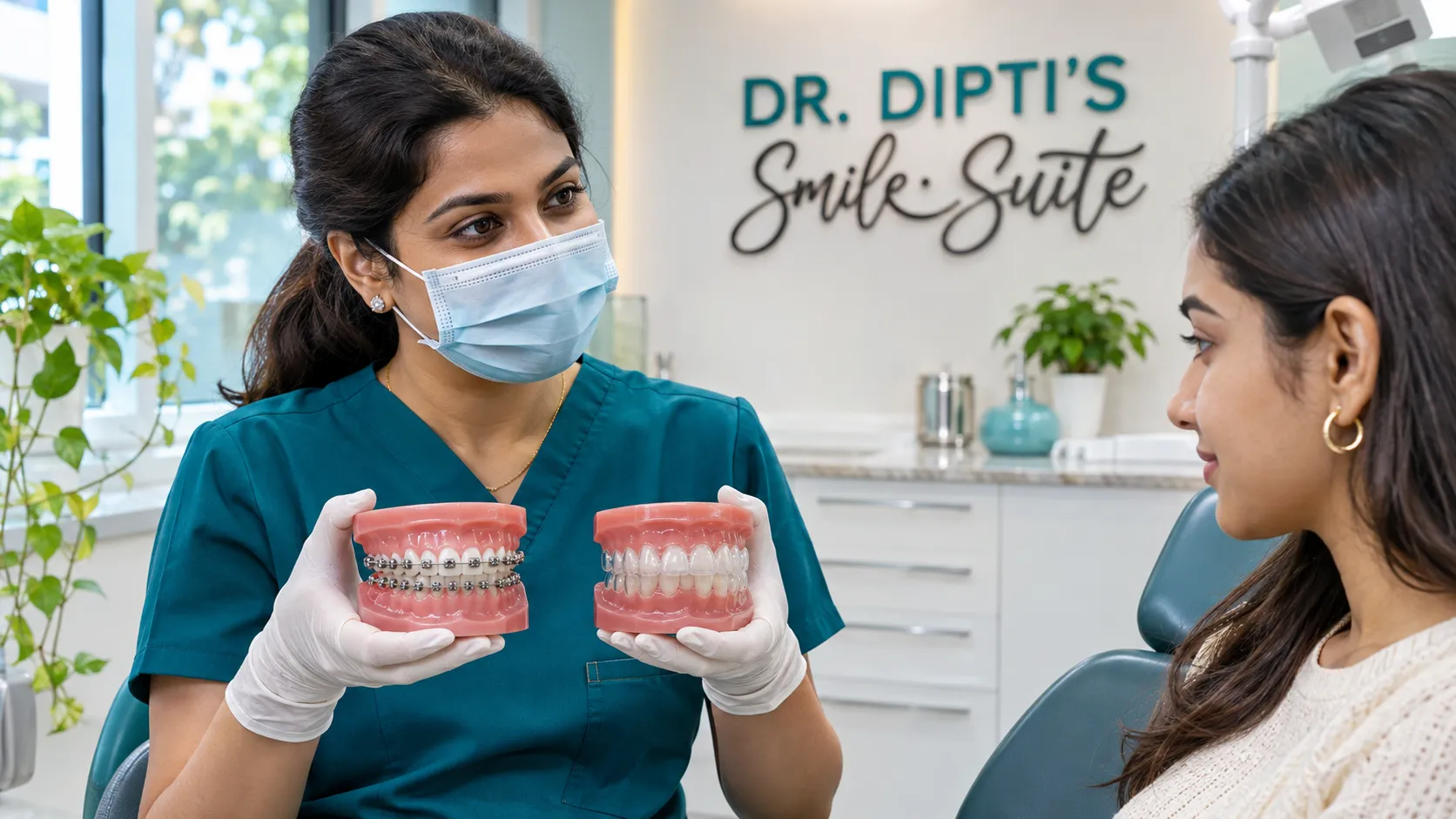
Often the answer is yes. Sometimes braces are the better choice. And for many people, either option will give a beautiful result, so the decision comes down to lifestyle, comfort and budget.
This guide compares Invisalign and traditional braces head to head on results, treatment time, comfort, food, gum health, cost and more, so you can see which suits you.
The short answer: Both Invisalign and traditional braces straighten teeth effectively. Invisalign is nearly invisible, removable, and easier to keep clean, but it depends on you wearing the aligners 20 to 22 hours a day. Braces work around the clock without relying on you, are often more predictable for complex bite problems, and usually cost less. The right choice depends on your case and your habits.
Why Straightening Teeth Matters
Misaligned teeth are very common. A 2021 meta-analysis of 54 studies with nearly 98,000 children found that 35.4% of Indian children aged 8 to 15 have malocclusion. Many adults also live with crowding, gaps or bite problems that were never treated, or that returned after braces in childhood.
Straight teeth are not only about looks. They are easier to clean, wear more evenly, and are less likely to chip. Correcting the bite can also make future crowns, veneers or implants simpler and longer lasting.
What Are Traditional Braces?
Traditional braces use small brackets bonded to the front of each tooth, connected by an archwire. The wire is adjusted every few weeks to move the teeth step by step.
Metal braces
Metal braces use stainless steel brackets. They are the most established, most affordable and most versatile type of orthodontic treatment. Modern metal brackets are smaller and smoother than those of the past.
Ceramic braces
Ceramic braces work exactly like metal braces but use tooth-coloured or clear brackets, so they are much less noticeable. They are a popular middle path for adults and teens who want fixed treatment with a more discreet look.
Explore: Orthodontics in Faridabad | Read more: How to Choose the Right Type of Braces in Faridabad
What Is Invisalign?
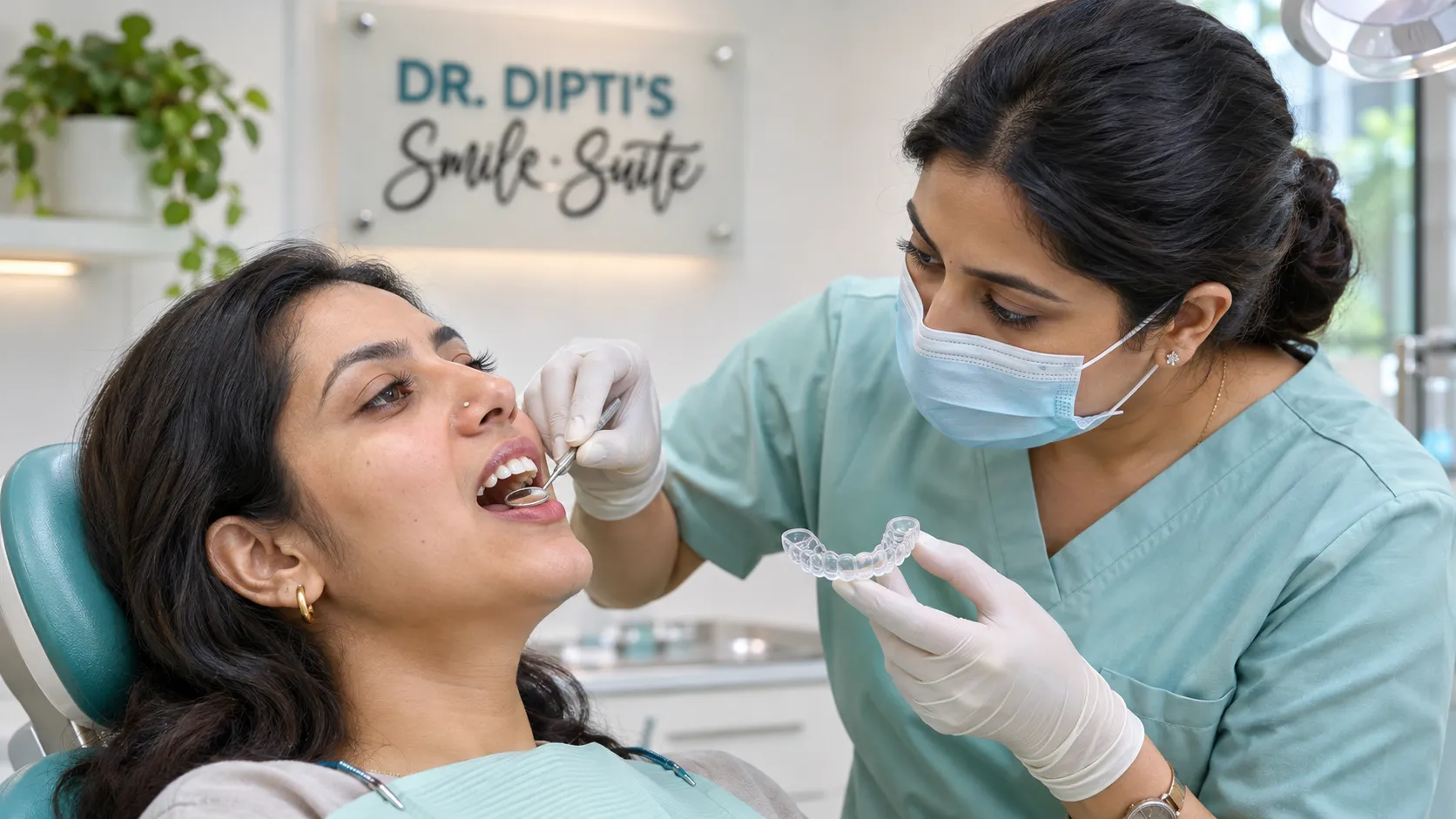
Invisalign is a clear aligner system that uses a series of thin, custom-made, transparent trays to move the teeth gradually.
How Invisalign works
- Digital scan: a 3D scan of your teeth replaces messy impressions in most cases.
- Digital treatment plan: the full tooth movement is planned on a computer, and you can preview a simulation of your expected result before you start.
- Attachments: small, tooth-coloured bumps are bonded to some teeth to help the aligners grip and move them precisely.
- Aligner changes: you switch to a new set of aligners every one to two weeks, as directed.
- Progress checks and refinements: regular visits track progress. Some cases need additional “refinement” aligners to perfect the final result.
Dr. Dipti’s Smile Suite is a Black Diamond Invisalign provider, one of the highest provider levels, reflecting extensive experience in planning and completing Invisalign cases.
Explore: Invisalign Aligners in Faridabad
Invisalign vs Braces: Side-by-Side Comparison
| Factor | Invisalign (clear aligners) | Traditional braces (metal or ceramic) |
|---|---|---|
| Appearance | Nearly invisible | Visible (metal) or less visible (ceramic) |
| Removable | Yes | No |
| Wear time | 20–22 hours a day | Works 24/7 automatically |
| Eating | Remove to eat; no food restrictions | Avoid hard, sticky and chewy foods |
| Brushing and flossing | Easy; remove aligners | Harder; needs special brushes |
| Comfort | Smooth plastic; pressure with each new set | Brackets and wires can rub cheeks |
| Clinic visits | Fewer, shorter progress checks | Regular adjustments every 4–6 weeks |
| Emergencies | Rare (lost or cracked aligner) | Broken brackets, poking wires |
| Complex bite problems | Suits many cases; some need extra help | Very versatile and predictable |
| Treatment preview | Digital simulation before starting | Not usually available |
| Depends on patient discipline | Highly | Less |
| Typical cost | Higher | Lower (metal), moderate (ceramic) |
| Retainers afterwards | Essential | Essential |
Head-to-Head: 10 Factors That Decide the Winner
1. Appearance
Invisalign wins. Aligners are nearly invisible in daily life, in photos and on video calls. Ceramic braces are the next most discreet, and metal braces are the most visible.
For professionals, college students, and anyone with a wedding or major event coming up, this is often the deciding factor.
2. Effectiveness and complex cases
It depends on the case. A 2019 systematic review in BMC Oral Health found that both clear aligners and braces were effective at treating malocclusion. The same review found braces performed better for:
- Achieving ideal contact between the back teeth
- Controlling root angulation
- Widening the dental arches
- Keeping results stable after treatment
A 2020 review in Orthodontics & Craniofacial Research found that aligners can give results comparable to braces for front-tooth alignment in mild to moderate cases. It also noted that many cases need more than one set of aligners to finish.
In practice: Invisalign handles mild to moderate crowding, spacing, relapse after old braces, and many bite problems very well. Severe rotations, large vertical movements, significant jaw problems and some extraction cases may be more predictable with braces, or with aligners combined with extra techniques.
3. Treatment time
Often similar, sometimes faster with aligners. In the studies analysed in the 2019 review, aligner patients had a shorter overall treatment duration. Real-world timing depends on case complexity and, for Invisalign, on how consistently the aligners are worn. Most treatments take somewhere between several months and two years.
4. Comfort
Invisalign usually wins. Aligners are smooth plastic with no wires or brackets to scrape the cheeks or lips. Both options cause some pressure and tenderness for a day or two after each new aligner or wire adjustment. That feeling is normal and means the teeth are moving.
5. Eating and food
Invisalign wins on freedom; braces win on convenience for frequent snackers.
With aligners, you remove them to eat, so there are no food restrictions. However, you must take them out for every meal and snack, and brush before putting them back. Frequent chai with sugar or constant snacking through the day can make this difficult.
With braces, you can eat at any time, but you must avoid hard and sticky foods such as bhutta (corn on the cob), nuts, hard candy, toffee, chikki and biting directly into apples or hard rotis with the front teeth.
6. Oral hygiene, gum health and white spots
Invisalign generally wins. Because aligners come out, brushing and flossing are easy. Braces trap plaque around brackets, which can cause gum inflammation and white spot lesions (early enamel damage) that may remain visible after the braces come off.
Research supports this:
- A 2018 meta-analysis in the Journal of the American Dental Association found that clear aligners were associated with better plaque and gum scores than fixed braces.
- A 2023 meta-analysis in BMC Oral Health found lower incidence and severity of white spot lesions, less plaque, and fewer decay-causing bacteria with clear aligners. It concluded that for patients who could be treated either way, aligners may be the better choice for oral health.
A 2023 umbrella review cautioned that the overall evidence on gum health is mixed and considered the two broadly comparable. Whichever you choose, excellent brushing and regular cleanings remain essential.
Read more: Bleeding Gums Causes: Why Your Gums Bleed and What It Means
7. Discipline and responsibility
Braces win if you tend to forget. Aligners only work while they are in your mouth. Wearing them less than 20 to 22 hours a day, losing them, or forgetting to switch sets will slow or stall treatment. Braces work around the clock with no effort required, which is why they often suit younger teens or anyone who knows they won’t be consistent.
8. Clinic visits and emergencies
Invisalign usually wins. Aligner patients typically need fewer and shorter visits, which suits busy professionals and people who travel. Braces need regular adjustments, and broken brackets or poking wires may need extra visits.
9. Speech and confidence
Mostly a tie. Some people notice a slight lisp for the first few days with aligners. Others feel self-conscious about visible braces. Most adapt within a week either way.
10. Cost
Braces win on price. Metal braces are usually the most affordable option, ceramic braces cost a little more, and Invisalign typically costs the most. The final price depends on case complexity and what is included.
When comparing quotes, make sure the total covers records, X-rays and scans, all aligners or brackets, refinements, attachments, visits, emergency repairs and retainers.
Read more: Braces Cost in Faridabad: Metal vs Ceramic vs Invisalign Price Comparison | Is ₹1.5 Lakh for Invisalign Worth It
Who Is Invisalign Best For?
- Adults and teens with mild to moderate crowding or spacing
- People whose teeth moved back after old braces
- Professionals, students and anyone who wants a discreet option
- Patients at higher risk of gum problems or white spots
- People who travel often or prefer fewer clinic visits
- Patients planning veneers, implants or whitening alongside straightening
- Anyone confident they will wear aligners consistently
Who Should Choose Traditional Braces?
- Patients with severe crowding, rotations or complex bite problems
- Cases with significant jaw discrepancies
- Younger teens who may not wear aligners reliably
- People who want the lowest-cost option
- Patients who know they won’t manage 20 to 22 hours of daily aligner wear
- Anyone who prefers a “set it and forget it” approach
Not sure which group you fall into? Read our decision checklist: Do I Need Braces or Invisalign? Questions to Ask Before Choosing
Invisalign vs Braces for Teens and Adults
Teenagers
Both options work well for teens. The key question is responsibility. Teens who are motivated and organised often do very well with Invisalign and appreciate the discreet look during school and college years. If a teen is likely to lose aligners or skip wearing them, braces are the safer choice.
Adults
Adults are now a large share of orthodontic patients. Most prefer Invisalign or ceramic braces for appearance, and value the easier cleaning and fewer visits that aligners offer. Gum health must be stable before treatment starts.
Children
For younger children, the focus is on early assessment around age seven, guiding jaw growth, and addressing habits such as thumb sucking.
Read more: Thumb Sucking and Its Effect on Kids Teeth | Explore: Pediatric Dentistry in Faridabad
Combining Straightening with Other Smile Treatments
As a prosthodontist, I often plan orthodontic treatment as the first step of a larger smile plan:
- Before veneers: aligning the teeth first can reduce how much tooth needs to be prepared for veneers, giving a more natural result
Explore: Dental Veneers in Faridabad
- Before implants: moving neighbouring teeth can create the right space and angle for an implant
Explore: Dental Implants in Faridabad
- With whitening: Invisalign trays can be used during whitening, or professional Zoom whitening can be done once straightening is complete
Explore: Teeth Whitening in Faridabad
- Digital smile makeover: straightening, whitening, bonding and veneers planned together as one complete result
Explore: Smile Makeover in Faridabad
- For worn teeth from grinding: aligning the bite before rebuilding worn teeth can create a more stable result
Read more: Teeth Grinding (Bruxism) at Night: Causes and Fix
What Treatment Looks Like at Dr. Dipti’s Smile Suite
- Consultation: we listen to your goals, timeline and any upcoming events.
- Examination: teeth, gums, bite and jaw joints are checked, and any decay or gum disease is treated first.
- Digital X-rays and 3D scan: a precise record of your teeth and bite.
- Honest recommendation: we explain whether Invisalign, ceramic braces or metal braces suit your case best, and why.
- Digital simulation: for Invisalign-suitable cases, you can preview your expected result.
- Clear, all-inclusive costs and timeline before treatment begins.
- Regular reviews to keep treatment on track.
- Retention plan: retainers to protect your new smile.
If braces are the better option for your case, we will tell you, even if you came in asking for Invisalign.
Life After Treatment: Retainers Are Essential
Whichever you choose, teeth tend to drift back after treatment, especially in the first year. You will need retainers:
- Clear removable retainers, usually worn at night
- Fixed (bonded) retainers, thin wires attached behind the front teeth
Most people need to wear retainers at night for the long term. Skipping them is the most common reason teeth shift after successful treatment.
Book Your Invisalign or Braces Consultation in Faridabad
Invisalign and traditional braces are both proven ways to straighten teeth. Invisalign offers discretion, comfort and easier cleaning. Braces offer reliability, versatility and lower cost. The right choice is the one that suits your teeth, your lifestyle and your commitment, and that you will see through to the end, retainers included.
At Dr. Dipti’s Smile Suite in Sector 14, Faridabad, a Black Diamond Invisalign provider, we will assess your smile, show you your options side by side, and help you choose with complete clarity on results, time and cost.
Dr. Dipti’s Smile Suite
SCF 142, Sector 14, HUDA Market, Faridabad, Haryana 121007
Call / WhatsApp: +91 88828 50066
Monday to Saturday: 10:00 AM – 3:00 PM and 5:30 PM – 8:00 PM