
The worry starts later. A grandparent remarks that the front teeth “are coming out”, a neighbour suggests applying neem or chilli, or you notice a gap between the front teeth when your child bites. Parents then wonder: is thumb sucking really damaging the teeth, and if so, when and how should it stop?
This guide covers:
- When thumb sucking is harmless and when it starts to affect the teeth and jaws
- Exactly what changes it can cause, and whether they can be fixed
- Gentle, practical ways to help your child stop, without shouting or harsh home remedies
Why Children Suck Their Thumbs
Sucking is one of the earliest reflexes. It helps babies feed and also calms them. Doctors call thumb, finger and pacifier sucking “non-nutritive sucking”, meaning sucking for comfort rather than food.
Children commonly suck their thumbs when they are:
- Tired or falling asleep
- Hungry, bored or unwell
- Anxious, shy or upset
- Adjusting to a big change, such as a new sibling, starting school or moving house
When it usually stops on its own
Most children grow out of the habit without any pressure. According to a clinical review on StatPearls, sucking habits usually resolve on their own between the ages of 2 and 4, with about 4% of children still sucking at age 8 and 2% at age 12.
The American Academy of Pediatric Dentistry (AAPD) recommends encouraging children to stop sucking habits by around age three. It also advises that a habit continuing beyond this age should be assessed by a dentist.
When Does Thumb Sucking Start to Affect the Teeth?
Not every thumb sucker will have dental problems. Four factors decide how much effect the habit has.
1. Duration: how many years it continues
This is the most important factor. A habit that stops before the permanent front teeth appear, around age 5 to 7, usually leaves little or no lasting effect. Changes in the baby teeth often correct themselves once the habit stops.
2. Frequency: how many hours a day
A child who sucks their thumb for a few minutes while falling asleep is very different from one who sucks for hours during the day and all night.
3. Intensity: how hard they suck
Some children rest the thumb passively in the mouth. Others suck so strongly that you can hear it and see their cheeks pulled in. Vigorous sucking creates much more pressure on the teeth and palate.
4. Position of the thumb
The thumb pushes the upper front teeth forward, presses the lower front teeth back, and rests against the roof of the mouth. How the thumb sits affects which changes appear.
Research supports this pattern. A 2025 meta-analysis in BMC Oral Health found that prolonged and daily sucking habits, both pacifier and thumb, are linked to a significantly higher risk of anterior open bite. Children who kept the habit for longer had a greater risk than those with shorter habits.
How Thumb Sucking Affects Kids Teeth and Jaws
Protruding upper front teeth (“buck teeth”)
The thumb pushes the upper front teeth forward and outward, creating a large overjet, a big horizontal gap between the upper and lower front teeth. This is what families often describe as “teeth coming out”.
Protruding front teeth are more likely to be injured. A 2015 meta-analysis found that a large overjet may double or even triple the risk of injury to the front teeth.
Read more: What to Do If You Chip or Break a Tooth
Anterior open bite
The thumb sits between the upper and lower front teeth and stops them growing into contact. When the child bites down, the back teeth meet but there is a gap at the front. An open bite makes it hard to bite into foods like rotis, apples and sandwiches with the front teeth.
Posterior crossbite and a narrow palate
When a child sucks, the cheek muscles press inward on the upper back teeth while the tongue sits low in the mouth. Over time, this can narrow the upper jaw and create a high, narrow palate. The upper back teeth may then bite inside the lower ones, called a crossbite. Crossbites can lead to uneven jaw growth if not treated.
Lower front teeth tipped backwards
The thumb resting on the lower front teeth can push them backwards, making the overjet even larger.
Tongue thrust and swallowing pattern
When there is an open bite, the tongue often pushes forward into the gap during swallowing and speech. This tongue thrust can keep the open bite from closing, even after the thumb habit stops.
Speech changes
An open bite and tongue thrust can lead to a lisp, or difficulty with sounds such as “s”, “z”, “t”, “d”, “sh” and “ch”.
Effects on the thumb itself
Long-term sucking can cause a thickened, callused or wrinkled thumb, skin cracks, and infections around the nail. A deformed finger is uncommon but can happen in prolonged, intense habits.
Germs and illness
Hands touch everything. Children who suck their thumbs carry bacteria and viruses from toys, floors and surfaces directly into the mouth.
Social and emotional effects
School-age children may be teased about the habit or about protruding teeth, which can affect their confidence.
Thumb vs Pacifier: Which Is Worse?
Both pacifiers and thumbs can affect the teeth. Systematic reviews show moderate evidence that pacifier use is linked to open bite and crossbite. Orthodontic-shaped pacifiers caused fewer open bites than conventional ones.
Many dentists still consider a pacifier the easier habit to manage, because you can take a pacifier away, but you cannot take away a thumb. The AAPD’s pacifier policy also notes that forcing a child to stop the pacifier too early has been linked to a longer-lasting finger habit. Gentle, gradual weaning works better than suddenly taking it away.
Practical tips if your child uses a pacifier:
- Choose an orthodontic-shaped pacifier of the right size for their age
- Never dip it in honey, sugar, ghee or juice, as this causes tooth decay
- Limit it to sleep times, and start weaning in the second year
- Replace damaged pacifiers, and never tie one around the neck
Can the Damage Be Reversed?
In most young children, yes. If the habit stops while the child still has mainly baby teeth, open bites and mild protrusion often improve on their own over the following months. The muscles, tongue and growing jaws gently guide the teeth back.
When the habit continues after the permanent front teeth come in (about age 6 to 8), the changes are more likely to remain. A narrow palate or crossbite usually needs orthodontic treatment, because it rarely corrects itself. The earlier the habit stops, the less treatment is likely to be needed later.
How to Help Your Child Stop Thumb Sucking
The goal is to help, not to punish. Pressure and scolding often make children suck more, because the habit is a source of comfort. Every child is different, so choose methods that suit your child’s age and personality.
1. Wait for the right time
Do not try to stop the habit during a stressful phase, such as a new baby in the family, starting school, illness or moving house. Choose a calm, settled period.
2. Help your child understand
From about age four, many children can understand simple explanations: “Your thumb is pushing your teeth forward. Shall we help your teeth grow straight?” A friendly explanation from the dentist, using a mirror or pictures, can be especially motivating.
3. Praise and reward, don’t punish
Notice and praise the times your child is not sucking. A sticker chart, with a small reward after a few days or a week without sucking, works well for many children. Avoid shaming, teasing or comparing them with siblings.
4. Find the trigger and replace the comfort
Notice when your child sucks: bedtime, TV time, car rides, or when upset. Then offer alternatives:
- A soft toy or blanket to hold at bedtime
- Busy hands during screen time, such as a stress ball, clay or colouring
- A hug and comforting words when upset
- Stories and talking in the car
5. Gentle reminders
Use a private signal, such as a gentle touch on the shoulder or a code word, rather than calling out the habit in front of others.
6. Physical reminders for night-time
Many children suck their thumb only while asleep. A soft cotton glove, a sock over the hand, a plaster on the thumb, or a fabric thumb guard can act as a reminder. These work best when the child agrees to use them.
7. Bitter-tasting nail coatings
Bitter nail coatings made for this purpose can remind some older children. Use only products labelled as safe for children, follow the instructions exactly, and never use them without your child’s understanding. Avoid home methods like chilli, neem paste or harsh chemicals on the hands, which can cause burns, eye irritation and distress.
8. Involve the dentist
Children often listen to “the doctor” in a way they won’t listen to parents. At our clinic, we talk to children directly and kindly, show them their teeth, and build a plan with them as a team.
Professional Help at Dr. Dipti’s Smile Suite
When gentle home methods are not enough, or when the teeth and jaws have already started to change, professional support makes a big difference.
Habit assessment and counselling
We examine your child’s teeth, bite, palate and swallowing pattern, and explain whether the habit is causing changes. We then create a habit-stopping plan with you and your child, using positive reinforcement and age-appropriate goals.
Explore: Pediatric Dentistry in Faridabad
Habit-breaking appliances
For older children who want to stop but cannot break the habit, a small custom-made appliance can be fitted behind the upper teeth. It acts as a reminder by making thumb sucking less satisfying. It does not hurt and is not a punishment. It is usually worn for a few months while the habit fades, and works best when the child understands and agrees to it.
Early orthodontic treatment
If the habit has already narrowed the upper jaw or caused a crossbite, an expansion appliance can gently widen the palate while the child is still growing. Early treatment can also reduce severe protrusion of the front teeth and the risk of injury to them. We recommend an orthodontic check by around age seven, or earlier if you notice changes.
Explore: Orthodontics in Faridabad
Braces and Invisalign for remaining problems
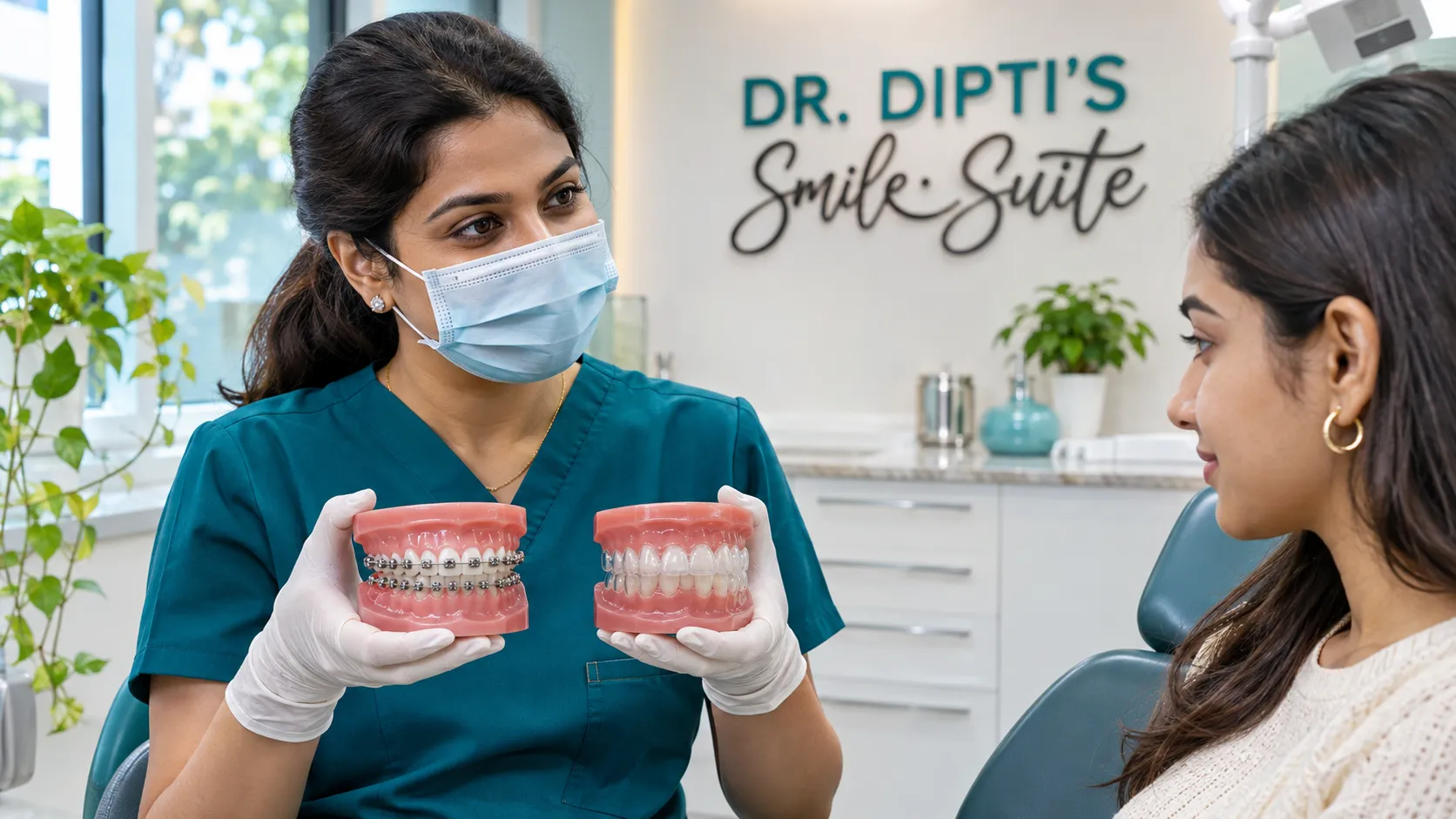
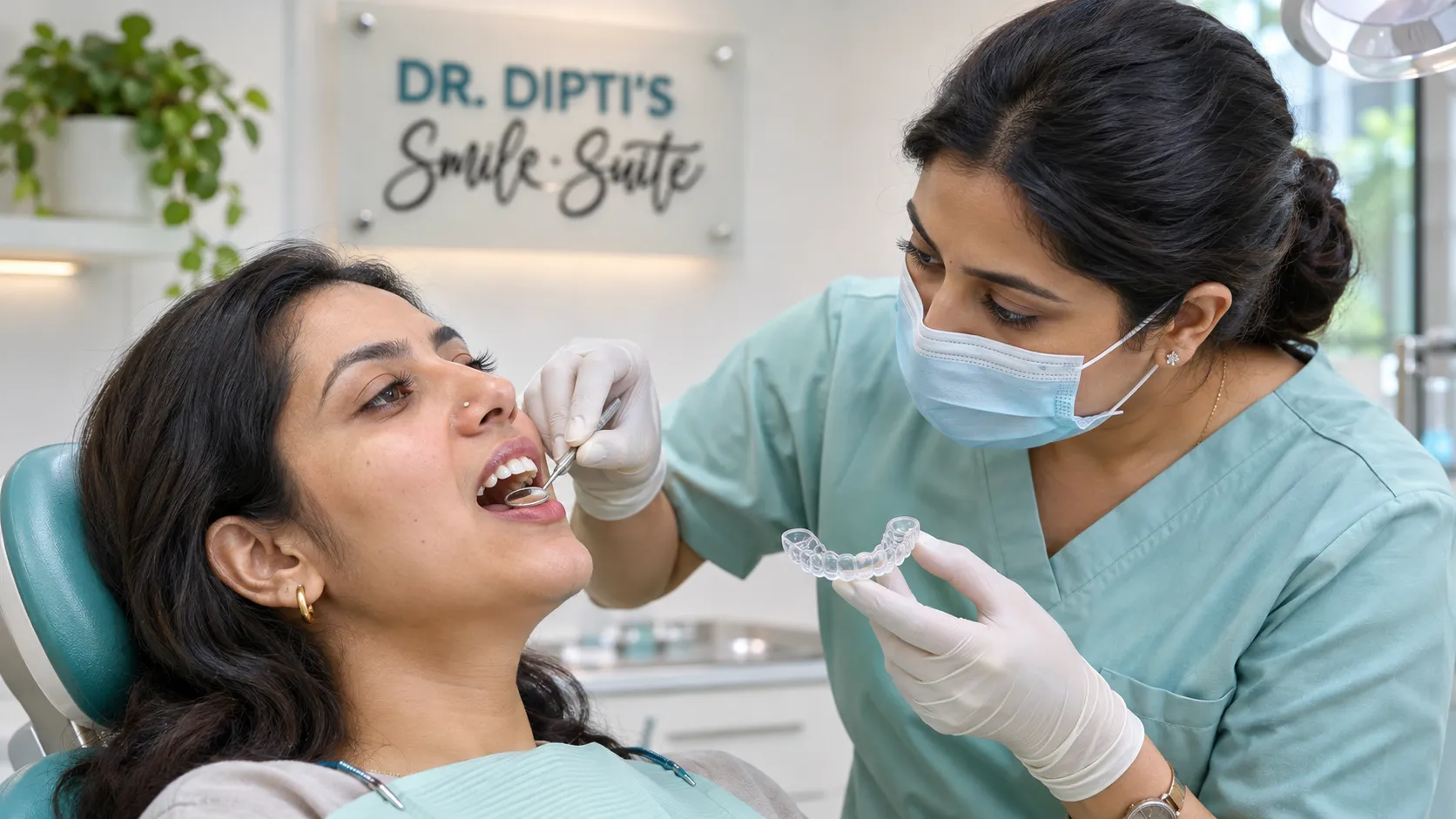
When the permanent teeth have come in with an open bite, protrusion or crowding, braces or Invisalign clear aligners can align the teeth and close the bite. As a Black Diamond Invisalign provider, we plan aligner treatment digitally, so families can see the expected result before starting. Aligners suit many older children, teenagers and adults.
Explore: Invisalign Aligners in Faridabad | Read more: Braces vs Invisalign in 2026
Tongue and speech support
If tongue thrust or speech difficulties persist after the habit stops, we guide families on tongue and swallowing exercises and coordinate with a speech therapist when needed.
Protecting protruding teeth
Children with protruding front teeth should wear a well-fitted mouthguard during sports until the teeth are corrected, to reduce the risk of chipping or knocking out a tooth.
Treating dental injuries and repairs
If protruding teeth have already been chipped, we can restore them with tooth-coloured bonding.
Explore: Composite Filling in Faridabad
Quick guide: age, what is normal, and what to do
| Child’s age | What’s typical | What parents should do |
|---|---|---|
| 0 to 2 years | Sucking is normal and soothing | No action needed; start dental visits by the first birthday |
| 2 to 3 years | Many children start to reduce the habit | Limit pacifier use; gently encourage other comforts |
| 3 to 4 years | AAPD advises encouraging children to stop | Positive reinforcement; dental assessment of the bite |
| 5 to 6 years | Permanent front teeth about to come in | Stronger focus on stopping; consider dentist-supported plan |
| 7 years and above | Changes are more likely to become permanent | Orthodontic assessment; habit appliance or treatment if needed |
Thumb Sucking Myths Common in Indian Homes
“It will stop on its own, don’t worry.” Often true before age four, but if the habit continues into school years, waiting can lead to more orthodontic treatment later.
“Apply chilli or neem on the thumb.” These can burn the skin, hurt the eyes, and create fear. Gentle methods and child-safe products work better.
“Scold the child and they will stop.” Shame and pressure usually increase anxiety, and anxiety increases sucking.
“Baby teeth don’t matter, so it is fine.” The habit affects the jaws and the position of permanent teeth, not just the baby teeth.
“Pacifiers are always bad.” In infancy, pacifiers can soothe babies and are easier to wean than a thumb. What matters is using them wisely and stopping on time.
Get Expert Advice on Thumb Sucking in Faridabad
Thumb sucking is a normal comfort habit, not something to be ashamed of. Most children stop on their own, and many more stop with gentle, positive support at home. When the habit continues into the school years, a timely dental check helps protect the bite, the jaw and your child’s confidence, often with simple steps that avoid larger orthodontic treatment later.
If your child is three or older and still sucking their thumb, or if you have noticed changes in their teeth, book a gentle check-up with us. We will assess your child’s bite, talk with your child in a friendly way, and build a plan that suits your family.
Dr. Dipti’s Smile Suite
SCF 142, Sector 14, HUDA Market, Faridabad, Haryana 121007
Call / WhatsApp: +91 88828 50066
Monday to Saturday: 10:00 AM – 3:00 PM and 5:30 PM – 8:00 PM