
It is common, but it is not normal. Healthy gums do not bleed with regular brushing. When they do, something is irritating or weakening the gum tissue, and that “something” can range from simple plaque to a vitamin shortage, a hormonal change, a medicine, or occasionally an underlying medical condition.
This guide focuses on the causes of bleeding gums: what each cause looks like, the clues that point to it, and when bleeding is a warning sign that needs prompt attention. If you are looking for step-by-step home care, read our companion guide: How to Stop Bleeding Gums at Home and When to Get Help.
Why Do Gums Bleed? The Short Answer
Gums bleed when the tissue becomes inflamed or fragile, so the tiny blood vessels inside break easily under light pressure. In most people, the cause is plaque bacteria at the gumline, which leads to gingivitis. Other causes include brushing too hard, hormonal changes, low vitamin C, smoking, diabetes, blood-thinning medicines and, rarely, blood disorders.
Gum problems are very common in India. A 2020 meta-analysis of 30 studies covering more than 92,000 Indian adults found that 51% had some form of periodontal disease and 46.6% had gingivitis. Worldwide, the WHO estimates that around one billion people have severe gum disease.
Plaque-Related Causes: The Most Common Reasons Gums Bleed
1. Gingivitis (early gum disease)
Plaque is a soft, sticky layer of bacteria that forms on teeth every day. When it stays along the gumline for more than a day or two, the gums react with inflammation: they turn red, puffy and tender, and they bleed when brushed or flossed.
Clues: bleeding while brushing or flossing, red or swollen gum edges, bad breath, no pain or only mild tenderness.
Gingivitis is fully reversible with better cleaning and a professional scaling.
2. Tartar (calculus) build-up
Plaque that isn’t removed hardens into tartar within days. Tartar is rough and porous, and it holds even more bacteria against the gums. It cannot be removed with a toothbrush, so the gums keep bleeding no matter how carefully you brush.
Clues: a hard yellow, brown or grey deposit, especially on the inside of the lower front teeth and along the gumline.
Read more: How Often Should You Get Teeth Scaling and Polishing
3. Periodontitis (advanced gum disease)
If gingivitis continues for months or years, inflammation spreads below the gumline and starts destroying the bone and fibres that hold the teeth. Pockets form between the teeth and gums, and these pockets trap more bacteria.
Clues: bleeding along with receding gums, teeth that look longer, gaps appearing between teeth, persistent bad breath, pus, and loose or drifting teeth.
Read more: Signs of Gum Disease You Shouldn’t Ignore
4. Missing areas while brushing
Many people brush twice a day but miss the same spots every time: the gumline, the inner surfaces of the teeth, and the back molars. Most importantly, a toothbrush cannot reach between the teeth, where gum disease usually starts.
Clues: bleeding concentrated in specific areas, often between teeth or on the back teeth.
Mechanical and Dental Causes
5. Brushing too hard or using a hard brush
Scrubbing hard with a medium or hard brush can injure even healthy gums. Over time, it also pushes the gums back and wears grooves into the teeth near the gumline.
Clues: bleeding right after brushing, sore gums, receding gums on the side opposite your brushing hand, and splayed bristles on a fairly new brush.
6. Starting to floss
Gums that are not used to flossing often bleed for the first several days. This is a sign of existing inflammation, not damage from the floss. The bleeding usually settles within one to two weeks of daily flossing.
7. Faulty fillings, crowns and bridges
Overhanging fillings, rough edges on crowns, and badly fitting bridges create ledges where plaque collects and the brush cannot reach. The gum next to them stays inflamed and bleeds.
Clues: bleeding repeatedly around one particular filling, crown or bridge.
Explore: Composite Filling in Faridabad | Dental Crowns and Bridges in Faridabad
8. Braces, aligners and dentures
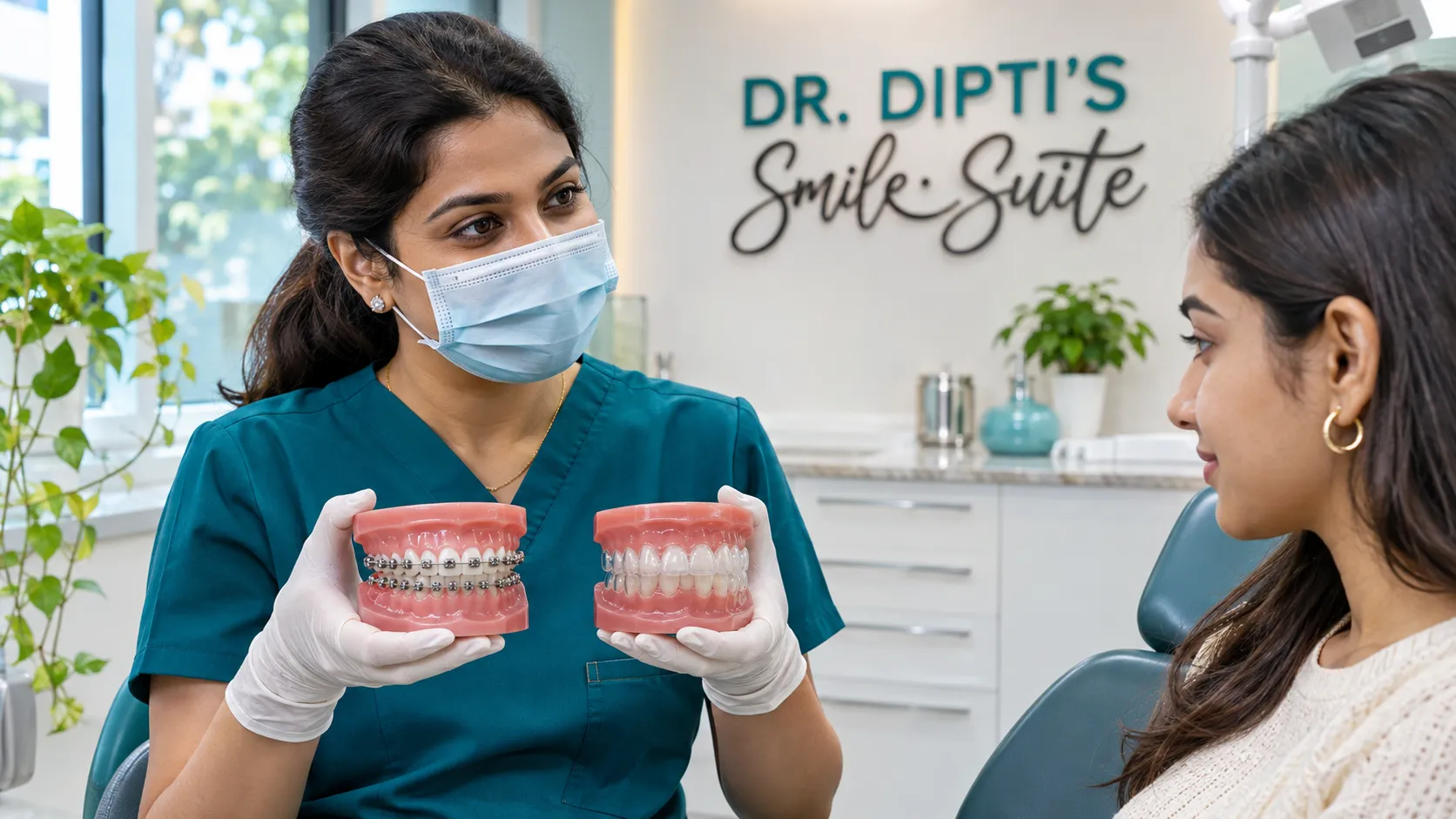
Brackets and wires trap plaque, making the gums around them prone to bleeding. Aligners worn over unbrushed teeth hold bacteria against the gums. Loose or rubbing dentures create sore spots that bleed.
9. Crowded or overlapping teeth
Crooked teeth are harder to clean, so plaque builds up in the same tight spots and the gums there bleed repeatedly.
Explore: Invisalign Aligners in Faridabad | Orthodontics in Faridabad
10. Wisdom tooth gum infection
A partly erupted wisdom tooth often has a gum flap over it that traps food. The gum becomes swollen, painful and bleeds easily. This condition is called pericoronitis.
Read more: Wisdom Tooth Pain: When to See a Dentist
Lifestyle Causes
11. Smoking, gutka, paan and tobacco
Tobacco damages gum tissue and slows healing. It also reduces blood flow to the gums, which can hide bleeding while gum disease progresses underneath. A study in Meerut found that periodontal disease was more severe in smokers and in people who cleaned their teeth with a finger and tooth powder.
Clues: stained teeth, receding gums, bad breath, and sometimes more bleeding after quitting, as normal blood flow to the gums returns.
12. Low vitamin C (and vitamin K)
Severe vitamin C deficiency (scurvy) is rare today. However, research shows that even mildly low vitamin C levels can make gums bleed more easily. A 2021 systematic review in Nutrition Reviews, analysing 15 clinical trials and survey data from over 8,000 people, found that gum bleeding on gentle probing was associated with low vitamin C levels in the blood. Increasing vitamin C helped reduce bleeding in people whose levels were low.
The lead researcher, a dentist, stressed that when your gums bleed, you should look for the reason, and that low vitamin C is one of the possibilities.
Clues: bleeding gums despite reasonable brushing, a diet low in fresh fruit and vegetables, very restrictive diets, or easy bruising.
Good vitamin C sources in Indian diets include amla, guava, oranges, mosambi, lemon, papaya, capsicum, tomatoes and leafy greens. Vitamin K deficiency, which affects blood clotting, is uncommon but can occur with poor absorption or long-term use of certain medicines. Speak to your doctor before starting supplements.
Hormonal Causes
13. Pregnancy
Rising hormone levels make the gums react far more strongly to plaque. Studies report that gingivitis affects 60% to 75% of pregnant women. Gum inflammation increases as pregnancy progresses and usually reduces after delivery.
Gum care during pregnancy matters for more than comfort. A 2021 meta-analysis found that treating gingivitis during pregnancy was associated with a lower risk of preterm birth.
Clues: swollen, bright red gums that bleed easily, typically from the second trimester; sometimes a red, raised lump on the gum (a pregnancy tumour) that bleeds when touched.
Professional cleaning is generally safe during pregnancy, and the second trimester is usually the most comfortable time for treatment.
Puberty, periods, contraceptives and menopause
Hormonal changes during puberty, before periods, with some hormonal contraceptives, and around menopause can all make the gums more sensitive and prone to bleeding.
Medical Conditions That Cause Bleeding Gums
14. Diabetes
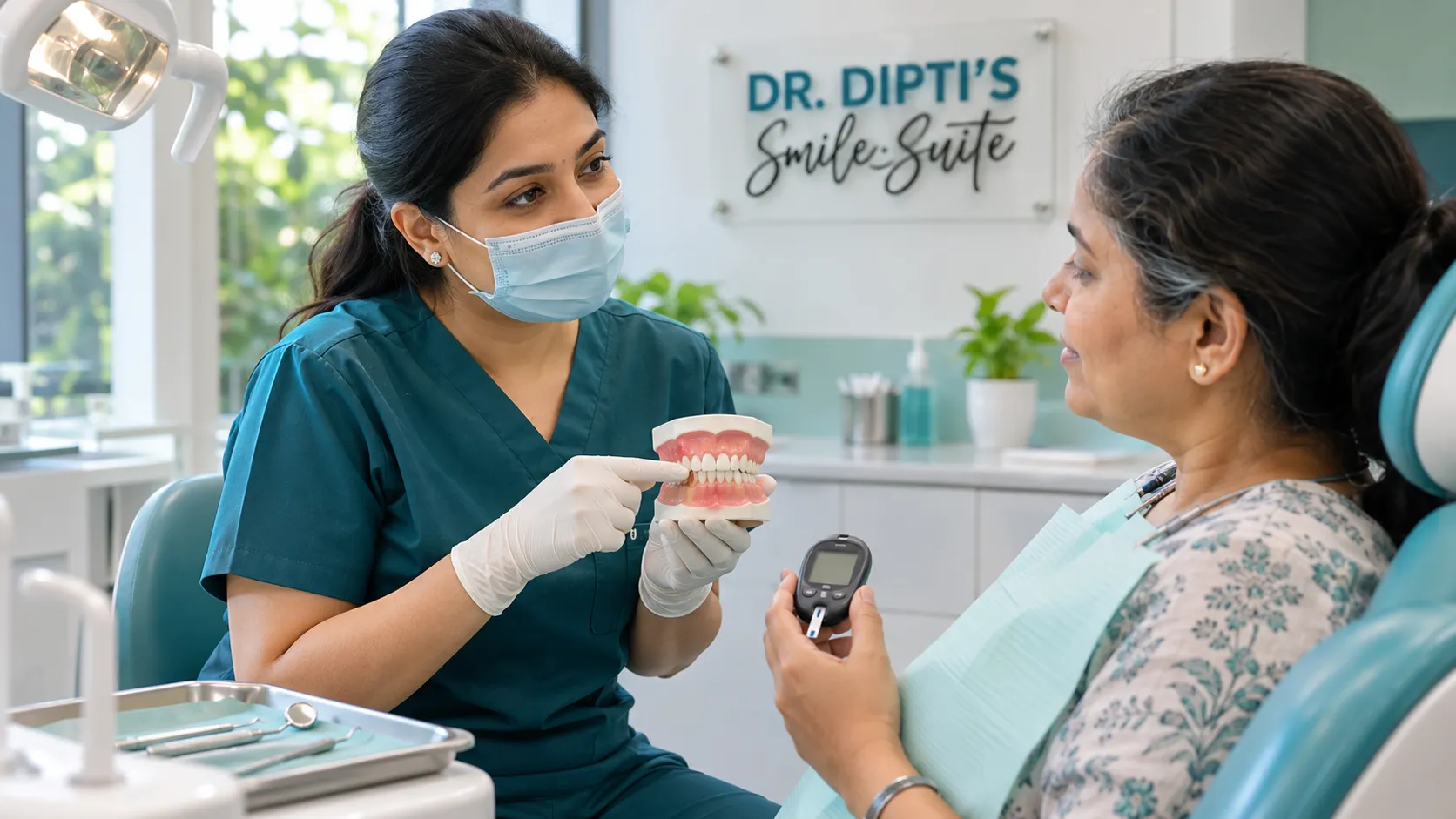
Diabetes and gum disease affect each other. Poorly controlled blood sugar makes gum infections more frequent and more severe, and active gum disease can make blood sugar harder to control.
Clues: bleeding gums along with frequent gum infections, slow healing, dry mouth, and increased thirst or urination.
Blood and clotting disorders
Conditions such as low platelet counts, leukaemia, haemophilia and other clotting disorders can cause bleeding from the gums even without brushing.
Clues: gums that bleed spontaneously or for a long time, together with easy bruising, nosebleeds, heavy periods, unusual tiredness, fever or frequent infections. These signs need prompt medical assessment.
Liver disease and weakened immunity
Liver disease can reduce clotting factors, and conditions that weaken the immune system can make gum infections more severe.
Medicines That Can Cause Bleeding Gums
15. Blood thinners and other medicines
- Blood thinners and antiplatelet medicines, such as aspirin, clopidogrel, warfarin and newer anticoagulants, make the gums bleed more easily and for longer
- Some blood pressure medicines (certain calcium channel blockers), anti-seizure medicines and immune-suppressing medicines can cause gum overgrowth, which traps more plaque and bleeds easily
- Medicines that cause dry mouth reduce saliva’s natural protection, increasing plaque and gum inflammation
Never stop or change a prescribed medicine on your own. Tell your dentist about every medicine you take, and talk to your doctor if you think a medicine is affecting your gums.
Bleeding Gums in Children
Children’s gums can bleed because of:
- Plaque from incomplete brushing
- Teeth coming in, or loose milk teeth
- Braces
- Mouth breathing, which dries the front gums
- Injuries from falls or toothbrush accidents
Spontaneous bleeding in a child, especially with bruising, tiredness, pallor or frequent fevers, should be checked by a doctor promptly.
Explore: Pediatric Dentistry in Faridabad
Quick Guide: Bleeding Gums Causes and Clues
| Cause | Typical clues | What usually helps |
|---|---|---|
| Gingivitis | Bleeding on brushing, red puffy gum edges | Better brushing, daily flossing, scaling |
| Tartar | Hard deposits, persistent bleeding | Professional scaling and polishing |
| Periodontitis | Receding gums, bad breath, loose teeth | Deep cleaning and gum treatment |
| Hard brushing | Bleeding after brushing, worn gumline | Soft brush and gentle technique |
| Faulty fillings or crowns | Bleeding around one restoration | Replacement filling or crown |
| Braces or crowding | Bleeding in hard-to-clean areas | Interdental brushes, orthodontics |
| Wisdom tooth infection | Swollen gum at the back, pain | Cleaning, or wisdom tooth removal |
| Smoking or tobacco | Staining, recession | Quitting, gum treatment |
| Low vitamin C | Bleeding despite good cleaning, low fruit intake | Vitamin C-rich foods; doctor’s advice |
| Pregnancy | Bright red, swollen gums | Gentle cleaning, professional care |
| Diabetes | Frequent gum infections, slow healing | Sugar control plus gum treatment |
| Blood thinners | Easy or prolonged bleeding | Dental care; discuss with doctor |
| Blood disorders | Spontaneous bleeding, bruising, fatigue | Urgent medical evaluation |
When Bleeding Gums Are a Warning Sign
See a dentist within a week or two if:
- Your gums have bled for more than two weeks despite good brushing and flossing
- Your gums are receding, or your teeth look longer
- You have persistent bad breath or a bad taste
- Your teeth feel loose or have started to shift
- Bleeding happens around a crown, implant, bridge or braces
Seek prompt medical attention if:
- Gums bleed on their own, without brushing
- Bleeding doesn’t stop after 15 to 20 minutes of firm pressure
- Bleeding comes with easy bruising, nosebleeds, extreme tiredness, fever or frequent infections
- Bleeding is heavy and you take blood-thinning medicines
How We Find the Cause at Dr. Dipti’s Smile Suite
Treating bleeding gums properly starts with identifying the cause. Your examination includes:
- A detailed history: brushing habits, diet, smoking, pregnancy, medical conditions and every medicine you take.
- A full gum examination: we gently measure the space around each tooth, record where the gums bleed, and check for recession and loose teeth.
- Digital X-rays: to check the bone supporting your teeth and look for tartar below the gumline.
- A check of existing dental work: fillings, crowns, bridges, braces or dentures that could be trapping plaque.
- Medical referral when needed: if anything suggests diabetes, a vitamin deficiency or a blood disorder, we advise you to see your doctor for blood tests.
Treatment Depends on the Cause
Once the cause is clear, treatment is usually straightforward:
- Plaque and tartar: professional scaling and polishing, plus a personalised home-care routine
- Periodontitis: deep cleaning (scaling and root planing) and regular gum maintenance
- Faulty dental work: smooth, well-fitting composite fillings, and crowns designed and made on-site with CAD/CAM technology
- Crowding: braces or Invisalign aligners, once the gums are healthy
- Wisdom tooth infection: cleaning, and removal of the tooth if infections keep returning
Explore: Oral Surgery in Faridabad
- Teeth lost to gum disease: dental implants, bridges or full mouth rehabilitation after the gums are stable
Explore: Dental Implants in Faridabad
- Medical causes: gum care alongside treatment from your doctor
For safe home steps you can start today, see our step-by-step guide: How to Stop Bleeding Gums at Home and When to Get Help.
How to Prevent Bleeding Gums
- Brush twice a day for two minutes with a soft brush, angled towards the gumline
- Clean between your teeth daily with floss, interdental brushes or a water flosser
- Get a check-up and scaling every six months
- Eat fresh fruit and vegetables every day
- Avoid all forms of tobacco
- Keep diabetes and other health conditions well controlled
- Replace your toothbrush every three months
- Get rough fillings, loose crowns and ill-fitting dentures fixed early
Find the Cause of Your Bleeding Gums in Faridabad
Bleeding gums are an early warning that is easy to ignore and easy to act on. In most cases, the cause is plaque and tartar, and the fix is simple. Sometimes, though, bleeding gums are the first sign of a vitamin gap, a hormonal change, diabetes or a medicine effect. Finding the real cause is what makes the bleeding stop for good.
At Dr. Dipti’s Smile Suite in Sector 14, Faridabad, we take the time to examine your gums thoroughly, explain the cause clearly, and treat it with the gentlest effective approach.
Dr. Dipti’s Smile Suite
SCF 142, Sector 14, HUDA Market, Faridabad, Haryana 121007
Call / WhatsApp: +91 88828 50066
Monday to Saturday: 10:00 AM – 3:00 PM and 5:30 PM – 8:00 PM