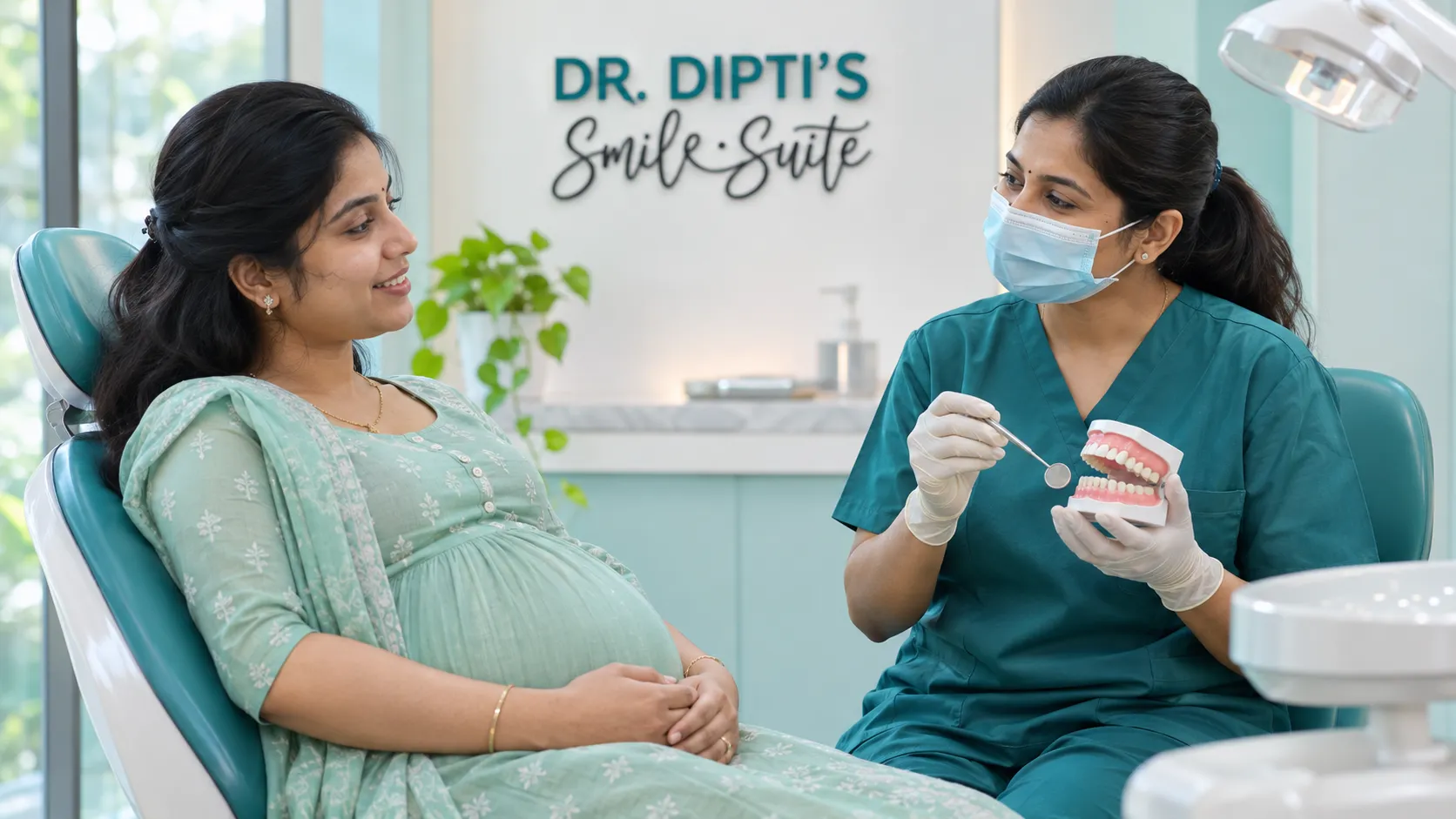
The truth is reassuring. Most dental care is not only safe during pregnancy, it is recommended. Delaying treatment can be riskier for both mother and baby than getting it done.
This guide explains:
- Which dental treatments are safe during pregnancy
- The best time to have them
- What is safe about X-rays, anaesthesia and medicines
- Which treatments are better postponed until after your baby arrives
Is Dental Treatment Safe During Pregnancy?
Yes. The American Dental Association states that preventive, diagnostic and restorative dental treatment is safe throughout pregnancy, and that local anaesthetics may be used. The American College of Obstetricians and Gynecologists (ACOG) agrees. Its guidance tells obstetricians to reassure patients that dental check-ups, X-rays and local anaesthesia are safe in pregnancy.
ACOG also advises that conditions needing prompt treatment, such as extractions, root canals and fillings for decay, can be managed at any time during pregnancy. An ACOG committee member put it simply: pregnancy is not a reason to delay root canals or fillings, because putting off treatment may lead to further complications.
An untreated dental infection is far more concerning during pregnancy than the treatment needed to fix it.
Why Dental Care Matters More During Pregnancy
Pregnancy gingivitis is very common
Pregnancy hormones make the gums react much more strongly to plaque. Studies report that gingivitis affects 60% to 75% of pregnant women. Gums become red, swollen and tender, and bleed easily when brushing. This usually begins in the second month and peaks in the later months.
Read more: Bleeding Gums Causes: Why Your Gums Bleed and What It Means
Gum health and pregnancy outcomes
Researchers have studied whether gum disease affects pregnancy outcomes. A 2021 meta-analysis of three clinical trials found that treating gingivitis during pregnancy was associated with a lower risk of preterm birth and higher birth weight. Overall, the evidence on gum disease and pregnancy outcomes is still mixed, and earlier reviews did not find a clear protective effect. What is clear is that gum treatment during pregnancy is safe and improves the mother’s oral health.
Higher risk of tooth decay
Several pregnancy changes increase cavity risk:
- Frequent snacking and cravings for sweets
- Morning sickness and vomiting, which bring stomach acid into the mouth
- Acid reflux in later pregnancy
- A stronger gag reflex, which makes brushing back teeth harder
- Tiredness, which makes routines slip
Protecting your baby’s future teeth
Mothers with untreated tooth decay can pass decay-causing bacteria to their babies through shared spoons, tasting food or kissing. Healthy teeth during pregnancy help give your baby a better start too.
Safe Dental Treatments During Pregnancy
Dental check-ups and examinations
Safe at any stage. A check-up during pregnancy helps catch gum problems and cavities early. Tell us how many weeks pregnant you are, about any pregnancy complications, and all medicines and supplements you take.
Scaling and polishing (professional cleaning)
Safe and recommended. A professional cleaning removes plaque and tartar that keep pregnancy gingivitis going. Many women notice less bleeding and swelling within a week or two.
Read more: How Often Should You Get Teeth Scaling and Polishing
Deep cleaning for gum disease (scaling and root planing)
Safe during pregnancy. The ADA recognises scaling and root planing as safe if periodontitis develops during pregnancy. Treating gum infection reduces inflammation for both comfort and health.
Dental X-rays
Safe when needed. The ADA considers dental X-rays safe at any stage of pregnancy. Modern digital dental X-rays use very low radiation doses and are aimed at the mouth, far from the baby. At our clinic, we take X-rays only when they are needed to diagnose or treat a problem, such as a painful tooth or a suspected infection.
Local anaesthesia (numbing injections)
Safe during pregnancy. Local anaesthetics such as lidocaine, with or without adrenaline (epinephrine), are considered safe for dental treatment in pregnancy. We use only the amount needed to keep you comfortable. Treating pain properly is better for you and your baby than enduring it.
Fillings
Safe at any stage. Cavities should be treated rather than left to grow. We use tooth-coloured composite fillings that bond to the tooth.
Explore: Composite Filling in Faridabad
Root canal treatment
Safe when needed. If a tooth is infected or the nerve is inflamed, root canal treatment removes the source of pain and infection while saving the tooth. Delaying it can allow infection to spread, which is more dangerous during pregnancy.
Explore: Root Canal Treatment in Faridabad
Tooth extraction
Safe when needed. A tooth that cannot be saved, or a wisdom tooth causing repeated infections, can be removed during pregnancy. Routine extractions are best planned in the second trimester when possible, but urgent extractions can be done at any time.
Read more: Wisdom Tooth Pain: When to See a Dentist | Explore: Oral Surgery in Faridabad
Emergency dental care
Safe and important at any time. Severe toothache, swelling, a broken tooth or a dental injury should be treated promptly in any trimester. Spreading facial swelling, fever or difficulty swallowing needs urgent care.
Read more: Toothache at Night: Home Remedies Until You See a Dentist
Treatments Usually Postponed Until After Delivery
Some dental procedures are elective or cosmetic. They are not unsafe in themselves, but there is no medical need to do them during pregnancy, so we usually plan them for after your baby is born:
- Teeth whitening: there is limited research on whitening during pregnancy, and pregnancy gums are more sensitive, so we recommend waiting until after delivery and breastfeeding.
Explore: Teeth Whitening in Faridabad
- Veneers and smile makeovers: these are best planned when you are comfortable sitting for longer appointments and your gums are stable.
Explore: Dental Veneers in Faridabad | Smile Makeover in Faridabad
- Dental implant surgery: elective implant placement is usually planned after delivery. Missing teeth can be temporarily replaced if needed.
Explore: Dental Implants in Faridabad
- Starting new orthodontic treatment: many women prefer to start braces or Invisalign after pregnancy. If you are already in treatment, it can usually continue, with extra attention to gum health.
Explore: Invisalign Aligners in Faridabad
- Large elective restorative work: major non-urgent crown and bridge work is often planned after delivery, unless a tooth needs protection sooner.
The Best Time for Dental Treatment During Pregnancy
First trimester (weeks 1 to 13)
Check-ups, cleanings and urgent treatment are safe. Because nausea and tiredness are often worst at this stage, many women prefer to schedule non-urgent treatment for the second trimester. If you have pain or infection, don’t wait.
Second trimester (weeks 14 to 27)
This is usually the most comfortable time for planned dental treatment. Nausea has often settled, and lying in the dental chair is still easy. It is ideal for cleanings, fillings and any non-urgent care.
Third trimester (weeks 28 to 40)
Treatment is still safe, but appointments are kept shorter. Lying flat on your back can press on a major blood vessel and make you feel dizzy or faint, so we position you comfortably, slightly tilted to the left, with a cushion, and give you breaks. Urgent treatment should not be delayed.
Quick guide: dental treatment during pregnancy
| Treatment | During pregnancy | Best timing |
|---|---|---|
| Check-up and examination | Safe | Any trimester |
| Scaling and polishing | Safe and recommended | Any trimester, ideally second |
| Deep cleaning (scaling and root planing) | Safe | Second trimester if possible |
| Dental X-rays (when needed) | Safe | Any trimester |
| Local anaesthesia | Safe | Any trimester |
| Fillings | Safe | Any trimester, ideally second |
| Root canal treatment | Safe when needed | Any time it is needed |
| Tooth extraction | Safe when needed | Any time if urgent; second if planned |
| Emergency care | Safe and important | Immediately |
| Teeth whitening | Postpone | After delivery and breastfeeding |
| Veneers or smile makeover | Postpone | After delivery |
| Elective implant surgery | Postpone | After delivery |
Medicines and Pregnancy: What Your Dentist Considers
Always tell your dentist that you are pregnant and which medicines and supplements you take. We will coordinate with your obstetrician if needed.
- Pain relief: some pain relievers that are fine for most adults are generally avoided in pregnancy, especially in later months. Do not self-medicate for toothache. Ask your dentist or obstetrician which option is safe for you.
- Antibiotics: when antibiotics are truly needed for a dental infection, pregnancy-safe options are chosen. Some antibiotics, such as tetracyclines, are avoided in pregnancy because they can affect the baby’s developing teeth and bones.
- Mouthwashes: an alcohol-free mouthwash is preferred. Ask before using any medicated rinse for long periods.
Common Dental Problems During Pregnancy and What Helps
Bleeding and swollen gums
Brush gently twice a day with a soft brush, clean between your teeth daily, and get a professional cleaning. Bleeding usually improves within weeks.
Read more: How to Stop Bleeding Gums at Home and When to Get Help
Pregnancy “tumour” (pregnancy epulis)
Some women develop a red, raised, harmless lump on the gum that bleeds easily. It often shrinks after delivery. If it bleeds a lot or interferes with eating, it can be removed.
Morning sickness and enamel erosion
Stomach acid softens enamel. After vomiting:
- Rinse your mouth with plain water
- Wait about 30 to 60 minutes before brushing, so you don’t brush away softened enamel
- Use a fluoride toothpaste to strengthen the teeth
Cravings and cavities
Choose tooth-friendly snacks such as fruit, curd, paneer, roasted chana or makhana. Keep sweets to mealtimes, and drink water between meals.
Strong gag reflex
Use a small-headed, soft toothbrush, brush slowly, try a mild-flavoured toothpaste, and focus on breathing through your nose.
Sensitive teeth
Use a desensitising toothpaste with fluoride. Sudden or lingering sensitivity should be checked, as it may signal decay.
Read more: Sensitive Teeth: Causes and Treatment Options
Pregnancy and diabetes
Women with gestational diabetes or pre-existing diabetes are more prone to gum problems, so regular cleanings are especially important.
Read more: Diabetes and Oral Health: What You Need to Know
Daily Oral Care Routine During Pregnancy
- Brush twice a day for two minutes with a soft brush and fluoride toothpaste.
- Clean between your teeth once a day with floss or interdental brushes.
- Rinse with water after snacks, and after vomiting.
- Drink plenty of water.
- Limit sugary snacks and drinks between meals.
- Book a dental check-up early in your pregnancy, and a cleaning in the second trimester.
Your Baby’s Teeth: Planning Ahead
Good dental habits during pregnancy prepare you for your baby’s oral care:
- Avoid sharing spoons or pre-tasting your baby’s food
- Wipe your baby’s gums after feeds
- Book your baby’s first dental visit by their first birthday
Read more: First Dental Visit for Your Child: What to Expect in Faridabad | Explore: Pediatric Dentistry in Faridabad
Dental Care While Breastfeeding
Routine dental care, local anaesthesia and most dental treatments are compatible with breastfeeding. Tell your dentist you are breastfeeding so that any medicines are chosen appropriately. Whitening and other cosmetic treatments can usually be planned once breastfeeding is established or complete, depending on your preference and your doctor’s advice.
Gentle Dental Care for Expectant Mothers in Faridabad
Pregnancy is a time to take extra care of yourself, and that includes your teeth and gums. Regular check-ups, a professional cleaning, and prompt treatment of any pain or infection are safe and important for both you and your baby.
At Dr. Dipti’s Smile Suite in Sector 14, Faridabad, we provide calm, unhurried dental care for expectant mothers. Appointments are planned around your trimester and comfort, with coordination with your obstetrician whenever needed.
Dr. Dipti’s Smile Suite
SCF 142, Sector 14, HUDA Market, Faridabad, Haryana 121007
Call / WhatsApp: +91 88828 50066
Monday to Saturday: 10:00 AM – 3:00 PM and 5:30 PM – 8:00 PM