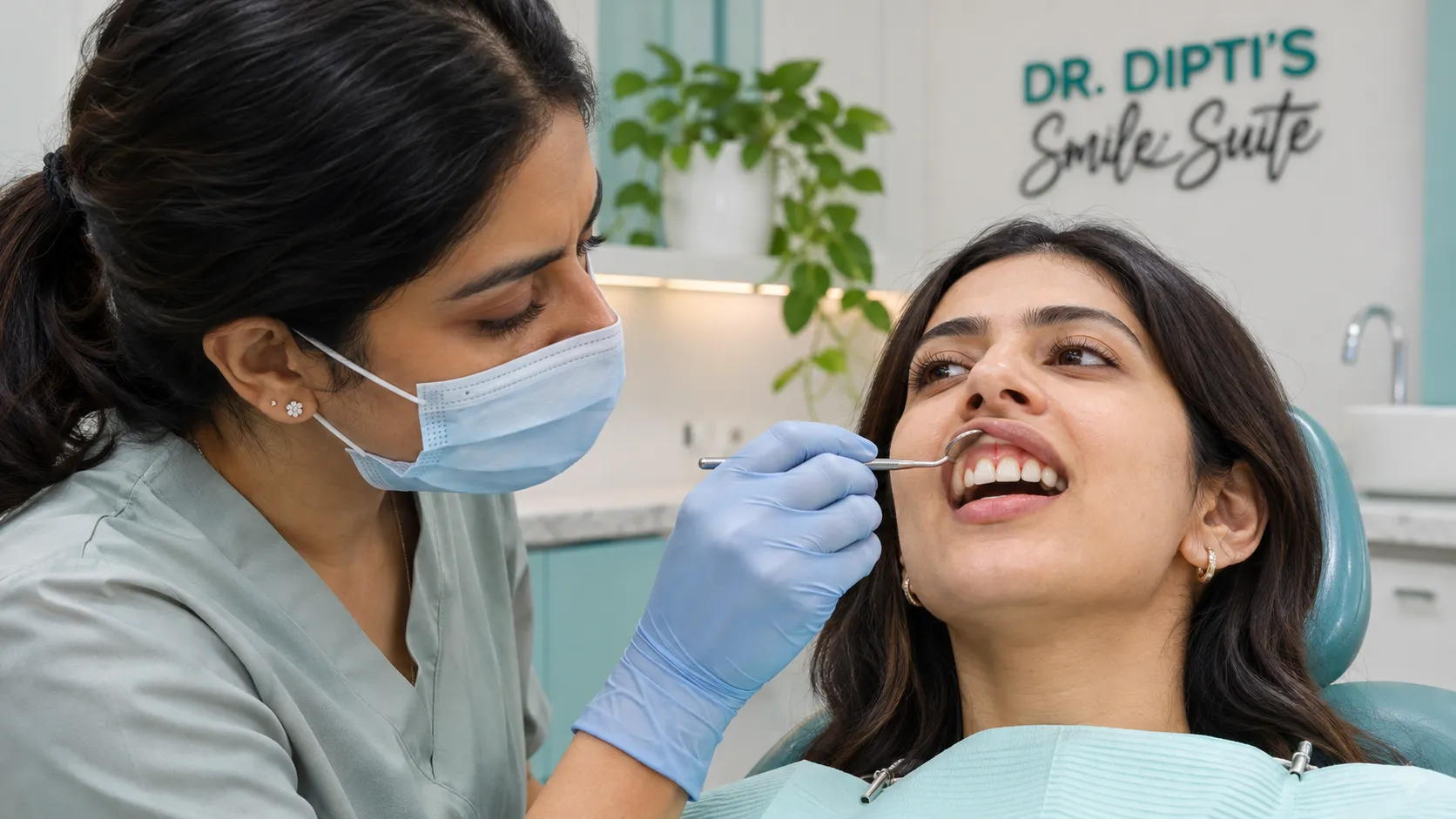
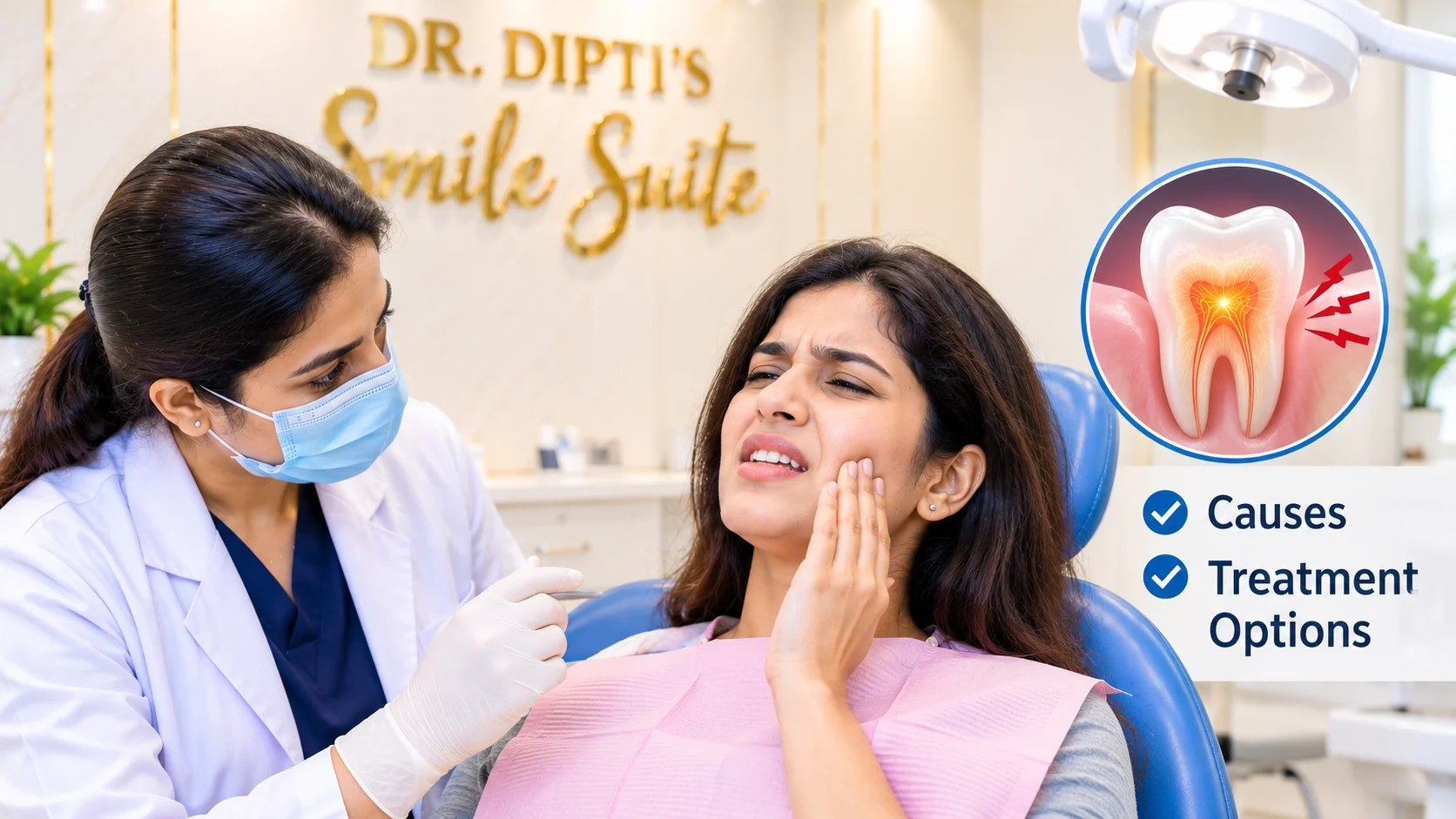
This guide explains sensitive teeth causes and treatment in plain language. It covers why sensitivity happens, which causes are harmless and which are warning signs, and the full range of treatment options, from a ₹150 toothpaste to bonding, crowns and gum care. It also explains when home care is enough and when you need a proper examination.
The condition is common. A 2019 systematic review in the Journal of Dentistry put the best overall estimate of dentine hypersensitivity at 11.5%, with an average of 33.5% across all studies. Indian data shows a similar picture. A study of 404 patients in Karnataka found a prevalence of 20.6%, highest in people aged 36–45 and more common in women. Most people simply live with it. In a Navi Mumbai study, people with moderate sensitivity mostly relied on desensitising toothpaste at home, and only 8.8% had visited a dental practice.
At our clinic in Faridabad, sensitivity is one of the most common reasons patients first walk in. It is also one of the most rewarding problems to treat, because the cause can almost always be found.
What Sensitive Teeth Actually Means
Each tooth has a hard outer layer of enamel on the crown and a layer called cementum over the root. Under both sits dentine, a softer layer full of thousands of microscopic tubes (tubules) that run towards the nerve in the centre of the tooth.
While enamel and gums cover the dentine, the nerve stays protected. When the dentine is exposed, triggers such as cold, heat, sugar, acid or touch move the fluid inside those tiny tubes. The nerve reads that movement as pain. Dentists call this dentine hypersensitivity.
The classic pattern is easy to recognise:
- A sharp, sudden pain lasting a few seconds
- Triggered by cold drinks, ice cream, sweets, sour foods, cold air or brushing
- Pain that stops once the trigger is removed
- Often felt near the gumline, where the tooth meets the gum
How sensitivity differs from other tooth pain
Not every twinge is “just sensitivity.” Pain that lingers for 30 seconds or more after a cold drink, throbs on its own, wakes you at night, or hurts when you bite down usually points to something deeper. That could be decay reaching the nerve, a cracked tooth or an infection. These conditions look similar at first but need very different treatment, which is why a diagnosis matters more than the toothpaste you pick.
Read more: How Do I Know If My Tooth Needs a Root Canal or a Filling
Common Causes of Sensitive Teeth
Sensitivity is a symptom, not a disease. The real work is finding out why the dentine became exposed. In our practice, these are the causes we see most often.
Gum recession
When gums pull back, they expose the root surface, which has no enamel to protect it. Recession comes from gum disease, aggressive brushing, a misaligned tooth that sits outside the bone, or simply age. The Karnataka study found sensitivity was significantly linked to gum recession, tooth wear and teeth positioned outward. If your teeth look “longer” than they used to, recession is a likely cause.
Read more: Signs of Gum Disease You Shouldn’t Ignore
Enamel erosion from acidic food and drinks
Acid softens enamel, and repeated exposure wears it thin. Common sources in Indian diets include:
- Nimbu pani, citrus fruits and fruit juices
- Carbonated soft drinks and energy drinks
- Tamarind, pickles and amchur
- Frequent sipping of tea or coffee with sugar
- Acid reflux and frequent vomiting, which bring stomach acid into the mouth
Brushing immediately after an acidic drink makes it worse, because the softened enamel wears away more easily.
Brushing too hard or with the wrong brush
Hard bristles and a forceful side-to-side scrub act like sandpaper at the gumline. Over months, this creates small notches near the gums and pushes the gums back. Researchers found gum recession and tooth wear were significantly associated with brushing in a horizontal direction and using medium-hardness bristles.
Grinding and clenching (bruxism)
Many people grind their teeth at night or clench during stressful workdays without knowing it. The constant load flattens the biting surfaces, chips enamel and causes tiny cracks at the neck of the tooth. Morning jaw ache, flattened teeth and headaches near the temples are common clues.
Cracked teeth and worn-out fillings
A crack, even an invisible one, lets triggers reach the dentine directly. Old silver or composite fillings can also leak at the edges over time. Pain on biting, especially when you release the bite, is a typical sign of a cracked tooth.
Tooth decay
A cavity breaks through enamel and exposes dentine. Early decay often shows up as sensitivity to sweets before it causes any real ache. Left alone, it progresses towards the nerve.
Dental fluorosis and developmental enamel defects
Fluorosis is common in parts of Haryana and North India where groundwater fluoride levels are high. It can leave enamel mottled, pitted and weaker. Children with a condition called molar-incisor hypomineralisation (MIH) can also have chalky, sensitive teeth from a young age.
Sensitivity after dental treatment
Short-term sensitivity is normal after a deep cleaning, a new filling, a crown or teeth whitening. It usually settles within a few days to a couple of weeks. One review notes that sensitivity was reported in 84.5% of patients after periodontal treatment, so mild discomfort after gum therapy is expected and manageable. Sensitivity that gets worse rather than better should be checked.
Signs That Sensitivity Needs a Dentist, Not Just Toothpaste
A desensitising toothpaste is a reasonable first step for mild, general sensitivity. Book an examination instead of waiting if you notice any of these:
- Pain that lingers for more than 30 seconds after the trigger
- Throbbing pain that starts on its own or wakes you at night
- Pain when chewing or biting down
- Sensitivity limited to one tooth
- Swelling, a pimple on the gum, or a bad taste
- Bleeding gums or teeth that look longer than before
- No improvement after four to six weeks of using a sensitivity toothpaste
- A visible chip, crack, dark spot or broken filling
These signs suggest decay, a crack, infection or gum disease. Toothpaste can mask these problems, but it cannot fix them.
How We Diagnose Tooth Sensitivity at Dr. Dipti’s Smile Suite
Treating sensitivity without a diagnosis is guesswork. Our examination focuses on finding the exact source:
- History: which triggers cause pain, how long it lasts, your diet, brushing habits, grinding, recent dental work and acid reflux.
- Clinical tests: a gentle air blast and touch test on each suspected tooth to map which surfaces respond.
- Gum assessment: measuring recession and pocket depth to check for gum disease.
- Bite and wear check: looking for flattened, chipped or cracked teeth that point to grinding.
- Digital X-rays and intraoral scanning: checking for hidden decay, leaking fillings, cracks and infection near the root.
Once we know the cause, we can match the treatment to it. Some patients need only a better brush and a specific toothpaste. Others need a small bonded filling or gum care. Only a few need more involved work.
Sensitive Teeth Treatment Options
Treatment works best in layers: protect the exposed dentine, fix the cause, and prevent it from coming back. Here are the options, starting with the simplest.
Desensitising toothpaste and home-care products
For mild sensitivity, the right toothpaste often brings real relief within two to four weeks of twice-daily use. Look for these active ingredients:
- Potassium nitrate: calms the nerve’s response to triggers
- Stannous fluoride: seals the open tubules and strengthens enamel
- Arginine with calcium carbonate: plugs tubules with a mineral layer
- Calcium sodium phosphosilicate (NovaMin): deposits a protective mineral layer over exposed dentine
A useful tip: after brushing at night, spit out the toothpaste but do not rinse with water. This leaves the active ingredients on the teeth longer. Pair the toothpaste with a soft-bristled brush and, if you have gum disease, a prescribed mouthwash. During your visit, we will recommend specific products based on what we find.
In-clinic desensitising agents and fluoride varnish
When home care is not enough, we apply professional-strength desensitisers and high-concentration fluoride varnish directly to the sensitive areas. These seal the exposed tubules and strengthen the surface. The procedure is painless, takes only minutes, and often gives noticeable relief the same day. It may need repeating every few months for lasting results.
Composite bonding for exposed roots and notches
If recession or hard brushing has worn notches into the tooth near the gumline, we cover the area with tooth-coloured composite resin. Bonding seals the dentine, restores the shape of the tooth and stops further wear. It is usually done in a single visit without drilling healthy tooth.
Explore: Composite Filling in Faridabad
Professional cleaning and gum treatment
Tartar along the gumline irritates the gums and drives recession. Scaling and polishing removes it. If gum disease is present, deeper cleaning below the gumline helps the gums heal and stabilise. Treating the gums treats the root cause instead of only masking pain.
Read more: How Often Should You Get Teeth Scaling and Polishing
Fillings for decay and replacing leaking restorations
Decay-related sensitivity resolves only when the decay is removed and the tooth is sealed. We replace old, leaking or cracked fillings with well-sealed, tooth-coloured composite restorations that bond to the tooth.
Custom night guards for grinding
For patients who grind or clench, a custom-made night guard protects the enamel from further wear and reduces the load on cracked or tired teeth. It is made from a precise scan of your mouth, so it fits comfortably and does not shift during sleep. As a prosthodontist, I also check how the bite comes together, because an uneven bite can overload specific teeth.
Dental crowns for cracked or heavily worn teeth
When a tooth is cracked, heavily filled or badly worn, a crown covers and protects the whole tooth. At our clinic, we design and make many crowns on-site with CAD/CAM technology, so suitable cases can be completed in a single visit.
Explore: Dental Crowns and Bridges in Faridabad
Root canal treatment when the nerve is affected
If sensitivity has turned into lingering or spontaneous pain, the nerve may be inflamed or infected. Root canal treatment removes the damaged nerve tissue, disinfects the canals and seals the tooth, ending the pain while saving the natural tooth. Modern root canal treatment is done under local anaesthesia and usually feels similar to getting a filling.
Explore: Root Canal Treatment in Faridabad | Read more: Root Canal Treatment Cost in Faridabad: A Clear Price Guide
Veneers, fluorosis treatment and full mouth rehabilitation
Where enamel is weak, mottled or worn across several front teeth, porcelain or composite veneers can protect the surface and improve appearance at the same time. Fluorosis-affected teeth respond well to a combination of conservative treatment and veneers. For patients with widespread erosion or wear from long-term grinding, full mouth rehabilitation rebuilds the bite and protects all the teeth together.
Explore: Dental Veneers in Faridabad | Smile Makeover in Faridabad
Orthodontics and Invisalign for teeth out of position
A tooth sitting too far forward often has thin bone and gum covering it, which makes recession and sensitivity more likely. Aligning the teeth with braces or Invisalign clear aligners can place them back within the bone and spread biting forces more evenly. As a Black Diamond Invisalign provider, we plan aligner treatment digitally so you can see the expected result before you begin.
Explore: Invisalign Aligners in Faridabad | Orthodontics in Faridabad
Dental implants when a tooth cannot be saved
Occasionally a tooth is too badly cracked or broken down to restore. In those cases, extraction followed by a dental implant gives a permanent, sensitivity-free replacement that looks and works like a natural tooth.
Explore: Dental Implants in Faridabad
Quick guide: cause and matching treatment
| Cause of sensitivity | Most suitable treatment |
|---|---|
| Mild general sensitivity | Desensitising toothpaste, soft brush, fluoride varnish |
| Gum recession | Gum treatment, scaling, composite bonding over exposed root |
| Brushing notches near gumline | Composite bonding, brushing technique correction |
| Grinding and clenching | Custom night guard, bite correction, crowns if cracked |
| Decay or leaking fillings | Tooth-coloured composite filling |
| Cracked tooth | Crown; root canal treatment if the nerve is affected |
| Nerve inflammation or infection | Root canal treatment |
| Widespread erosion or fluorosis | Veneers, full mouth rehabilitation |
| Tooth out of alignment | Braces or Invisalign aligners |
Sensitivity During Cosmetic and Children’s Treatment
Teeth whitening: Temporary sensitivity is a known side effect of whitening. Before Zoom whitening, we check for exposed roots, decay and leaking fillings, then apply desensitising agents before and after the session. Most patients feel only mild, short-lived sensitivity that fades within a day or two.
Read more: Safe Teeth Whitening in Faridabad That Won’t Hurt | Explore: Teeth Whitening in Faridabad
Aligners and braces: Mild tenderness for a day or two after each new aligner set or braces adjustment is normal. This is pressure from the teeth moving, not dentine hypersensitivity.
Children: A child who avoids cold foods, cries while brushing or has chalky, discoloured molars may have decay or enamel defects. Our pediatric dentistry team uses child-friendly fluoride applications, sealants and gentle fillings to protect young teeth.
Explore: Pediatric Dentistry in Faridabad
Daily Habits That Protect Sensitive Teeth
Treatment works best when daily habits support it. These changes make a real difference:
- Use a soft-bristled brush and gentle, short strokes angled towards the gumline, not a hard horizontal scrub
- Brush twice a day with a fluoride or desensitising toothpaste, and do not rinse after the night-time brush
- Wait about 30–60 minutes after acidic food or drinks before brushing
- Drink acidic or sugary drinks with meals rather than sipping them throughout the day, and use a straw where practical
- Rinse with plain water after tea, coffee, juices or sour snacks
- Avoid using teeth to open packets or bottle caps
- Wear your night guard if one has been made for you
- Get scaling and a check-up every six months, or as advised for your gums
- See a doctor about acid reflux if heartburn is frequent, because it affects teeth as well
Get Relief From Sensitive Teeth in Faridabad
Sensitive teeth are your mouth’s early warning system. The jolt from a cold drink is telling you that dentine is exposed somewhere. A short examination can show whether that is due to tired gums, a brushing habit, night-time grinding or a tooth that needs repair. In most cases the fix is simple, comfortable and quick, especially when it happens early.
If sensitivity has been changing how you eat, drink or brush, book a consultation. We will find the cause, explain your options clearly with costs upfront, and start with the least invasive treatment that solves the problem.
Dr. Dipti’s Smile Suite
SCF 142, Sector 14, HUDA Market, Faridabad, Haryana 121007
Call / WhatsApp: +91 88828 50066
Monday to Saturday: 10:00 AM – 3:00 PM and 5:30 PM – 8:00 PM