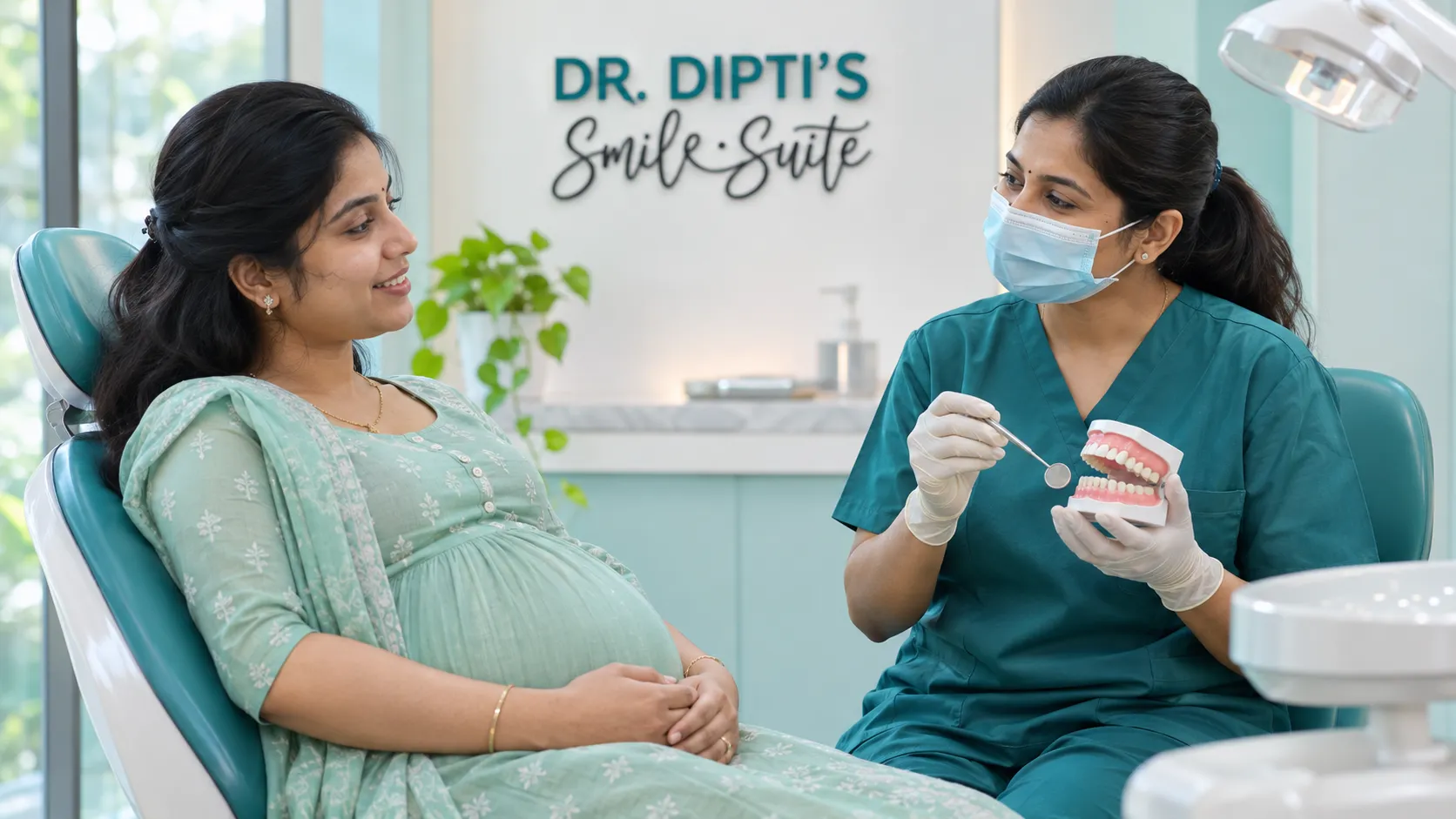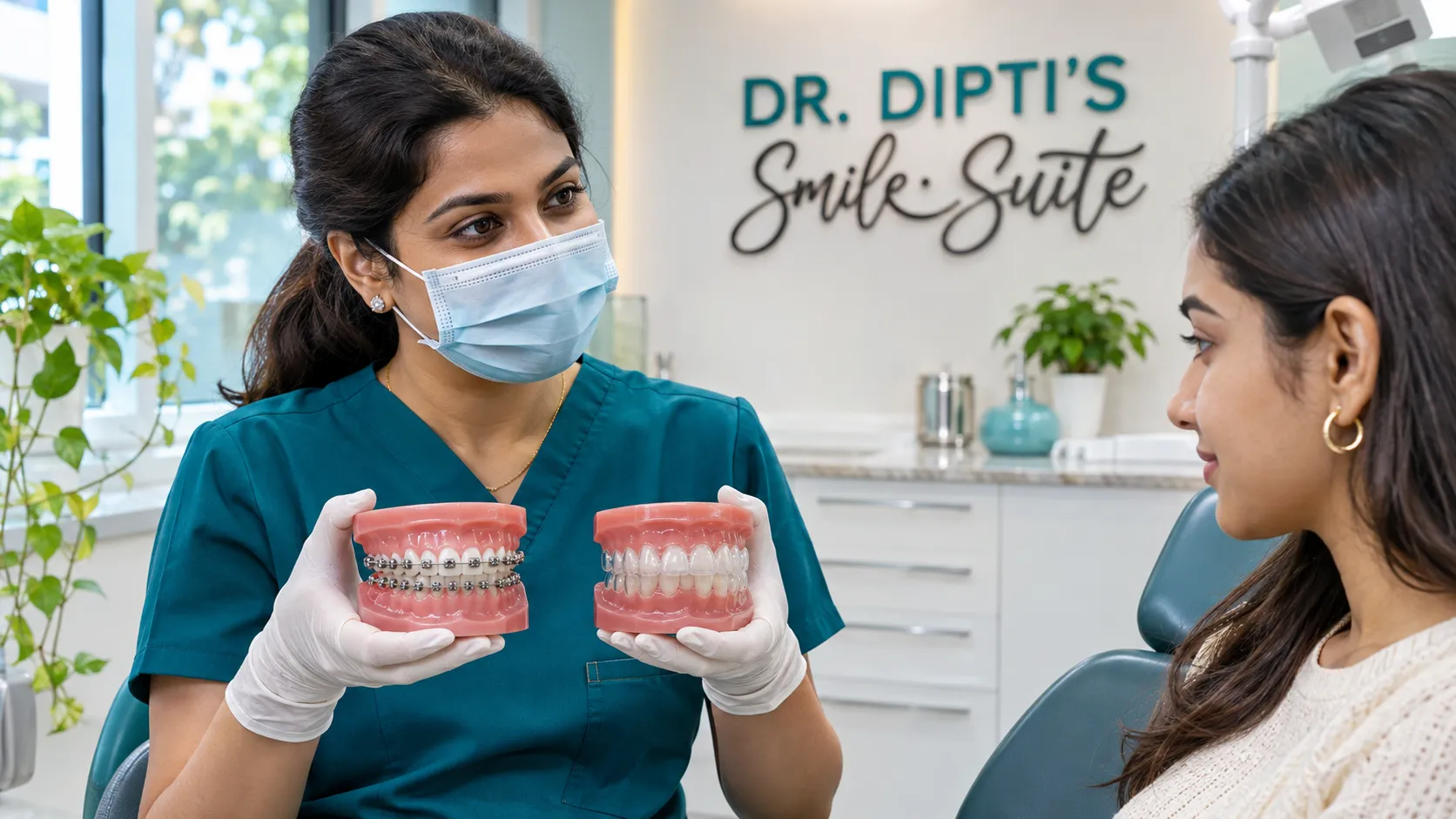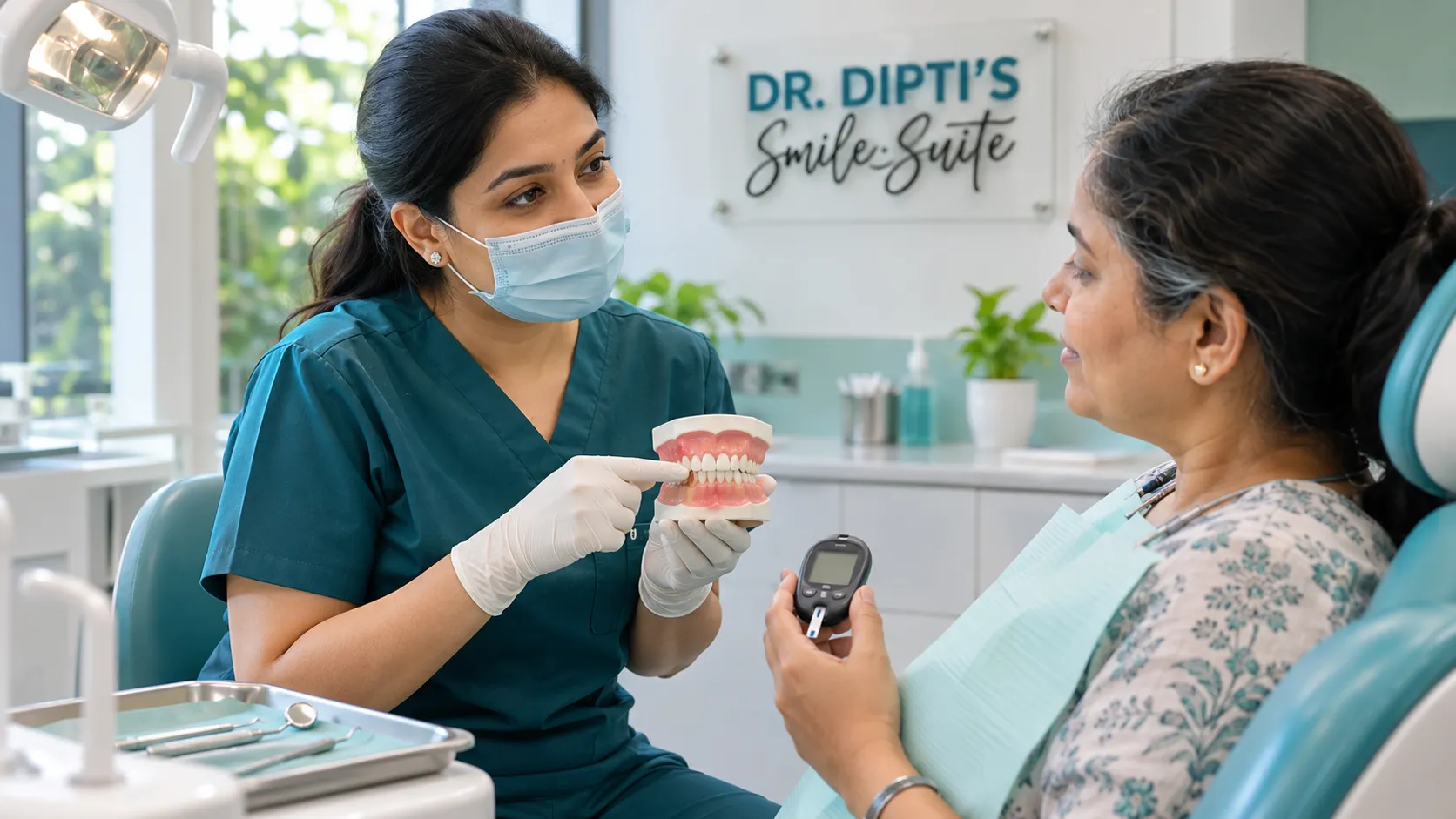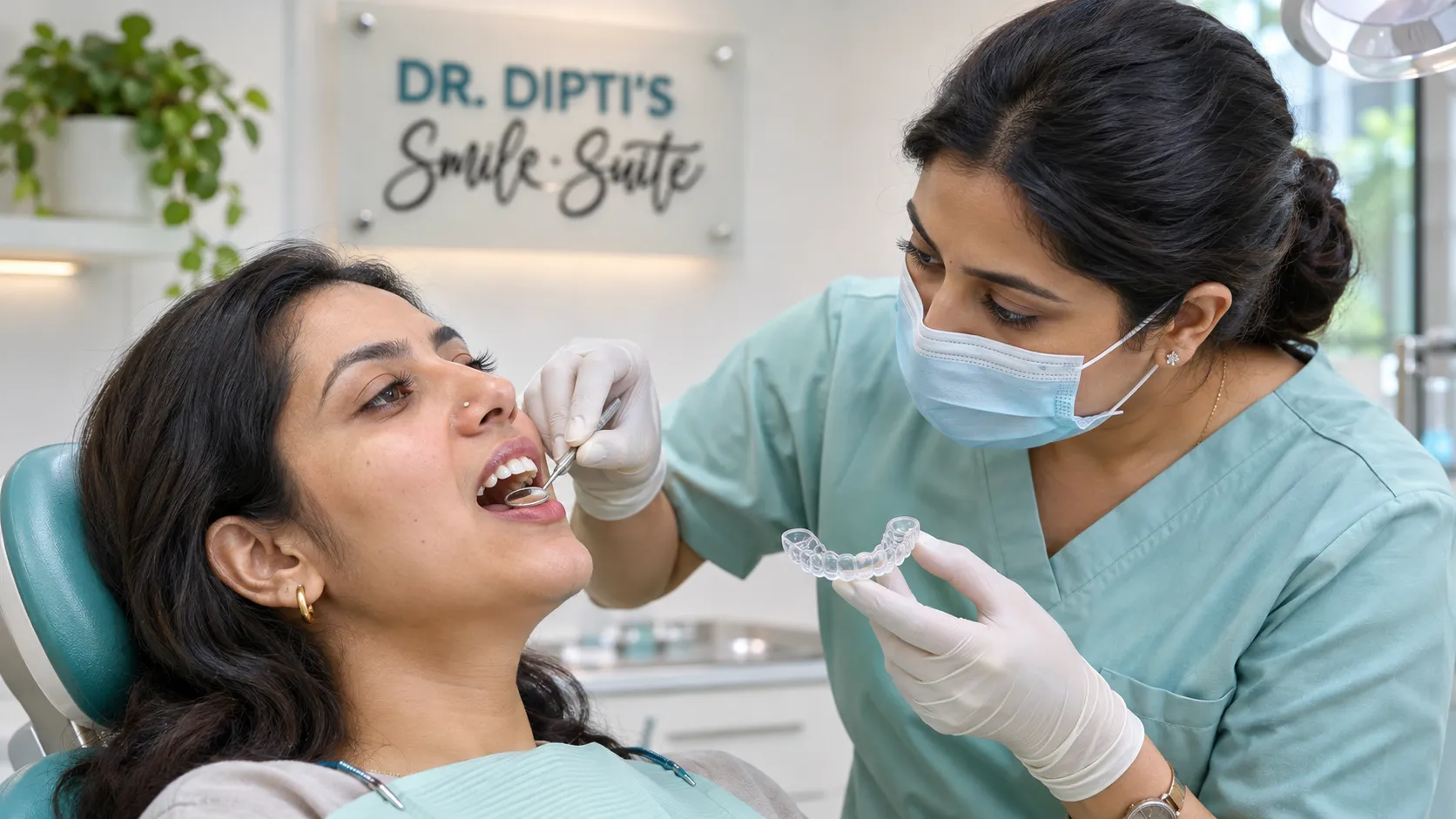
It does not have to be that way. A first dental visit planned early, before there is any pain, is usually short, playful and reassuring. It also gives your child a simple, lasting message: the dentist is a friendly place.
This guide explains:
- When your child’s first dental visit should happen
- How to prepare your child (and yourself)
- What happens at the visit, step by step
- What to do if your child cries
- How to care for baby teeth at home afterwards
When Should Your Child Have Their First Dental Visit?
The American Academy of Pediatric Dentistry recommends a first dental examination within six months of the first tooth appearing, and no later than the first birthday. Since most babies get their first tooth between 6 and 10 months, this usually means a visit somewhere between the first tooth and age one.
For most Indian families, this comes as a surprise. The common belief is that dental visits start at age three, or when a child complains of pain. Early visits matter for three reasons:
- Decay can start very early. Milk teeth have thinner enamel than adult teeth, so cavities spread faster.
- Prevention is easiest before problems begin. Small habits around feeding, brushing and sweets have the biggest effect in the first two years.
- Good first experiences prevent dental fear. A child whose first visit is relaxed is far less likely to grow into an anxious adult patient.
If your child is already older than one and has not seen a dentist, that is completely fine. The best time for the first visit is now, whether your child is 2, 4 or 6.
Book sooner if you notice:
- White chalky lines or brown or black spots on the teeth
- Food getting stuck in holes in the teeth
- Pain while eating, or a child refusing food on one side
- Swelling of the gums or face, or a pimple on the gum
- A fall or injury to the mouth
- Teeth that look crooked, crowded or widely spaced in an unusual way
- Long-term thumb sucking or mouth breathing
Why Baby Teeth Matter More Than Parents Think
“Milk teeth will fall anyway” is one of the most common reasons parents delay dental care. Baby teeth do fall out, but many stay in the mouth until age 10 to 12, and they do important work in the meantime:
- Eating and nutrition: painful teeth lead to poor eating and weight gain problems
- Speech: front teeth help children form sounds correctly
- Space for adult teeth: baby teeth hold space for the permanent teeth growing underneath; early loss can lead to crowding later
- Confidence: children with visibly decayed teeth can feel shy smiling and talking
- Overall health: untreated decay can lead to infection, swelling and disturbed sleep
Tooth decay in young children is very common in India. A 2022 meta-analysis in the Indian Journal of Public Health, pooling 71 studies with 69,330 children, found that the prevalence of early childhood caries was 46.9%. In other words, roughly one in every two young children in India has decay. Most of these cases are preventable with early guidance.
How to Prepare Your Child for the First Dental Visit
Choose the right time
Book a morning appointment, or a slot after your child’s nap, when they are rested and fed. Avoid times close to sleep or meal times, when children are more likely to be cranky.
Talk about it in a positive way
Keep your language simple and cheerful: “The dentist will count your teeth and see how strong they are.” Avoid words like “hurt”, “injection”, “pain” or “don’t be scared”. Children pick up fear from the words adults use, even when the intention is to reassure.
Play dentist at home
Take turns counting each other’s teeth with a toothbrush, or check a favourite teddy’s teeth. Picture books and short cartoons about visiting the dentist also help children know what to expect.
Never use the dentist as a threat
Statements such as “If you eat chocolates, the doctor will give you an injection” create fear that can last for years. Present the dentist as a helper, not a punishment.
Manage your own nervousness
Children sense their parents’ anxiety. If you had bad dental experiences yourself, try to stay calm and positive. If it helps, let another relaxed family member come along.
What to bring
- Your child’s medical history, any allergies, and current medicines
- Details of feeding habits (breastfeeding, bottle, night feeds, sippy cup)
- The brand of toothpaste you use
- A favourite toy or comfort blanket
- A short list of your questions
What Happens During the First Dental Visit
At Dr. Dipti’s Smile Suite, a child’s first visit usually takes about 20 to 30 minutes, and much of that time is spent talking with parents. Here is what typically happens.
1. A friendly welcome
We give your child time to look around, meet the team and get comfortable. Our dental chair can move up and down, which children usually find fun. Nothing is rushed.
2. A conversation with you
We ask about your child’s health, feeding, brushing routine, snacks, thumb or pacifier habits, and any concerns you have. This helps us judge your child’s risk of tooth decay.
3. Knee-to-knee examination for babies and toddlers
For very young children, the examination is often done with the child lying across your lap, facing you, with their head resting on the dentist’s knees. Your child can see you the whole time, which keeps them secure. Older children usually sit in the chair, sometimes on a parent’s lap.
4. Checking teeth, gums and growth
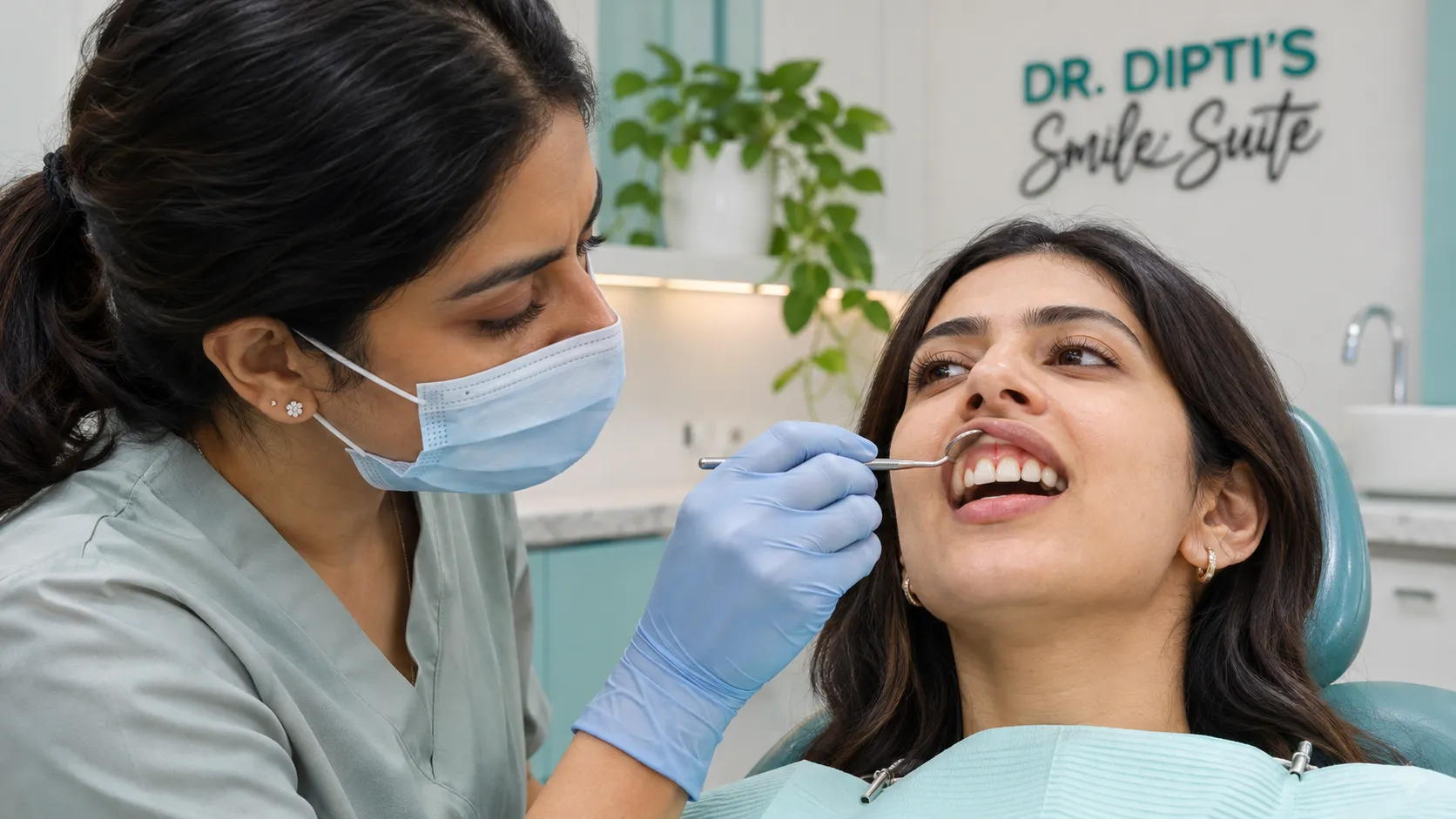
We look at each tooth for early signs of decay, check the gums and tongue, assess how the jaws are growing and how the teeth meet, and look for effects of habits such as thumb sucking.
5. A gentle clean, if needed
If there is plaque or staining, we clean the teeth gently with a soft brush. There is no drilling at a routine first visit.
6. Fluoride varnish, when appropriate
Depending on your child’s age and risk of decay, we may paint a thin layer of fluoride varnish onto the teeth. It takes about a minute, does not hurt, and helps strengthen enamel against decay. Because parts of Haryana have naturally high fluoride levels in groundwater, we also ask about your drinking water source before recommending any fluoride product.
7. X-rays only if needed
Most first visits for young children do not need X-rays. If we suspect decay between the teeth or need to check developing teeth, we use digital X-rays, which use very low radiation doses.
8. Guidance for parents
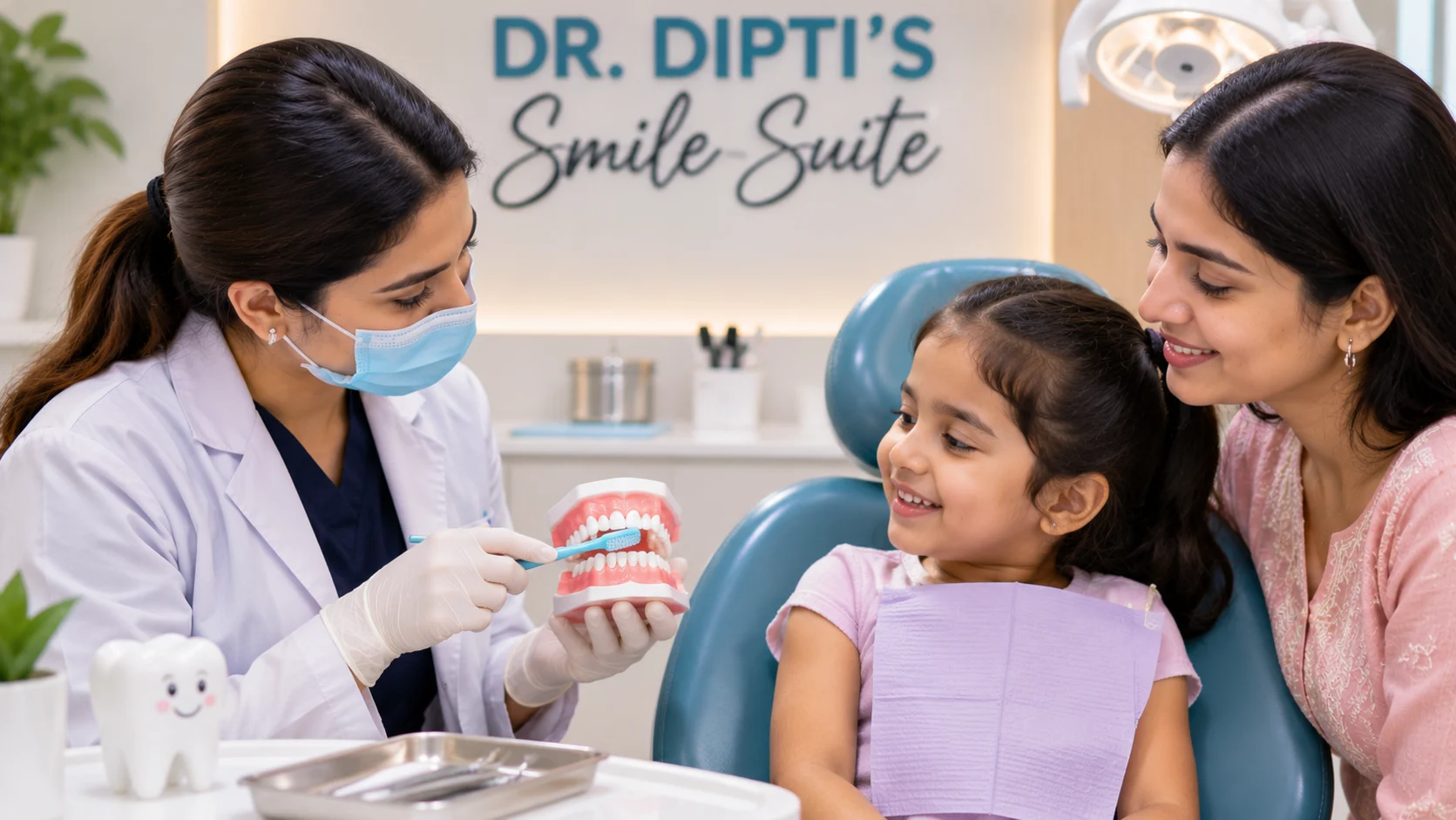
This is often the most useful part. We show you how to brush your child’s teeth correctly, how much toothpaste to use, and which foods and habits increase decay risk. We also tell you when to come back.
What If My Child Cries?
Crying at a first dental visit is completely normal, especially for children under three. Crying is often a reaction to new people and a new place, not to pain. For babies, crying can even help, because their mouth opens wide for a quick look.
Our team uses child-friendly techniques that keep the experience positive:
- Tell-show-do: we explain each step in simple words, show the instrument on a finger or toy, and only then do it
- Lots of praise: we notice and celebrate every small bit of cooperation
- Your presence: parents stay with their child throughout the visit
- No forcing: if a child is very upset, we keep the visit short and positive, and complete the rest another day
Parents often tell us their child was calmer than expected. One Google review from a parent described their son being unafraid during a dental procedure for the first time, because of the patience shown during treatment. That is exactly the experience we aim for at every first visit.
Common Findings and Treatments for Children
Most first visits end with nothing more than advice and a fluoride application. If we do find a problem, these are the gentle treatments we offer through our pediatric dentistry service.
Explore: Pediatric Dentistry in Faridabad
Fluoride varnish
This is a quick, painless coating that strengthens enamel and can help stop very early decay from progressing. It is often repeated every few months for children at higher risk.
Pit and fissure sealants
The chewing surfaces of back teeth have deep grooves where food and bacteria collect. Sealants are a thin protective coating that fills these grooves. No injection or drilling is needed, and they are especially useful for permanent molars when they appear around age six.
Tooth-coloured fillings
Small cavities can be repaired with tooth-coloured fillings that bond to the tooth and look natural. Treating decay early keeps fillings small and comfortable.
Explore: Composite Filling in Faridabad
Pulp treatment for baby teeth
When decay reaches the nerve of a milk tooth, a child-friendly pulp treatment, sometimes called a “baby root canal”, can save the tooth until it is ready to fall out naturally. This keeps space for the adult tooth and avoids early extraction.
Crowns for badly broken-down baby teeth
Back teeth with large cavities may need a protective crown so they can keep working for chewing until they naturally fall out.
Habit guidance and early orthodontic assessment
Prolonged thumb sucking, pacifier use and mouth breathing can affect how the teeth and jaws develop. We guide parents on gently breaking these habits. Around age seven, we recommend an orthodontic check to spot bite or crowding problems early, when growth can still be guided.
Explore: Orthodontics in Faridabad
Fluorosis and enamel defects
Children who drink high-fluoride groundwater while their teeth are forming can develop white or brown patches on the adult teeth. Dr. Dipti has special experience in treating fluorosis, and early advice on water sources helps protect developing teeth.
Dental injuries
Toddlers and active children often chip or knock teeth. We assess these injuries promptly and gently.
Read more: What to Do If You Chip or Break a Tooth
Age-by-Age Home Care Guide for Parents
| Age | What to do at home |
|---|---|
| Birth to first tooth | Wipe the gums with a clean, damp cloth after feeds |
| First tooth to age 3 | Brush twice daily with a soft infant brush and a rice-grain-sized smear of fluoride toothpaste |
| Ages 3 to 6 | Brush twice daily with a pea-sized amount of fluoride toothpaste; teach your child to spit, not rinse |
| When teeth touch each other | Start cleaning between the teeth with floss or floss picks |
| Up to about age 7 to 8 | Parents should brush or supervise brushing, because children lack the hand control to clean well |
| From around age 6 | Ask about sealants for the new permanent molars |
Habits that protect milk teeth
- Do not put your child to sleep with a bottle of milk, formula, juice or sweetened liquid
- Clean your child’s teeth after the last night feed
- Move from a bottle to a cup around the first birthday
- Avoid dipping pacifiers in honey, sugar or ghee
- Avoid sharing spoons or pre-chewing food, which can pass decay-causing bacteria from adult to child
- Offer water between meals instead of juice or sweetened milk
Everyday Indian food habits to watch
Many common foods stick to children’s teeth and feed decay: biscuits, rusks, chips, toffees, chocolates, sweetened breakfast cereals, packaged juices and mithai. Sweets given as a reward or bribe make this worse.
How often a child eats sugar matters more than how much. Keep sweets to mealtimes rather than spread through the day, and offer fruit, paneer, curd, roasted chana or makhana as snacks.
Read more: How to Prevent Cavities in Kids Teeth | Signs Your Child Needs a Pediatric Dentist in Faridabad
How Often Should Children Visit the Dentist After the First Visit?
Most children should have a check-up every six months. Children at higher risk of decay, such as those with existing cavities, frequent snacking or special health needs, may need visits every three to four months. Regular visits also help your child see the clinic as a familiar, friendly place.
A family dental home makes this easier. At Dr. Dipti’s Smile Suite, we care for parents and grandparents too, so the whole family can be seen in one place, often on the same day.
Read more: Recommendations for Family Dentists in Faridabad NCR
First Dental Visit Checklist for Parents
- Book within six months of the first tooth, or by the first birthday
- Choose a morning or post-nap slot
- Talk positively and play dentist at home
- Bring the medical history, list of medicines, and your questions
- Bring a favourite toy
- Stay calm and let the dental team lead
- Praise your child afterwards, whatever happened
- Book the next check-up before you leave
Book Your Child’s First Dental Visit in Faridabad
A first dental visit is not about fixing problems. It is about preventing them and building trust. The earlier it happens, the more likely your child is to grow up with healthy teeth and no fear of the dentist.
At Dr. Dipti’s Smile Suite in Sector 14, Faridabad, we keep children’s visits unhurried, gentle and fun, and we make sure parents leave with clear, practical guidance.
Dr. Dipti’s Smile Suite
SCF 142, Sector 14, HUDA Market, Faridabad, Haryana 121007
Call / WhatsApp: +91 88828 50066
Monday to Saturday: 10:00 AM – 3:00 PM and 5:30 PM – 8:00 PM