If you've been quoted somewhere around ₹1.5 lakh for Invisalign, you're probably doing the math in your head right now. That's a real amount of money, and it's fair to want to know exactly what you're getting for it before you say yes.
Here's the short answer: ₹1.5 lakh is actually on the lower end of what Invisalign costs in India, and it usually covers a lot more than just the plastic trays. But "worth it" depends entirely on your case, your expectations, and whether you understand what's included and what isn't.
This guide breaks down exactly where that money goes, why the price swings so much between clinics, and how to decide if it makes sense for you.
Not sure if your case fits this budget?
Book a consultation with Dr. Dipti's Smile Suite and get a clear, personalized cost estimate before you commit to anything.
How Much Does Invisalign Really Cost in India
Across most Indian cities, Invisalign treatment typically falls between ₹1.5 lakh and ₹4 lakh. Where you land in that range depends mainly on how much your teeth need to move, not on which city you live in or which clinic you pick, although those do play a small role too.
Rough breakdown by case type:
- Simple cases (mild crowding or small gaps): ₹1 lakh to ₹1.5 lakh
- Moderate cases (noticeable crowding, spacing, or bite correction): ₹1.5 lakh to ₹3 lakh
- Complex cases (severe crowding, multiple teeth movement, bite issues): ₹3 lakh to ₹4 lakh or more
So if you've been quoted ₹1.5 lakh, there's a good chance your orthodontist has assessed your case as mild to moderate. That's actually a reasonable starting point, not a red flag.
What ₹1.5 Lakh Actually Includes
This is the part most price-comparison articles skip. A ₹1.5 lakh Invisalign quote isn't just paying for a stack of clear trays. It typically bundles together several things:
Initial consultation and diagnostics. Before any aligner is made, your orthodontist needs to examine your bite, take X-rays, and usually do a 3D digital scan of your teeth using a scanner like iTero. This step alone can cost ₹5,000 to ₹15,000 if billed separately, but it's usually folded into the total.
The ClinCheck treatment plan. This is the digital simulation that maps out exactly how your teeth will move, tray by tray, from your current position to the final result. You get to see this before treatment even begins, which is one reason Invisalign is more predictable than guessing your way through fixed braces.
The aligner trays themselves. Depending on your case, you might need anywhere from 15 to 40+ sets of trays, each worn for about one to two weeks. These are manufactured by Align Technology using the same global process regardless of which country you're treated in.
Ongoing orthodontist supervision. You'll have periodic check-ins, usually every 6 to 8 weeks, where your orthodontist checks progress and hands you the next batch of trays. This clinical oversight is what separates a proper Invisalign treatment from just buying trays online.
Minor refinements. Teeth don't always move exactly as planned. Most quotes include one round of refinement aligners if small corrections are needed near the end of treatment.
Retainers (sometimes). Some clinics include your first set of retainers in the total price, others charge separately. This is worth confirming upfront, because skipping retainers after treatment is how people end up with relapse.
Once you look at it this way, ₹1.5 lakh isn't just paying for plastic. It's paying for a diagnostic process, a customized digital plan, a manufacturing pipeline, and months of professional supervision.
Why Does the Price Range Vary So Much?
You'll notice quotes anywhere from ₹1 lakh to ₹4.5 lakh depending on where you look, and that's not clinics being inconsistent. A few real factors drive this:
Provider tier. Align Technology ranks orthodontists by experience and case volume, into tiers like Silver, Gold, Diamond, and Platinum. More experienced providers, who've handled more complex cases, often charge more, partly because they can predictably manage harder corrections.
Number of aligner trays needed. More trays mean more manufacturing cost and a longer treatment timeline, which pushes the price up.
Case complexity. Bite corrections (overbite, underbite, crossbite) generally cost more than simple spacing or crowding fixes, because they require more precise, staged movements.
City and clinic overheads. Metro clinics with higher rent and staffing costs sometimes charge more than clinics in smaller cities, though the difference is usually smaller than people expect.
Invisalign vs. other aligner brands. Some Indian and international aligner brands price themselves well below Invisalign, sometimes starting around ₹40,000 to ₹90,000. They can work for very minor corrections, but they don't always match Invisalign's precision, material quality, or the depth of clinical backing that comes with the brand.
If you're evaluating a quote, ask your orthodontist directly: how many aligner trays does my plan need, and what tier provider are you? That alone explains most of the price difference you'll see between clinics.
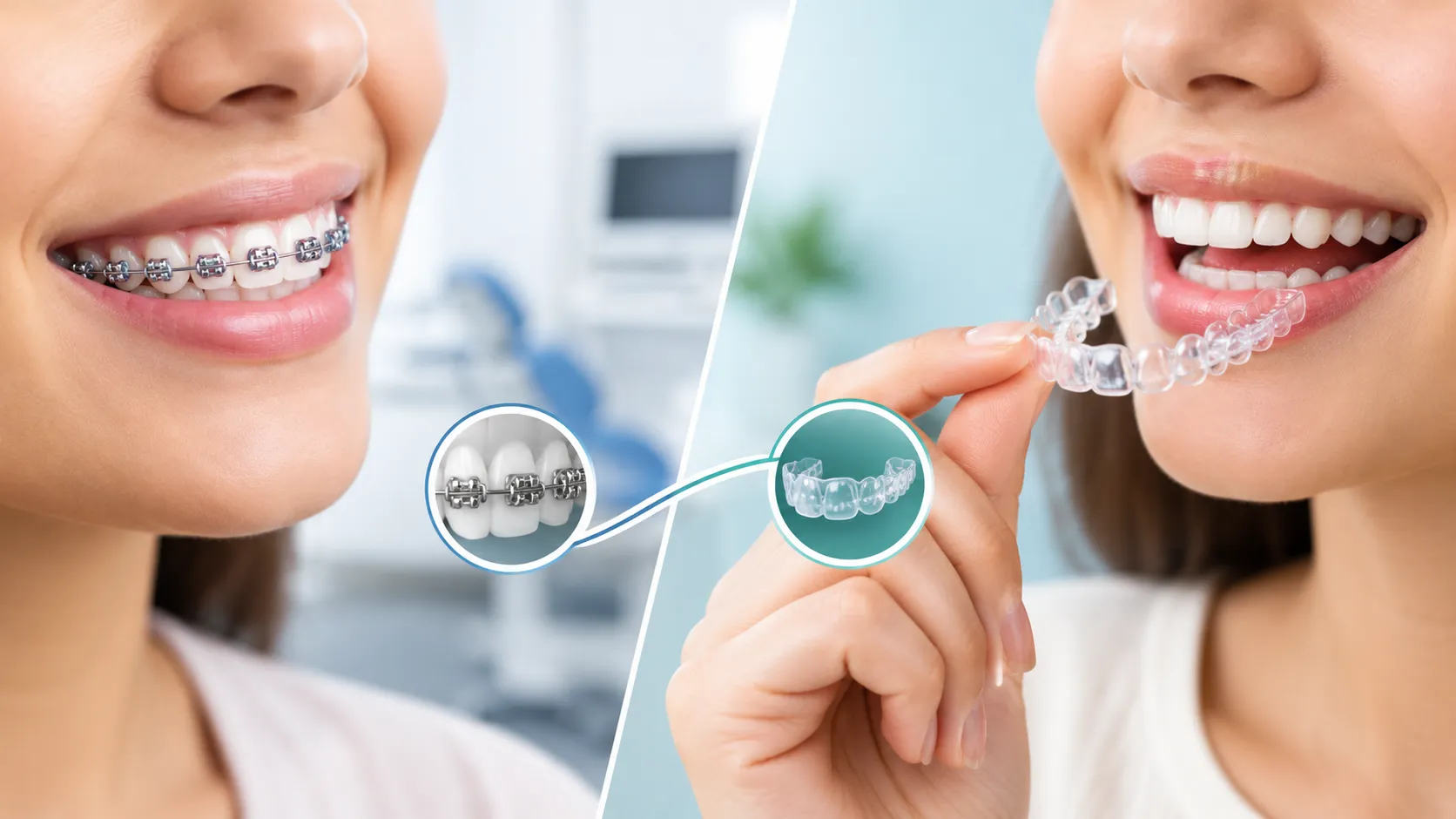
Invisalign vs. Braces vs. Other Clear Aligners: A Real Comparison
| Option | Typical Cost in India | Treatment Time | Best For |
|---|---|---|---|
| Metal braces | ₹30,000 – ₹80,000 | 18–36 months | Complex bite issues, tighter budgets |
| Ceramic braces | ₹50,000 – ₹1,00,000 | 18–30 months | Discretion at a lower cost than aligners |
| Other clear aligner brands | ₹40,000 – ₹1,00,000 | 6–18 months | Mild to moderate cases, budget-conscious patients |
| Invisalign | ₹1,00,000 – ₹4,00,000+ | 6–18 months | Mild to complex cases needing predictable, well-documented results |
The honest takeaway here is that Invisalign isn't automatically the "best" option for everyone. It's the option with the most clinical research behind it, the most experienced global provider network, and the most predictable digital planning process. If your case is mild and your budget is tight, a cheaper aligner brand or ceramic braces might get you a similar result for less. If your case has any complexity, or you simply want the most tested and widely used system, Invisalign's price starts to make more sense.
When ₹1.5 Lakh for Invisalign Is Actually Worth It
It's worth it when:
- Your orthodontist has confirmed your case is mild to moderate, matching what a ₹1.5 lakh quote typically covers
- You can realistically commit to wearing the aligners 20 to 22 hours a day, since Invisalign only works as well as your compliance
- You value being able to remove the aligners to eat, brush, and attend events without visible metal
- You're comparing this against the real alternative cost of fixed braces plus the extra visits, food restrictions, and oral hygiene challenges that come with them
- You've confirmed what's included (refinements, retainers, follow-up visits) so there are no surprise add-ons later
It's worth reconsidering if:
- Your case is severe and you're being quoted at the very low end, since that might mean an incomplete treatment plan or a provider underestimating the work involved
- You're not confident you can stick to the wear-time discipline aligners require
- Budget is a genuine constraint and a well-fitted alternative (ceramic braces or another aligner brand) can achieve a similar outcome for meaningfully less
There's no universal right answer here. The honest way to know is to get your case assessed properly rather than comparing price tags in isolation.
Hidden Costs Worth Asking About Before You Sign Up
A few things that catch people off guard after they've already started treatment:
- Lost or damaged aligner replacement. If you lose a tray, replacing it usually isn't free.
- Extra refinement rounds. One round is often included, but if your teeth need more correction than planned, additional refinement trays may cost extra.
- Retainers after treatment. If retainers weren't bundled into your quote, expect to pay separately, and understand that skipping them risks your teeth shifting back.
- Missed appointment fees. Some clinics charge for repeatedly missed or rescheduled check-ins.
None of these are dealbreakers, but asking about them upfront means your ₹1.5 lakh doesn't quietly become ₹2 lakh by the time you're done.
If you're in Faridabad and weighing your aligner options, it's worth reading about what's involved in getting the best Invisalign treatment in Faridabad before you finalize a clinic.
Making Invisalign More Affordable
If ₹1.5 lakh feels steep upfront, there are a few practical ways clinics make it manageable:
- EMI and credit card installment plans. Most established clinics offer 0% or low-interest EMI options, splitting the cost over 6 to 12 months.
- Health insurance (limited). Most dental insurance in India doesn't fully cover orthodontic treatment, but it's worth checking your policy, since partial coverage sometimes exists.
- Invisalign Lite or shorter treatment plans. For very minor corrections, some clinics offer lighter Invisalign packages starting lower than full treatment, though these come with fewer aligner trays and are limited to specific case types.
- Choosing the right provider tier for your case. You don't always need the most senior provider for a simple case. A capable Gold or Diamond provider may charge less than a Platinum one for the same straightforward correction.
Conclusion
₹1.5 lakh for Invisalign isn't a small decision, and you're right to want clarity before committing to it. But once you break down what that number actually covers, the diagnostics, the digital planning, the trays, and months of professional supervision, it starts to look less like a markup and more like a genuinely comprehensive treatment package, at least for mild to moderate cases.
The real question isn't whether ₹1.5 lakh is a fair price in the abstract. It's whether it's the right treatment for your specific teeth, your budget, and your ability to stay consistent with wearing the aligners. That's not something a blog post can tell you, it needs an actual assessment.
If you'd like an honest, personalized answer on whether Invisalign is worth it for your case, call us directly at 8882850066 and we'll walk you through it.