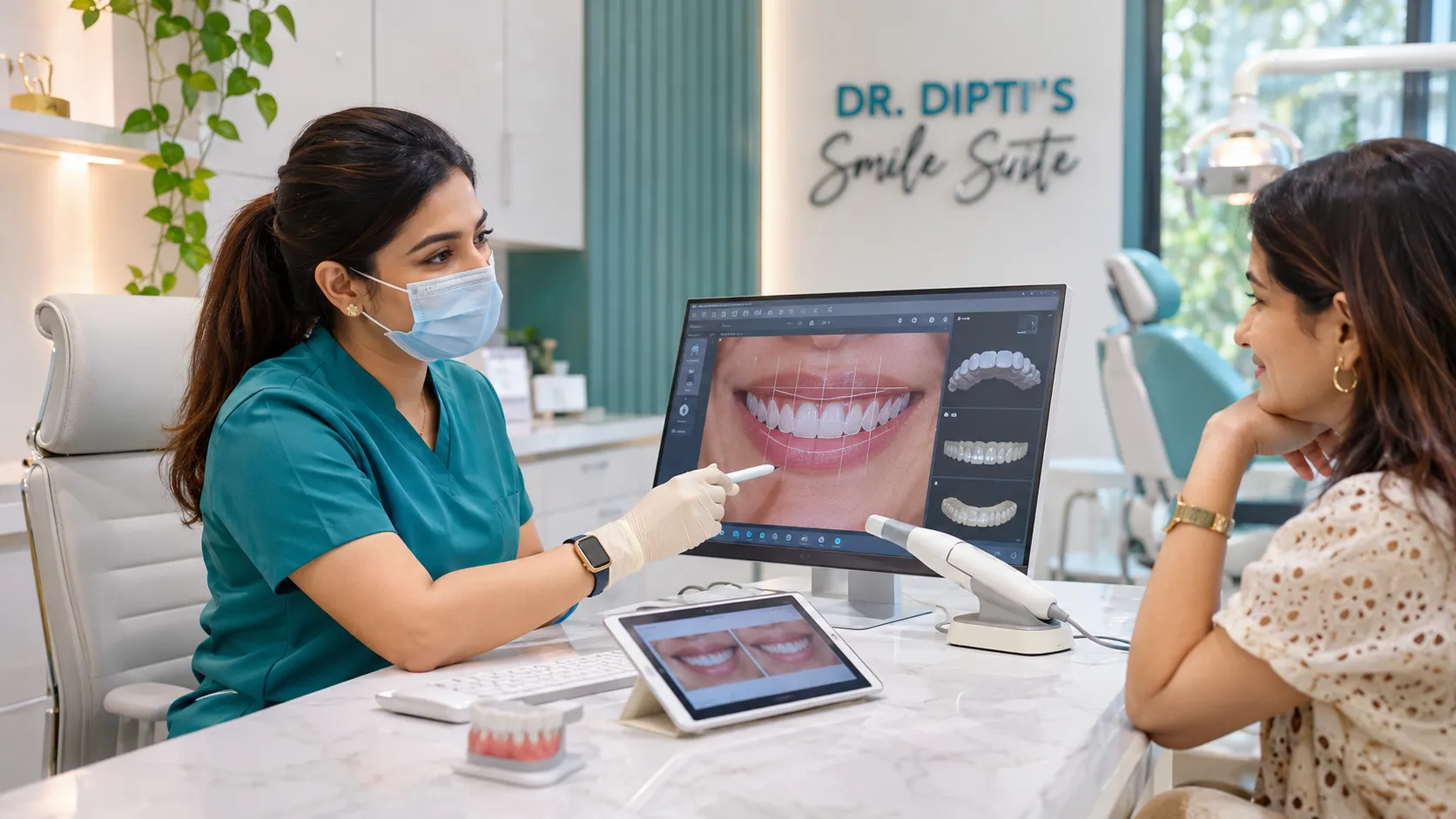

You spit after brushing and the foam is pink. Maybe it happened once last week, and now it happens most mornings. Most people rinse, shrug and carry on, because the gums do not hurt and the bleeding stops within seconds. At our clinic in Faridabad, this is one of the most common things patients mention, and it is usually something they noticed months before they booked a visit.
Bleeding gums are rarely an emergency, but they are almost never "normal" either. Healthy gum tissue does not bleed from regular brushing. When it does, your mouth is telling you that something, usually plaque, has been sitting at the gum line long enough to cause inflammation. The good news is that when bleeding gums are caught early, the damage is fully reversible.
This guide is built around one practical question: when should you actually see a dentist? We will cover the main causes briefly, then walk through a simple way to judge how urgent your situation is, what happens during a gum check-up at Dr. Dipti's Smile Suite, and how treatment changes depending on the stage of the problem.
If you want a detailed breakdown of every possible reason, read our full guide: Bleeding Gums Causes: 15 Reasons Why Your Gums Bleed.
What Bleeding Gums Really Mean
Your gums are a seal around each tooth. When bacteria in plaque collect along that seal, the body sends extra blood to the area to fight them. The tissue becomes swollen, softer and more fragile, so even the light pressure of a toothbrush or floss can break tiny blood vessels. That is why bleeding is often the very first sign of gum disease, appearing before pain, bad breath or loose teeth.
Think of it like a warning light on a car dashboard. The light itself is not the problem. It is pointing at something underneath that needs attention, and ignoring it does not make the issue go away.
Is a little blood ever normal?
A one-off spot of blood after biting into something hard, or for the first few days after you start flossing, can be harmless. What is not normal is bleeding that keeps returning every time you brush, bleeding without any obvious trigger, or bleeding that comes with swelling, soreness or a bad taste. Those patterns point to an ongoing cause.
Common Causes of Bleeding Gums at a Glance
In the large majority of adults we see, bleeding gums come from plaque and tartar. Other causes are less common, but they matter because they change how the problem should be treated.
Plaque and tartar build-up (gingivitis)
Plaque is a soft, sticky film of bacteria that forms on teeth every day. If it is not cleaned away properly, it irritates the gums and causes gingivitis, the earliest stage of gum disease. Over time, plaque hardens into tartar (calculus), which a toothbrush cannot remove. Tartar keeps the gums inflamed, so bleeding continues no matter how well you brush. This is the most common reason we recommend a professional scaling and polishing.
Periodontitis (advanced gum disease)
When gingivitis is left untreated, inflammation can spread below the gum line and start to damage the bone and fibres that hold teeth in place. This stage, called periodontitis, causes gum pockets, receding gums, persistent bad breath and eventually loose teeth. Bleeding often continues at this stage, though smokers may notice less bleeding because tobacco reduces blood flow to the gums and masks the warning sign.
Brushing and flossing habits
A hard-bristled brush, a heavy "scrubbing" action or snapping floss down onto the gums can injure healthy tissue. On the other hand, people who start flossing after a long gap often see bleeding for the first week or two. In that case, the bleeding usually settles as the gums get healthier, which is a good sign rather than a reason to stop.
Dental work and appliances
An old filling with a rough edge, a crown that does not fit snugly or a bridge that traps food can all keep one area of gum inflamed. Braces and aligners make cleaning harder too. If bleeding is always in the same spot, a faulty restoration is worth checking. We often fix this with a new composite filling or a better-fitting dental crown or bridge.
Hormonal changes
Pregnancy, puberty and some hormonal medicines make gums more reactive to plaque. Pregnancy gingivitis is very common and should not be ignored, because gum treatment is safe during pregnancy. Read more in our guide on dental care during pregnancy.
Medical conditions and medicines
Diabetes, especially when blood sugar is poorly controlled, makes gum disease more likely and harder to treat. We explain this link in Diabetes and Oral Health: What You Need to Know. Blood thinners, some blood pressure medicines and certain other drugs can also increase bleeding. Less commonly, very low vitamin C levels, blood disorders or other systemic illnesses show up first as gum bleeding, which is one reason persistent bleeding should be examined rather than guessed at.
Smoking and tobacco
Cigarettes, bidis, gutka and other tobacco products damage gum tissue and slow healing. They also hide the bleeding that would normally alert you to a problem, so smokers often find out about gum disease later than non-smokers.
When to See a Dentist for Bleeding Gums
This is the part most people want answered. The simplest way to decide is to sort your symptoms into three levels. Be honest about which one describes you.
Green: watch and improve your routine for two weeks
You can try improving your home care first if:
- The bleeding is light and only happens while brushing or flossing.
- You recently started flossing, switched to a new brush or brushed harder than usual.
- There is no pain, swelling, bad taste or loose tooth.
- You are otherwise healthy and not on blood-thinning medicines.
Switch to a soft-bristled brush, brush twice a day for two minutes at a gentle angle toward the gum line, and clean between teeth once a day. Our complete guide to daily oral hygiene and how to stop bleeding gums at home explain the technique step by step. If the bleeding has not clearly improved in about two weeks, move to the amber level.
Amber: book a dental appointment within the next few weeks
Schedule a gum check-up soon if any of these apply:
- Your gums still bleed after two weeks of good brushing and flossing.
- Your gums look red, puffy or shiny instead of pale pink and firm.
- You have bad breath or a bad taste that does not go away after brushing.
- Your gums seem to be pulling back, making teeth look longer.
- You can see hard yellow or brown deposits near the gum line.
- You are pregnant, have diabetes or smoke, all of which raise the risk of gum disease.
- It has been more than six to twelve months since your last professional cleaning.
None of these are emergencies, but they are signs that home care alone is not enough. Our article on the signs of gum disease you shouldn't ignore covers these warning signals in more depth.
Red: see a dentist or doctor as soon as possible
Do not wait if you notice:
- Bleeding that does not stop after 10 to 15 minutes of firm pressure with clean gauze.
- Bleeding gums together with unexplained bruising, nosebleeds, fever, unusual tiredness or weight loss.
- Gums that bleed on their own without brushing or eating.
- A painful swelling or pus near a tooth, or a swollen face or jaw.
- Teeth that have become noticeably loose or have shifted position.
- Heavy bleeding while you are on blood thinners.
Some of these signs can point to a dental abscess, a severe gum infection or a problem with blood clotting, which may need both a dentist and a physician. If you are in pain or swelling outside clinic hours, see our guide on how to find emergency dental services in Faridabad. Never stop a prescribed blood thinner on your own because of bleeding gums. Speak to the doctor who prescribed it first.
| Level | What you notice | What to do |
|---|---|---|
| Green | Light bleeding only when brushing or flossing, no pain or swelling | Improve brushing and flossing, review in 2 weeks |
| Amber | Bleeding beyond 2 weeks, puffy gums, bad breath, tartar, receding gums | Book a gum check-up and cleaning soon |
| Red | Bleeding that won't stop, swelling or pus, loose teeth, bruising or fever | Seek dental or medical care as soon as possible |
What Happens During a Gum Check-Up at Dr. Dipti's Smile Suite
Many patients put off a visit because they expect a lecture or a painful procedure. A gum check-up is neither. It is a calm, step-by-step assessment, and most people are surprised how quickly it is done.
Step 1: A short conversation
We ask how long the bleeding has been happening, where it occurs, how you clean your teeth, and about your general health. Medicines, pregnancy, diabetes and smoking all change the plan, so these details matter.
Step 2: Gum examination and pocket measurement
Using a fine, blunt instrument, the dentist gently measures the small space between each tooth and the gum. Healthy gums have shallow pockets. Deeper pockets and bleeding points tell us whether you have gingivitis or periodontitis and which areas need the most care.
Step 3: X-rays when needed
If deeper pockets or loose teeth suggest bone loss, digital X-rays show what is happening below the gum line. They also help us spot hidden decay or infection that could be contributing to the problem.
Step 4: A clear explanation and plan
You leave knowing exactly what stage your gums are at, what treatment is recommended, how many visits it may take and what you can do at home. If a medical cause is suspected, we will suggest the right tests or a visit to your physician.
Treatment Options for Bleeding Gums
Treatment depends on the cause and the stage. The earlier you come in, the simpler it usually is.
Professional cleaning for gingivitis
For early gum disease, scaling and polishing removes plaque and tartar from above and just below the gum line. Most patients see a clear reduction in bleeding within one to two weeks, provided they keep up good home care. If you are wondering about price, our teeth cleaning cost guide for Faridabad and the teeth cleaning cost page explain what to expect.
Deep cleaning for periodontitis
When pockets are deeper, a deep cleaning (scaling and root planing) is carried out under local anaesthesia so it is comfortable. The root surfaces are smoothed so the gums can heal and reattach. Medicated mouthwash or local antibiotics may be added in some cases, followed by review visits to check healing.
Fixing local causes
If one area keeps bleeding because of a broken filling, an overhanging crown or a trapped wisdom tooth, fixing that cause is part of treatment. That may mean replacing a restoration, treating an infected tooth with root canal treatment, or removing a problem wisdom tooth through oral surgery. Our guide on wisdom tooth pain explains when a back tooth is the source of gum trouble.
Straightening crowded teeth
Crowded or overlapping teeth create spaces that are hard to clean, so plaque builds up and gums bleed. Once gums are healthy, aligning the teeth with orthodontic braces or Invisalign clear aligners can make long-term cleaning much easier.
Replacing lost teeth after advanced gum disease
If gum disease has already caused tooth loss, the gums must be stabilised first. After that, missing teeth can be replaced with dental implants or bridges, and the overall look can be restored with a smile makeover if you wish.
Coordinating with your doctor
For patients with diabetes, blood disorders or those on blood thinners, we plan treatment carefully and, where needed, coordinate with your physician. Treating gum inflammation can also make it easier to manage blood sugar in people with diabetes, so the benefit goes both ways.
What Happens If You Ignore Bleeding Gums
Gum disease is usually painless in its early stages, which is exactly why it is easy to ignore. Left alone, gingivitis can progress to periodontitis. Over months and years this can lead to:
- Receding gums and sensitive, exposed roots (see our guide on sensitive teeth).
- Persistent bad breath, which we cover in bad breath causes and dental solutions.
- Gum abscesses and repeated swelling.
- Loose, shifting or lost teeth.
- Costlier and longer treatment than a simple cleaning would have been.
Research has also linked gum disease with wider health conditions, including diabetes and heart disease. While gum disease is not proven to cause these conditions, keeping your gums healthy is a sensible part of looking after your overall health.
Bleeding Gums in Children and Teenagers
Children can get gingivitis too, especially during tooth eruption, when they wear braces or when brushing is rushed. Bleeding in a child's mouth is usually plaque related, but it deserves a check if it lasts more than a week or two or appears with bruising elsewhere on the body. Our pediatric dentistry team makes these visits gentle and friendly. You may also find our article on the signs your child needs a pediatric dentist in Faridabad helpful.
How to Prevent Bleeding Gums From Coming Back
Once your gums are healthy, keeping them that way is mostly about steady habits rather than special products.
- Brush twice daily with a soft brush and fluoride toothpaste, angling the bristles toward the gum line.
- Clean between your teeth every day with floss, interdental brushes or a water flosser.
- Get a professional cleaning every six months, or more often if your dentist advises it.
- Avoid tobacco in all forms.
- Eat a balanced diet with fresh fruits and vegetables, and limit sugary snacks between meals.
- Keep diabetes and other medical conditions well controlled.
- Replace your toothbrush every three months or when the bristles splay.
Get Your Bleeding Gums Checked in Faridabad
At Dr. Dipti's Smile Suite, we treat bleeding gums as an early, fixable problem, not something to live with. Alongside gum care, our clinic offers complete family dentistry, including root canal treatment, dental implants, crowns and bridges, composite fillings, teeth whitening, dental veneers, orthodontics, Invisalign, oral surgery, pediatric dentistry and cosmetic dentistry.
If your gums have been bleeding for more than two weeks, or you have any of the amber or red signs above, book a gum check-up. A short visit now can save you from much bigger treatment later.
Dr. Dipti's Smile Suite
SCF 142, Sector 14, HUDA Market, Faridabad, Haryana 121007
Call or WhatsApp: +91 88828 50066
Book a Gum Check-Up