Wisdom teeth removal is one of the most searched dental procedures in India, and also one of the most misunderstood. People hear stories about swollen cheeks, missed work and difficult recoveries, and they put off treatment until a wisdom tooth is already infected. This guide explains when removal is actually needed, how the procedure works, what recovery looks like day by day, and what affects the cost, so you can make a calm and informed decision.
What Are Wisdom Teeth?
Wisdom teeth are the third molars at the very back of your mouth. They usually appear between the late teens and early twenties, and by then the other teeth have often taken up the available space. When the jaw is too small, a wisdom tooth may come in at an angle, only partly erupt, or stay trapped under the gum or bone. This is called impaction, and it is the most common reason for removal.
When Does a Wisdom Tooth Need to Be Removed?
A wisdom tooth that is healthy, fully erupted and easy to clean can often stay. Dentists generally recommend removal when:
- The tooth is impacted or growing at an angle toward the next molar
- Repeated gum swelling and infection occur around a partly erupted tooth
- Decay develops in the wisdom tooth or in the tooth in front of it
- Food packs behind the second molar and cannot be cleaned
- The tooth is causing pain, jaw stiffness or bad breath
- Crowding or pressure on neighbouring teeth is a concern before orthodontic treatment
A dental X-ray, usually an OPG, shows the position, the roots and how close the tooth is to nerves and sinuses, which helps your dentist plan the safest approach.
Wisdom Tooth Extraction Procedure Step by Step
1. Examination and X-ray
Your dentist reviews your history, examines the area and studies the X-ray to decide whether the tooth can be taken out simply or needs a minor surgical approach.
2. Anaesthesia
Local anaesthesia numbs the area so the procedure is comfortable. For anxious patients or more complex cases, additional sedation options may be discussed.
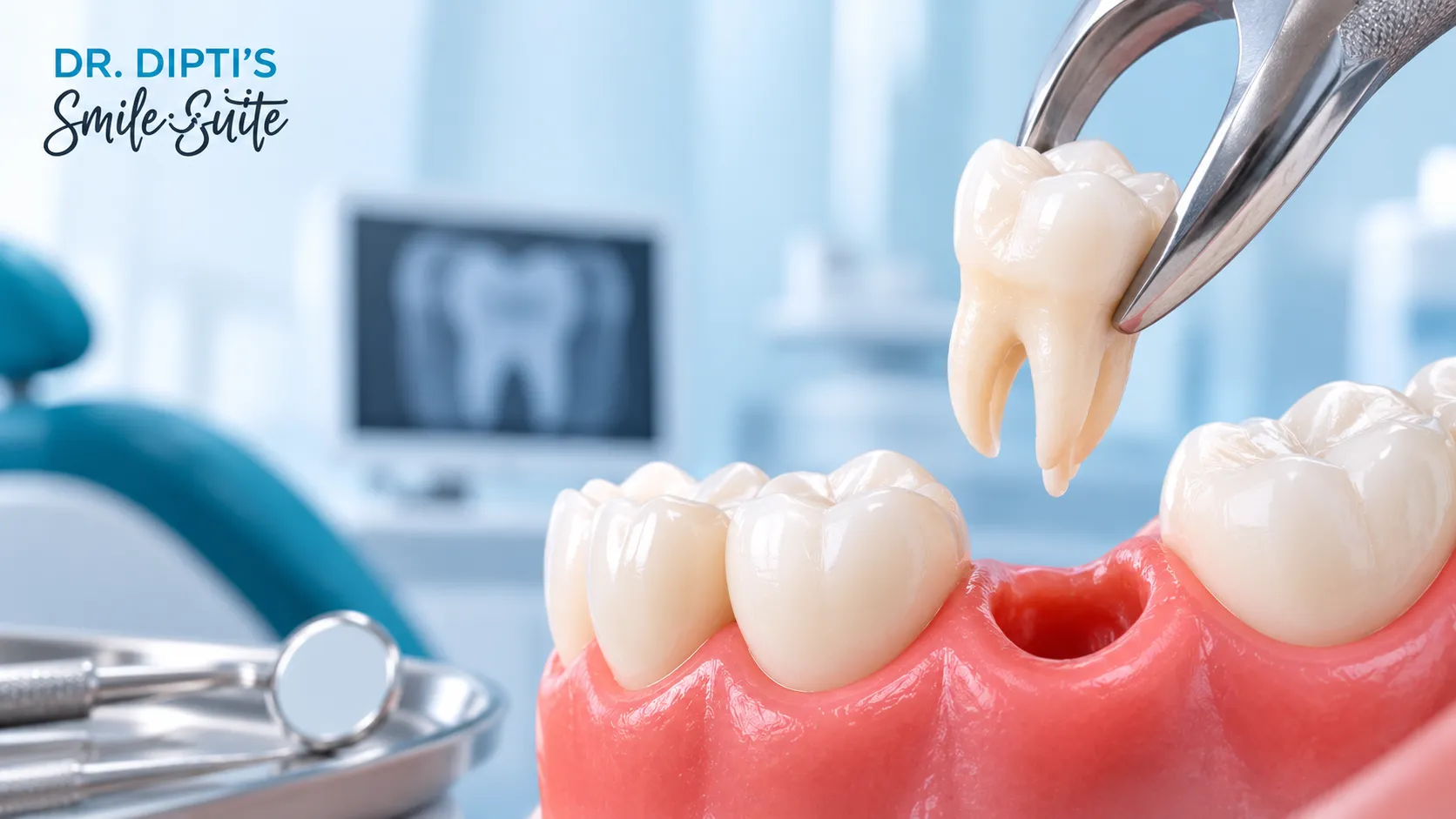
3. Removing the tooth
An erupted tooth can often be loosened and lifted out. An impacted tooth may need a small opening in the gum and sometimes removal of a little bone, and the tooth may be sectioned into pieces so it comes out gently.
4. Closing and first care
The site is cleaned, stitches may be placed, and you bite on gauze while a blood clot forms. You receive written aftercare instructions before you leave.
Wisdom Teeth Removal Recovery: What to Expect
- First 24 hours: A clot forms in the socket. Some oozing is normal. Rest, keep your head raised and avoid disturbing the area.
- Days 2 to 3: Swelling of the cheek often peaks and then starts to ease.
- Days 7 to 10: Stiffness and soreness fade, and dissolvable stitches break down.
- About 2 weeks: Mild bruising settles and most people feel fully recovered.
The gum opening can take longer to close completely, so keep the area clean even after you feel better.
Aftercare Tips That Protect Healing
- Bite on gauze as advised to control bleeding.
- Apply a cold pack on the outside of the cheek in short intervals for the first few hours.
- Do not rinse forcefully, use a straw, smoke or drink alcohol during the first 24 hours.
- After 24 hours, rinse gently with warm salt water or the mouthwash your dentist recommends.
- Eat soft, cool or lukewarm food and avoid hot, spicy, crunchy or sticky items for the first few days.
- Take medicines exactly as prescribed, with food if they upset your stomach.
- Avoid strenuous exercise for a few days.
Dry Socket and Other Complications
Complications are uncommon but worth knowing about. Dry socket causes intense, throbbing pain a few days after removal, sometimes with a bad taste or odour. Your dentist can dress the socket for relief. Contact the clinic if you notice heavy bleeding that will not stop, fever, pus, swelling that worsens after the third day, or numbness that does not improve. Prompt attention keeps small problems from becoming bigger ones.
Wisdom Tooth Removal Cost in Faridabad: What Affects the Price
There is no single fixed price, because removal can range from a straightforward extraction to a surgical procedure. These are the factors that decide the cost:
- Erupted vs impacted: Impacted teeth need more time, planning and technique.
- Depth and angle: Teeth lying sideways or close to a nerve are more complex.
- Number of teeth: Removing all four may be planned across one or two visits.
- Type of anaesthesia: Local anaesthesia alone costs less than options with added sedation.
- Imaging and follow-up: X-rays and review visits may be part of the estimate.
The most accurate estimate comes after an examination and X-ray, so ask for it in writing and check what is included.
Choosing the Right Dentist for Wisdom Tooth Surgery
Experience matters most when a tooth is impacted. Look for a clinic that takes proper imaging, explains the risks honestly and gives clear aftercare instructions. Our guide on how to choose the best oral surgeon in Faridabad lists what to ask before you book.
What If You Delay Removal?
Leaving a problematic wisdom tooth can allow repeated infection, decay in the neighbouring molar and persistent gum swelling. These flare-ups often arrive at inconvenient times. Treating the tooth when it is first causing trouble is usually simpler than dealing with an acute infection.
Wisdom Teeth Removal at Dr. Dipti's Smile Suite
At our clinic in Sector 14, Faridabad, we assess each wisdom tooth with imaging, explain whether removal is truly needed and describe the steps in plain language. Learn more about our oral surgery services in Faridabad or book a consultation to have your tooth examined.
Reviewed by Dr. Dipti Goyal. This article is general information and not a substitute for a clinical examination. Recovery varies from person to person; follow the instructions given by your own dentist.