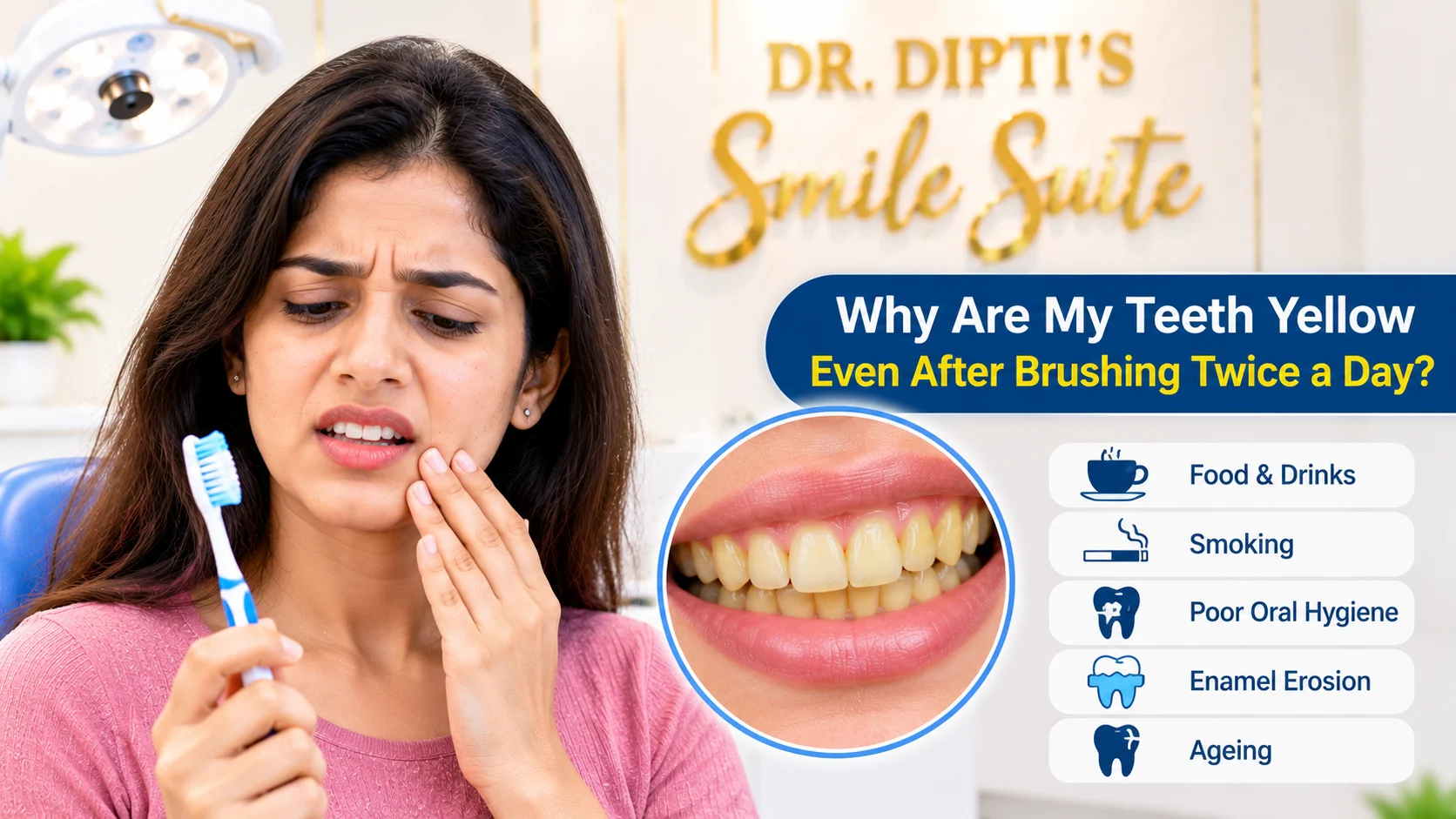
Usually nothing is wrong with your effort. Brushing does a specific job: it removes plaque and fresh surface stains. It cannot remove hardened tartar. It cannot bleach the natural colour inside the tooth. It cannot undo enamel that has worn thin or developed differently.
This guide covers:
- The real reasons teeth stay yellow despite regular brushing
- How to tell which type of yellowing you have
- Which solutions work for each type, from a professional clean to Zoom whitening and veneers
First, What Colour Should Healthy Teeth Be?
Natural teeth are not pure white. Each tooth has two main layers:
- Enamel: the outer layer, hard and slightly translucent, with a bluish-white tint
- Dentine: the layer underneath, naturally yellow to light brown
Tooth colour is the yellow dentine showing through the translucent enamel. People with thinner or more translucent enamel naturally have more yellow-looking teeth, even when their teeth are perfectly healthy and clean.
The bright, uniform white often seen in films and advertisements usually comes from whitening, veneers or crowns, not from brushing. A slightly warm, ivory shade is normal. If your teeth are getting darker, are uneven, or look much more yellow than they used to, there is usually a specific reason worth looking into.
Two Types of Yellowing: Surface Stains and Internal Colour
Dentists divide tooth discolouration into two broad types. Knowing which one you have is the key to choosing the right fix.
Extrinsic (surface) stains
These sit on the outer surface of the enamel. They come from food, drinks, tobacco and plaque. They tend to look patchy, often darker near the gumline and between teeth. Professional cleaning and whitening toothpastes can remove or reduce them.
Intrinsic (internal) discolouration
This lies within the tooth structure, in the dentine or deep in the enamel. It comes from genetics, ageing, fluorosis, certain medicines, injury or a dead nerve. Brushing and toothpaste cannot reach it. It needs professional whitening or cosmetic restorations.
Most adults have a mix of both, which is why one product rarely solves the whole problem.
Why Your Teeth Are Yellow Even After Brushing Twice a Day
1. Daily chai, coffee and haldi stains
Tea and coffee contain tannins that bind to the enamel surface. Turmeric, which is in almost every Indian meal, is a strong natural dye. Colas, red wine, soy sauce, beetroot, pan masala and coloured sweets add to the stain.
Brushing removes fresh stain, but if you drink four cups of chai a day, the stain builds up faster than brushing can remove it. Over months, it settles into the tiny pores of the enamel.
2. Tartar that brushing cannot remove
Plaque left along the gumline hardens into tartar (calculus) within days. Tartar is rough, porous and naturally yellow to brown, and it absorbs stains easily. It is often found on the inside of the lower front teeth and around the gumline.
No toothbrush, toothpaste or home remedy can remove tartar. Only professional scaling can. For many people, this one cause explains most of the yellowing they see.
Read more: How Often Should You Get Teeth Scaling and Polishing
3. You are brushing often, but missing key areas
Brushing twice a day is about frequency. Technique matters just as much. Common gaps include:
- Brushing for 30 to 40 seconds instead of two full minutes
- Missing the gumline, where plaque and stain collect first
- Skipping the inner surfaces of the teeth
- Never cleaning between the teeth, where yellow-brown stain builds up unseen
- Using an old brush with splayed bristles
Better technique and daily cleaning between the teeth often make a visible difference within a few weeks.
4. Brushing too hard, which makes teeth look more yellow
This surprises many people. Scrubbing hard with a hard brush or gritty powder slowly wears away enamel. As the enamel thins, more yellow dentine shows through. Hard brushing also pushes the gums back, exposing the yellower root surface.
So the harder you scrub to whiten your teeth, the more yellow they can eventually become.
5. Enamel erosion from acidic food and drinks
Acids from nimbu pani, citrus fruits, soft drinks, energy drinks, pickles, tamarind and acid reflux soften and dissolve enamel over time. Thinner enamel lets more dentine colour show through. Eroded teeth often look yellow and slightly translucent at the edges, and may also feel sensitive.
Read more: Sensitive Teeth: Causes and Treatment Options
6. Ageing
With age, enamel gradually thins and the dentine underneath becomes thicker and darker. This happens to everyone. Teeth naturally become more yellow over the decades, even with excellent care.
7. Genetics
Some people are simply born with thinner enamel or naturally darker dentine. If your parents or siblings also have yellowish teeth, genetics is probably part of the picture.
8. Dental fluorosis, common in Haryana
Drinking water with too much fluoride while the teeth are forming in childhood causes dental fluorosis. It shows up as white flecks, yellow to brown patches, or pitted enamel. Fluorosis is endemic in 17 Indian states, and Haryana is one of them. A study of 1,713 schoolchildren in one block of Jhajjar district, Haryana, found that 66.32% were affected by dental fluorosis.
Fluorosis staining is inside the enamel, so no amount of brushing will shift it. It responds well to the right combination of professional treatments.
9. Medicines and mouthwashes
- Tetracycline-type antibiotics taken during childhood can cause grey, brown or banded discolouration inside the teeth
- Chlorhexidine mouthwash used for long periods leaves brown surface stains
- Liquid iron supplements can leave dark surface stains, especially in children
10. A single dark or yellow tooth
If only one tooth is darker than the others, it usually has a specific cause: an old injury, a dead or dying nerve, or a tooth that has had root canal treatment. This tooth needs an examination before any whitening, to check its health.
11. Old fillings, crowns and smoking
Old composite fillings absorb stain and turn yellow over time. Old metal fillings can give a grey shadow through the tooth. Smoking and chewing tobacco cause stubborn yellow-brown to black staining and also increase gum disease.
How to Tell Which Type of Yellowing You Have
This quick self-check helps, although a dental examination gives a definite answer:
| What you notice | Most likely cause |
|---|---|
| Yellow-brown patches near gums and between teeth | Surface stain and tartar |
| Hard, rough yellow deposit inside lower front teeth | Tartar |
| Even, overall yellow shade, all teeth similar | Natural dentine colour, age or genetics |
| Yellow with see-through or glassy edges | Enamel erosion |
| White flecks, yellow-brown patches or pitting | Fluorosis |
| Grey, brown or banded colour inside teeth | Medicines in childhood |
| One tooth darker than the rest | Injury, dead nerve or root canal tooth |
| Yellow around the edges of a filling | Old, stained restoration |
What Doesn’t Work, and What Can Harm Your Teeth
Social media is full of home whitening tricks. Most do little, and some cause permanent damage:
- Activated charcoal powder: abrasive; can wear enamel and gather in gaps, and makes teeth look more yellow over time
- Lemon juice, vinegar or orange peel: acidic; dissolves enamel and increases yellowing and sensitivity
- Baking soda scrubbed hard every day: may lift some surface stain, but harsh daily use is abrasive
- Strawberries with salt or baking soda: acid plus abrasion; little real whitening
- Unregulated online bleaching kits: risk of gum burns, high sensitivity and uneven results
- Brushing harder or more often: wears enamel and gums, revealing more yellow underneath
What Actually Works: Home Care
Whitening toothpaste, with realistic expectations
Whitening toothpastes do help with surface stains. A 2017 systematic review in the International Journal of Dental Hygiene found that nearly all whitening toothpastes reduced extrinsic discolouration compared with regular toothpaste. A 2020 review in Operative Dentistry reached a similar conclusion, but noted that whitening toothpastes also caused more side effects than regular ones.
What whitening toothpaste cannot do is change the natural colour of the tooth. It removes surface stain. It does not bleach dentine. Use one with fluoride, and switch back to a regular or sensitivity toothpaste if your teeth become sensitive.
Better brushing tools and habits
- Use a soft-bristled brush, or an electric brush, which can help reduce surface stain
- Brush for two full minutes, angled towards the gumline, with gentle strokes
- Clean between the teeth daily with floss, interdental brushes or a water flosser
- Replace your brush every three months
Smarter eating and drinking
- Drink tea, coffee and colas with meals rather than sipping them through the day
- Use a straw for cold drinks and juices where practical
- Rinse with plain water after chai, coffee or haldi-rich meals
- Wait 30 to 60 minutes after acidic food or drinks before brushing
- Quit smoking and all tobacco products
These habits slow staining and protect enamel. Removing tartar or changing the internal colour of the teeth still needs professional care.
Professional Treatments for Yellow Teeth at Dr. Dipti’s Smile Suite
The right treatment depends on the cause. We start with an examination, a shade assessment against a professional shade guide, and a check of your gums, enamel and any existing fillings. We then recommend the simplest option that will give you the result you want.
Scaling and polishing
For tartar and surface stains, a professional cleaning is the first step and often the most dramatic one. Removing tartar and polishing away stains can make teeth noticeably brighter in a single visit. It also gives the best base for any whitening that follows.
Zoom teeth whitening
For overall yellowing from age, genetics or deep stains, professional Zoom whitening lightens the natural colour of the teeth, which brushing and toothpaste cannot do. The treatment is done in the clinic under controlled conditions, with protection for the gums and desensitising care before and after. Results are visible the same day.
Whitening does not change the colour of fillings, crowns or veneers. If you have any of these on your front teeth, we plan to whiten first and then match or replace those restorations afterwards.
Explore: Teeth Whitening in Faridabad | Read more: Safe Teeth Whitening in Faridabad That Won’t Hurt
Whitening a single dark tooth
A single tooth darkened by an old injury or root canal treatment often does not respond fully to standard whitening. After checking the tooth’s health, we may recommend internal whitening, bonding, a veneer or a crown, depending on the tooth.
Fluorosis treatment
Fluorosis staining sits within the enamel, so we combine treatments based on its severity. Options include gentle surface treatment for mild white or brown patches, whitening to even out the overall shade, composite bonding for pitted areas, and veneers for moderate to severe cases. Treating fluorosis is one of our clinic’s areas of special experience.
Composite bonding
Tooth-coloured composite resin can cover small stained areas, pits, or yellow root surfaces exposed by gum recession. It is completed in a single visit with little or no removal of healthy tooth.
Explore: Composite Filling in Faridabad
Porcelain veneers
When yellowing is deep, such as from tetracycline staining, severe fluorosis or heavily worn enamel, whitening alone may not be enough. Thin porcelain veneers cover the front surfaces of the teeth to give a natural-looking, stain-resistant shade, along with improvements in shape and alignment.
Explore: Dental Veneers in Faridabad | Read more: Dental Veneers in Faridabad: Cost and Procedure
Crowns and replacing old fillings
Discoloured old fillings can be replaced with fresh, colour-matched composite. Heavily filled, root canal treated or badly discoloured teeth may be best restored with ceramic crowns, which we design and make on-site with CAD/CAM technology.
Explore: Dental Crowns and Bridges in Faridabad
Digital smile makeover
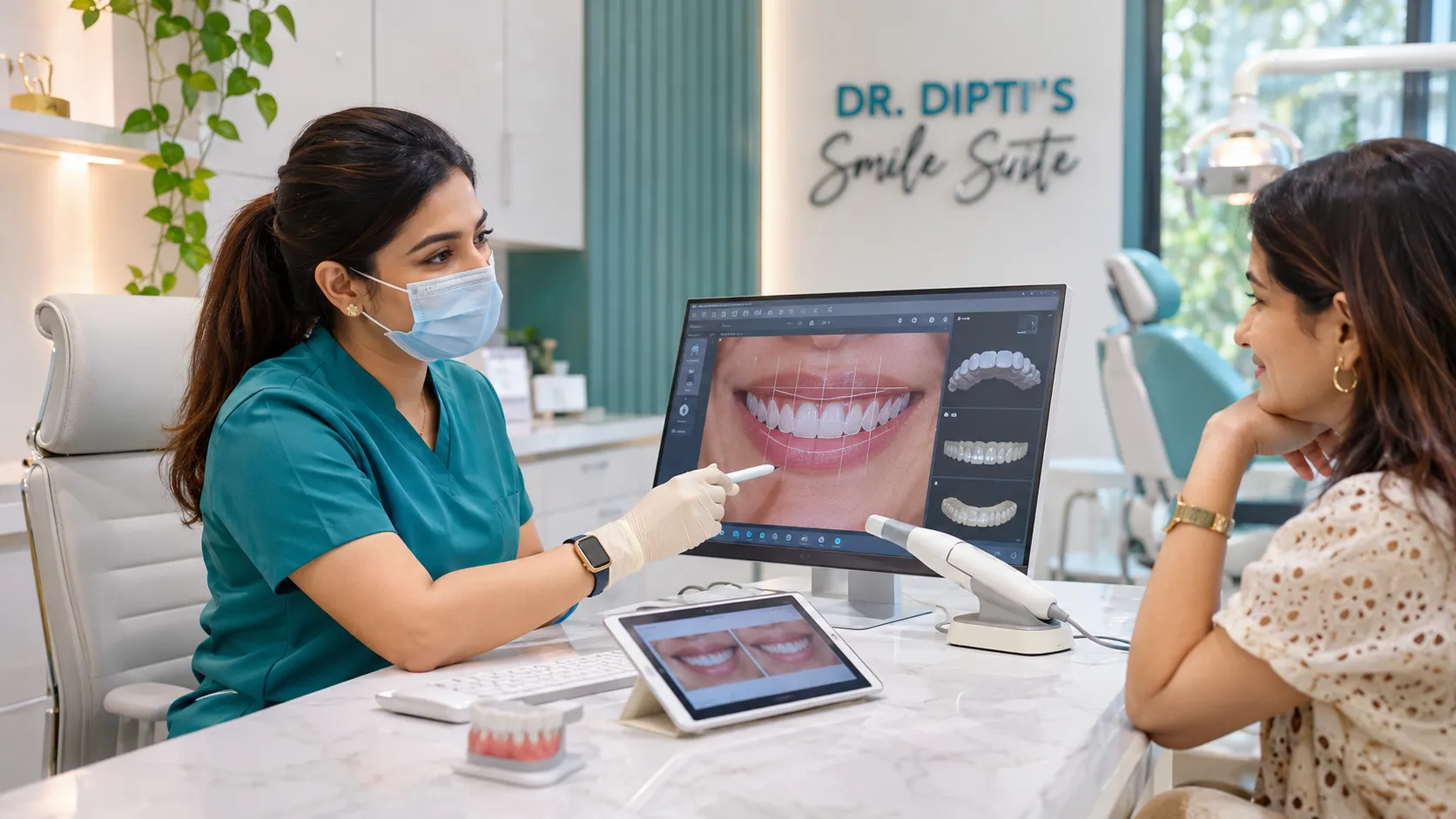
When colour, shape, gaps and alignment all matter to you, a digital smile makeover plans the whole result before treatment begins. It may combine whitening, Invisalign clear aligners, bonding and veneers, so you can see the expected outcome in advance.
Explore: Smile Makeover in Faridabad | Invisalign Aligners in Faridabad | Cosmetic Dentist in Faridabad
Yellow or stained teeth in children
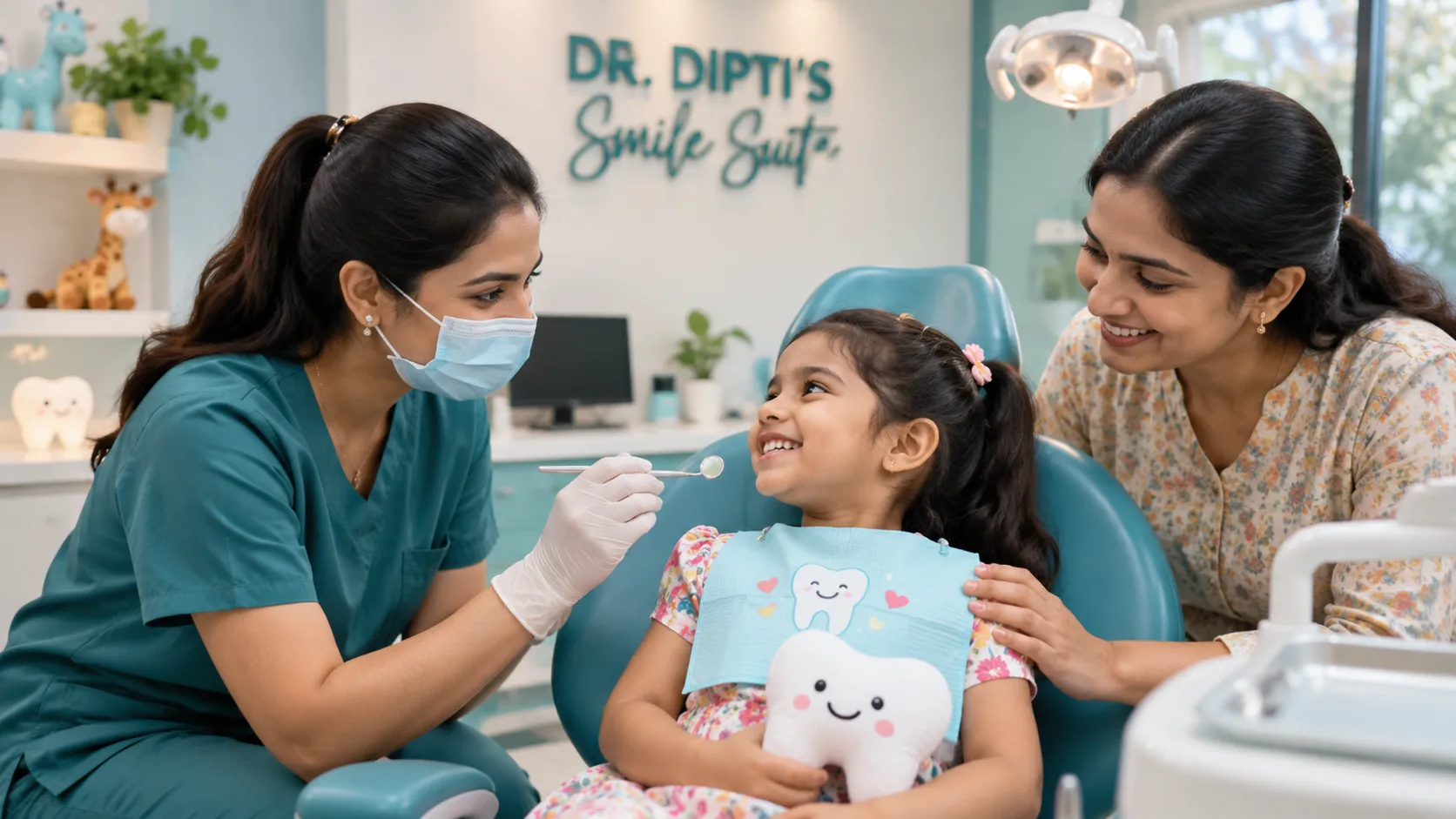
Children’s teeth can look yellow because of plaque, iron supplements, early decay or fluorosis. Adult teeth also naturally look more yellow than baby teeth when they first come in. Whitening is not recommended for young children. Our pediatric dentistry team focuses on gentle cleaning, decay prevention and guidance on drinking water and fluoride use.
Explore: Pediatric Dentistry in Faridabad
Quick guide: cause and best treatment
| Cause of yellowing | Best treatment |
|---|---|
| Surface stains from chai, coffee, haldi | Scaling and polishing, whitening toothpaste |
| Tartar build-up | Professional scaling |
| Natural colour, age, genetics | Zoom whitening |
| Enamel erosion | Bonding or veneers, plus diet changes |
| Fluorosis | Combination of whitening, bonding and veneers |
| Tetracycline staining | Veneers or crowns |
| Single dark tooth | Internal whitening, veneer or crown |
| Stained old fillings | Replacement composite fillings |
How to Keep Your Teeth Whiter for Longer
- Get scaling and polishing every six months
- Brush gently for two minutes twice a day and clean between your teeth daily
- Rinse with water after tea, coffee and coloured foods
- Avoid tobacco in every form
- Limit acidic drinks and protect enamel
- Use a whitening toothpaste a few times a week if your teeth are not sensitive
- After professional whitening, avoid strongly coloured foods and drinks for the first 48 hours, and book touch-ups as advised
Get Brighter Teeth in Faridabad
If you are brushing twice a day and your teeth are still yellow, your effort is not the problem. Your teeth simply need a different solution from the one brushing can provide. The first step is finding out which type of yellowing you have. After that, the fix is usually more straightforward than people expect.
Book a smile consultation at Dr. Dipti’s Smile Suite. We will check your teeth, show you your current shade, explain what is causing the yellowing, and outline realistic options and costs before we begin.
Dr. Dipti’s Smile Suite
SCF 142, Sector 14, HUDA Market, Faridabad, Haryana 121007
Call / WhatsApp: +91 88828 50066
Monday to Saturday: 10:00 AM – 3:00 PM and 5:30 PM – 8:00 PM