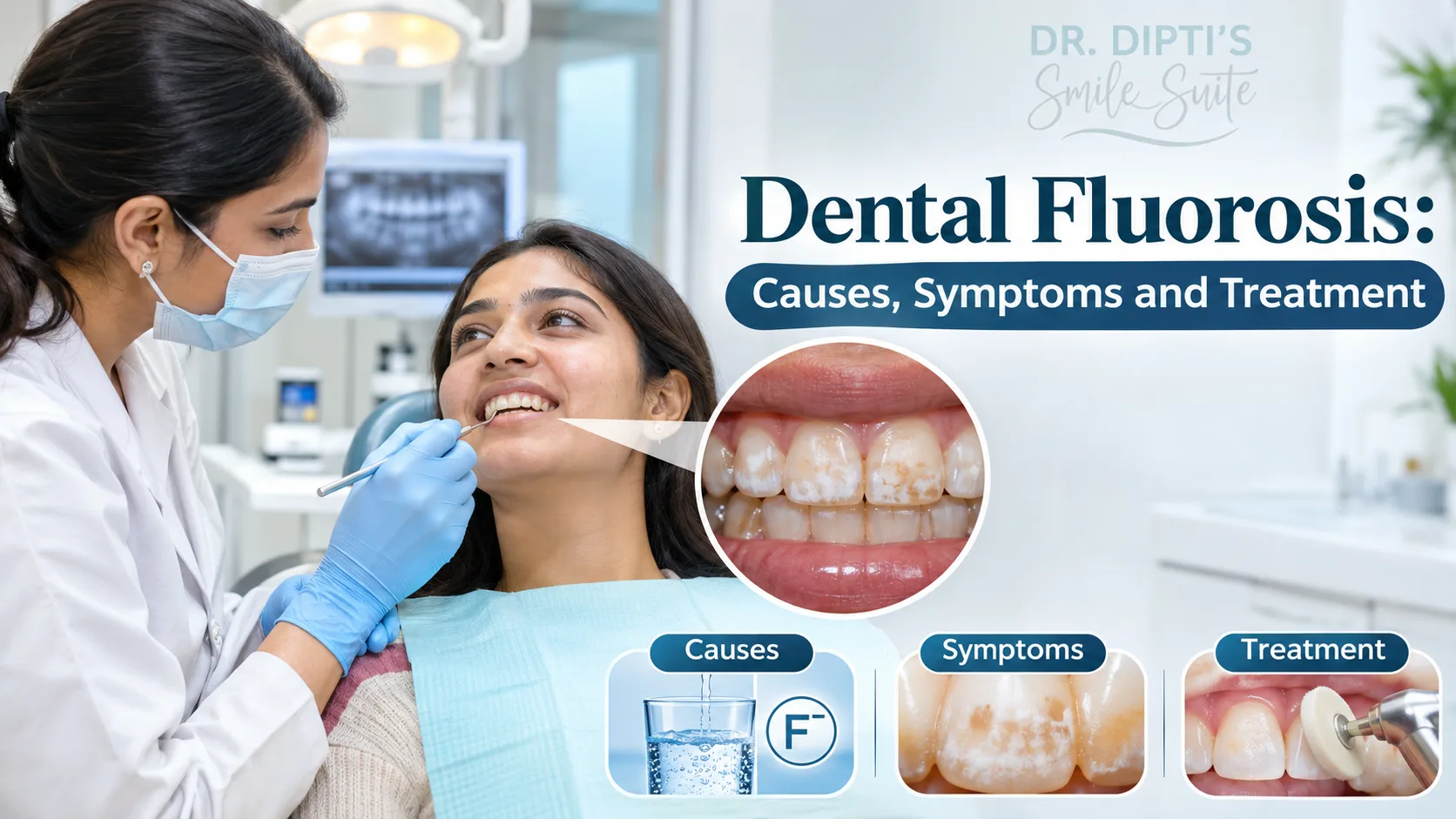
This is dental fluorosis. It is not caused by poor brushing, and it is not tooth decay. It is a change in the enamel that happened years ago, while the teeth were still forming in childhood.
This guide explains:
- What causes fluorosis and who is at risk
- How to recognise it and tell it apart from other stains
- How to protect children today
- The treatments that can genuinely improve how your teeth look
Treating fluorosis-affected teeth is one of our clinic’s areas of special experience, and our video library includes short explainers on fluorosis in adults and children.
What Is Dental Fluorosis?
Fluoride, in the right amount, strengthens teeth and helps prevent decay. In excess, especially over months or years while the teeth are forming, it disturbs the way enamel develops. The result is enamel that is more porous and less evenly mineralised than normal.
When these teeth come into the mouth, the porous areas look chalky white. Over time, they can absorb stains from food and drink and turn yellow, brown or even dark brown. In more severe cases, the weak enamel can pit or chip away.
The key point: fluorosis develops in childhood
Fluorosis only develops while teeth are forming beneath the gums. For permanent teeth, this happens from birth to about eight years of age. After the enamel has formed, high fluoride cannot cause fluorosis in those teeth.
So an adult who moves to a high-fluoride area will not develop dental fluorosis. A child who drinks high-fluoride water in early childhood may show it on their permanent teeth when they come in at 6 to 12 years of age.
Why Fluorosis Is So Common in Haryana and North India
India has some of the highest natural fluoride levels in groundwater in the world. Fluorosis is endemic in 17 Indian states, and Haryana is one of them. Researchers estimate that about 62 million people in India are at risk of fluorosis. In Haryana, groundwater is the primary drinking water source for about 98% of the population.
The effect on children can be striking. A study of schoolchildren in one block of Jhajjar district, Haryana, found that 1,176 of 1,713 children (66.32%) had dental fluorosis.
Fluoride levels can vary greatly from one village, colony or borewell to the next. One household may have safe water while another nearby has high levels. Families who have moved to Faridabad and the NCR from such areas often bring fluorosis with them, and many still visit their home villages where children drink the local water.
Safe fluoride levels in drinking water
India’s drinking water standard, IS 10500:2012, sets an acceptable fluoride limit of 1.0 mg/L, and a permissible limit of 1.5 mg/L only where no alternative source exists. Water above these levels, consumed regularly by young children, significantly raises the risk of fluorosis.
Causes and Risk Factors of Dental Fluorosis
High-fluoride drinking water
This is by far the most common cause in India. Handpumps, borewells and tubewells drawing from fluoride-rich rocks are the main sources.
Swallowing toothpaste in early childhood
Young children often swallow toothpaste instead of spitting it out. Using large amounts of fluoride toothpaste, especially where drinking water is also high in fluoride, adds to the total intake.
Fluoride supplements without testing water
Fluoride drops or tablets should only be given if a dentist or doctor recommends them, and only after the fluoride level of the drinking water is known.
Cooking with high-fluoride water
Food cooked in high-fluoride water also adds to daily intake, particularly for young children.
Other contributing factors
Undernutrition, low calcium intake and hot climates, where children drink more water, can increase the effect of fluoride on developing teeth.
Symptoms: How to Recognise Dental Fluorosis
Fluorosis usually affects several teeth in a similar way on both sides of the mouth, because all were forming at the same time. Signs include:
- Fine white lines or streaks running across the teeth
- Chalky white or opaque patches, often on the front teeth
- Yellow, brown or dark brown stains that do not brush off
- Small pits or a rough, mottled enamel surface
- Edges of the teeth that chip or wear easily in severe cases
- Sometimes increased sensitivity, especially where enamel has worn
Grades of fluorosis
Dentists grade fluorosis by severity, which helps decide treatment:
| Grade | What it looks like |
|---|---|
| Questionable | A few white flecks or spots |
| Very mild | Small, paper-white opaque areas covering less than a quarter of the tooth |
| Mild | White opaque areas covering up to half of the tooth surface |
| Moderate | Whole tooth surfaces affected, with brown staining and some wear |
| Severe | Widespread pitting, brown to dark staining, and a corroded appearance |
Fluorosis or something else?
Several other conditions also cause white or brown marks on teeth. An examination helps tell them apart:
- Early tooth decay: white chalky spots, usually near the gumline or between teeth, often in areas where plaque collects
- White spots after braces: around where brackets were placed
- Enamel defects from childhood illness or molar-incisor hypomineralisation: often affect individual teeth unevenly
- A single discoloured tooth: usually from injury or a dead nerve, not fluorosis
- Medicine-related staining: such as from certain antibiotics in childhood; often grey or banded
Read more: Why Are My Teeth Yellow Even After Brushing Twice a Day?
Is Dental Fluorosis Harmful?
Mild and moderate dental fluorosis is mainly a cosmetic concern. The teeth are usually functional and not more prone to decay. However, it can have real effects:
- Confidence and quality of life: visible stains can make people, especially teenagers and young adults, self-conscious about smiling, speaking or being photographed
- Weak enamel in severe cases: pitted enamel can chip, wear and become sensitive
- A sign of high fluoride exposure: fluorosis indicates that the family’s drinking water may be high in fluoride. Long-term intake of very high fluoride can also affect bones and joints (skeletal fluorosis), so testing the water matters for the whole family’s health, and anyone with joint stiffness or bone pain should see a doctor.
How to Prevent Fluorosis in Children
Fluorosis cannot be reversed once teeth have formed, but it can be prevented in younger children. This is one of the most valuable things a family can do.
Test your drinking water
If your family uses borewell, handpump or tubewell water, or lives in or visits a high-fluoride area, get the water tested. District water testing laboratories and NABL-accredited private labs can check fluoride levels.
Use safe water for drinking and cooking
If fluoride is above the safe limit, use a safe alternative supply. Alternatively, use a household water treatment method that is proven to remove fluoride, such as reverse osmosis or activated alumina, and get the treated water retested.
Use the right amount of toothpaste
Do not stop fluoride toothpaste. It is important for preventing decay. Use the correct amount instead:
- Under three years: a rice-grain-sized smear
- Three to six years: a pea-sized amount
- Supervise brushing and teach children to spit, not swallow
Don’t give fluoride supplements without advice
Fluoride drops or tablets should only be used on a dentist’s or doctor’s advice, after checking your water.
Start dental visits early
A first dental visit by age one gives you personalised advice on fluoride, water and brushing for your child.
Read more: First Dental Visit for Your Child: What to Expect in Faridabad | Explore: Pediatric Dentistry in Faridabad
Dental Fluorosis Treatment Options
The good news is that fluorosis stains can be improved dramatically, and often removed from view entirely. The best treatment depends on the severity, the number of teeth affected, your age and your goals. At Dr. Dipti’s Smile Suite, we start with an examination, photographs and a shade assessment, then plan the most conservative approach that will give you the result you want.
Research on fluorosis treatment is still limited, but it gives useful direction. A 2018 systematic review in the Journal of Esthetic and Restorative Dentistry found that, for mild to moderate fluorosis, resin infiltration appeared to be the most promising treatment, followed by bleaching and then microabrasion.
Microabrasion
A gentle, mildly acidic and abrasive paste is used to polish away a very thin layer of stained surface enamel. It works well for superficial brown stains and mild fluorosis and is completed in a single visit. It is less suitable for deep or pitted defects.
Professional teeth whitening
Professional whitening lightens the overall tooth shade and reduces the contrast between white patches and the rest of the tooth. It can make yellow and brown fluorosis stains much less noticeable. We use Zoom whitening under controlled conditions, with gum protection and desensitising care.
Explore: Teeth Whitening in Faridabad
Resin infiltration
In resin infiltration, the porous enamel is gently prepared and a very fluid, tooth-coloured resin is allowed to soak into it, then hardened with light. This changes how light passes through the enamel, so chalky white patches blend with the surrounding tooth. No drilling is needed. A 2021 meta-analysis in Clinical Oral Investigations concluded that resin infiltration is a viable option for masking fluorosis and white spot lesions.
Composite bonding
Tooth-coloured composite resin is bonded over areas with deeper stains, pits or rough enamel. It is shaped and polished to look natural, usually in a single visit and with minimal removal of healthy tooth.
Explore: Composite Filling in Faridabad
Porcelain veneers
For moderate to severe fluorosis, especially with dark brown staining and pitting across several front teeth, porcelain veneers are often the most reliable long-term solution. These thin, custom-made ceramic shells cover the front surfaces of the teeth. They give an even, natural, stain-resistant shade, and can also improve shape and minor alignment.
Explore: Dental Veneers in Faridabad | Read more: Dental Veneers in Faridabad: Cost and Procedure
Crowns
When fluorosed teeth are badly worn, chipped or heavily filled, ceramic crowns can restore strength and appearance. We design and make many crowns on-site with CAD/CAM technology.
Explore: Dental Crowns and Bridges in Faridabad
Combined treatment and digital smile makeover
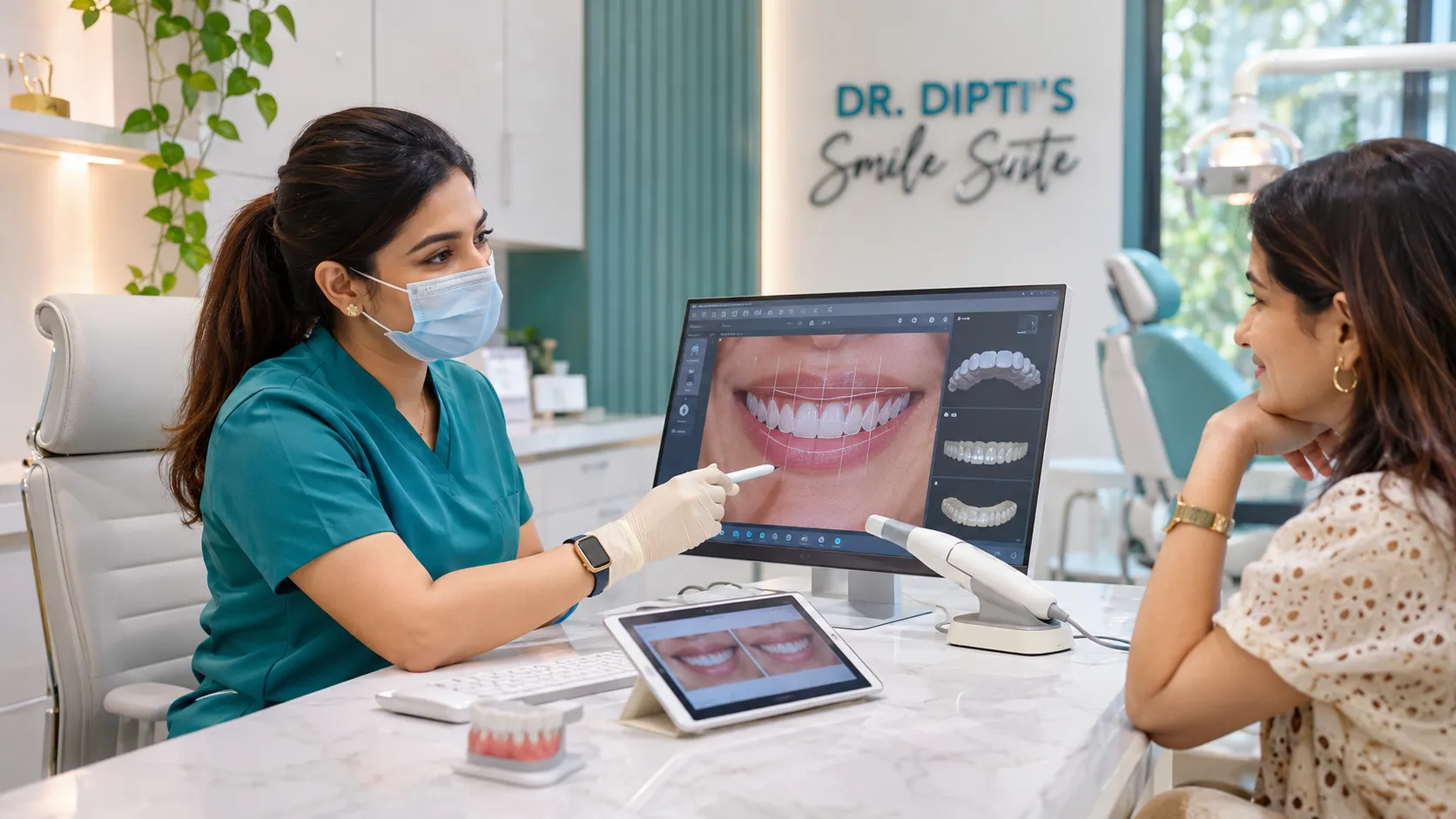
Many patients get the best result from a combination, for example whitening followed by resin infiltration or bonding, or whitening of the lower teeth with veneers on the upper front teeth. With a digital smile makeover, we plan the full result on screen before starting, so you can see what to expect. If teeth are also crowded or gapped, aligning them with Invisalign first can reduce how much tooth needs to be prepared for veneers.
Explore: Smile Makeover in Faridabad | Invisalign Aligners in Faridabad | Cosmetic Dentist in Faridabad
Quick guide: severity and suitable treatment
| Severity | Typical appearance | Suitable treatments |
|---|---|---|
| Very mild to mild | White flecks or patches | Resin infiltration, microabrasion, whitening |
| Mild with yellow stain | White patches with light staining | Whitening plus resin infiltration or microabrasion |
| Moderate | Brown stains across tooth surfaces | Whitening with bonding, or veneers |
| Severe | Pitting, dark staining, chipped enamel | Porcelain veneers or crowns |
Fluorosis Treatment for Children and Teenagers
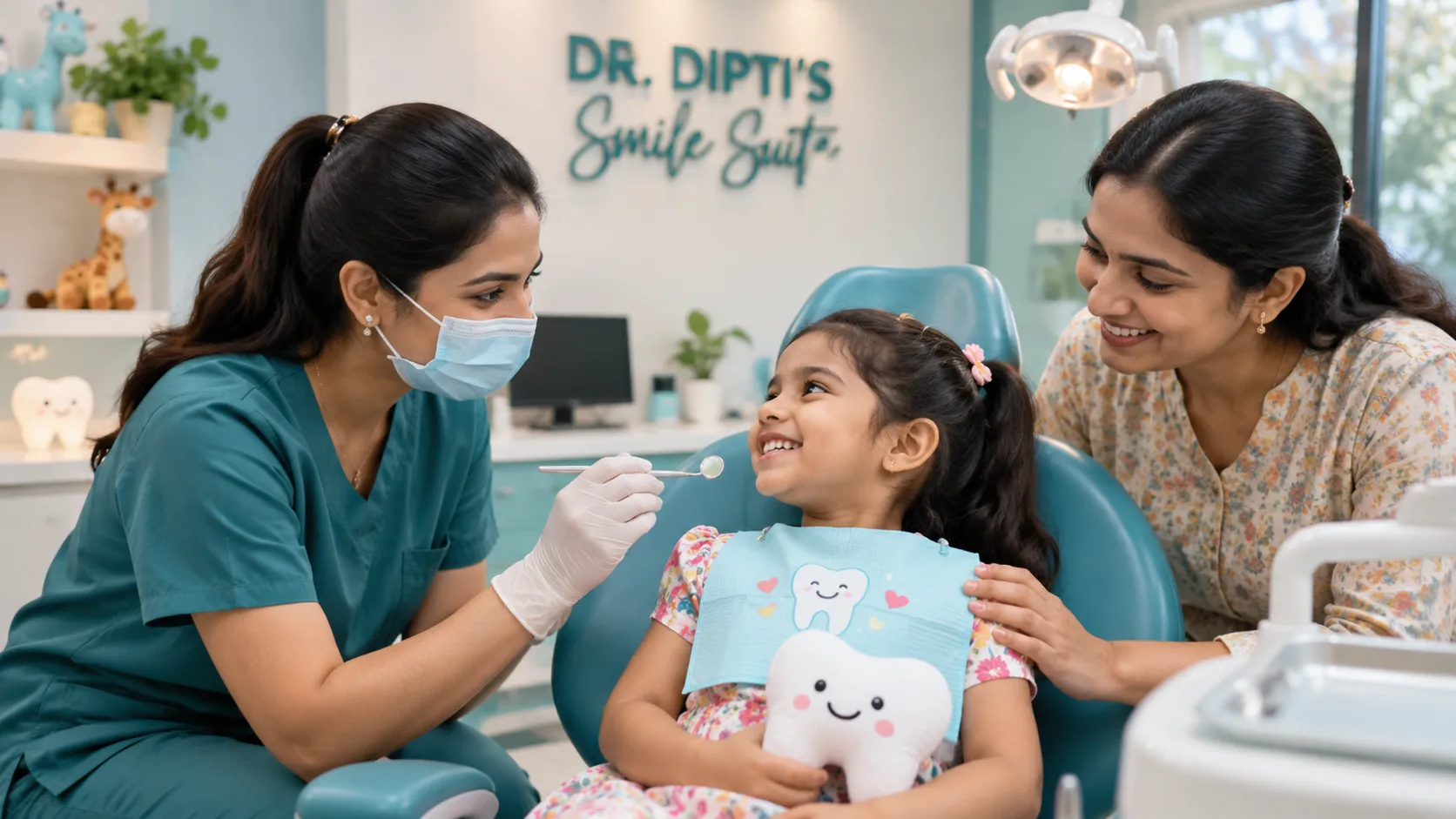
Children often notice fluorosis when their permanent front teeth come in, and teenagers can become very self-conscious about it. Treatment for young patients focuses on the gentlest options:
- Resin infiltration and microabrasion can be suitable for older children and teenagers with mild to moderate fluorosis
- Composite bonding can be used to cover deeper stains without removing much tooth
- Whitening is usually postponed until the late teens, depending on the case
- Veneers and crowns are generally delayed until the teeth and gums have matured
We also advise families on safe water and toothpaste use, to protect younger siblings whose teeth are still forming.
Caring for Your Teeth After Fluorosis Treatment
- Brush twice daily with fluoride toothpaste and clean between the teeth every day
- Limit tea, coffee, cola and strongly coloured foods, especially after whitening or bonding
- Avoid biting hard objects with bonded or veneered teeth
- Get a professional clean and check-up every six months
- Use a night guard if you grind your teeth, to protect veneers and bonding
- Plan touch-ups for whitening or polishing as advised
Get Expert Fluorosis Treatment in Faridabad
Dental fluorosis may have formed years ago, but it does not have to define your smile today. With modern conservative treatments, many patients see dramatic improvement, often in one or two visits. For more severe cases, veneers can give a completely new, natural-looking smile.
At Dr. Dipti’s Smile Suite in Sector 14, Faridabad, we treat fluorosis regularly for patients from across Faridabad, the NCR and wider Haryana. We will examine your teeth, show you realistic options, and plan treatment around your goals and budget.
Dr. Dipti’s Smile Suite
SCF 142, Sector 14, HUDA Market, Faridabad, Haryana 121007
Call / WhatsApp: +91 88828 50066
Monday to Saturday: 10:00 AM – 3:00 PM and 5:30 PM – 8:00 PM