
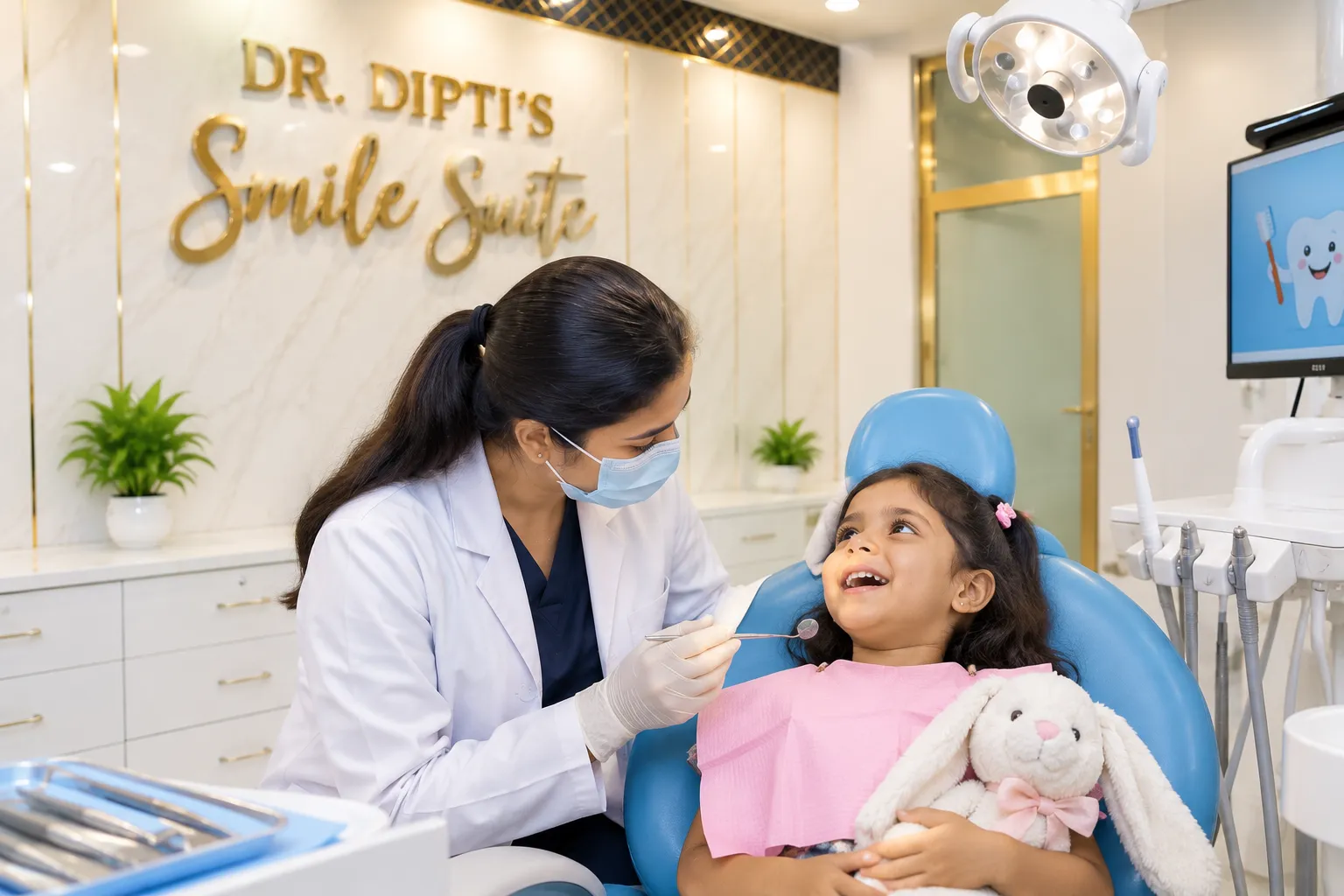
Pediatric dentistry is different from general dentistry. There are different methods of communication and pacing as well as specialized equipment that is appropriate to use with children and helps children who are emotionally distressed aboutcare that is provided in an unfamiliar environment.
Why Children Require Special Dental Care
A child's mouth is still developing. Baby teeth act as guides to help permanent teeth emerge in the correct position, and if a baby tooth is lost prematurely, for example, due to an infection or accident, the surrounding teeth can shift and causing crowding in the permanent teeth. This is one reason the ADA suggests that cavities in baby teeth should not be left untreated with the thinking of “they’ll fall out anyway.”
Also, children often can’t express how they feel as adults can. A child may say a tooth “feels weird” instead of saying it is sharp, so a pediatric dentist must put more trust in a child’s behavior and use a lot of experience to determine what is wrong.
When should a child see a dentist for the first time?
Most dental associations, including the Indian Dental Association, suggest that a child should see a dentist for the first time within 6 months of the eruption of the first baby tooth, or by the child’s first birthday, whichever comes first. Often times, the first visit is more for the dentist to check the eruption of the teeth and the child’s gum development and less for the child to receive any dental work.
Children often times will only see a dentist when there is a visible problem, for example a dark spot on a tooth or if the child complaints of pain while eating. Most of the time, this results in the child’s first dental experience being an uncomfortable one.
Most Frequent Reasons Parents Bring Children to the Dentist
Parents from Faridabad contact us for a few main reasons, each requiring a particular kind of handling.
Parents ask about cavities or dark spots on their children’s teeth. Decay on baby teeth can get really bad really quickly since the enamel on baby teeth is a lot thinner than that on adult teeth. It can even cause the child to lose the tooth prematurely, and it can infect the gums as well.
We get a lot of parents coming in concerned after their child has taken a dental injury. Baby teeth can take a long time to fully grow in, and a dental injury can affect the permanent teeth growing beneath the gums as well.
It can be difficult for children to stop sucking their thumbs or using a pacifier, but it is best for the proper development of their jaw and teeth for it to stop by the age of 4 or 5. A dentist can help come up with ways to help the child stop.
A lot of parents just want to have their children’s teeth cleaned and checked regularly.
A lot of parents are concerned about the alignment of their children’s teeth and if they benefit from an early orthodontic evaluation.
A Step-by-Step Guide to What Happens at a Child's First Dental Visit
The goal of the first visit is for the dentist to meet the child and for the child to become comfortable with the dentist's office. The dentist will have the child sit in the chair and come up with ways for the child to familiarize themselves with the office and their equipment. One method is the "tell, show, do" technique where the dentist tells the child what they will be doing, shows the child the equipment, and then does the task. This technique helps to remove the unknown which commonly causes anxiety.
After the initial meeting, the visits may consist of:
- A preliminary examination of the teeth and gums to assess bite.
- A discussion with the parent about the child's brushing and diet habits as well as any other concerns the parent may have.
- A teeth cleaning if the child is old enough and/or the teeth need cleaning.
- Counseling on the use of fluoride and dental sealants if the child is at a high risk for cavities.
- An age appropriate explanation to the child of what the dentist found.
If a cavity was found, the dentist will most likely not conduct the treatment during this visit, especially if the child is young or anxinety.
Handling Dental Anxiety Without Making It Worse
I think the way adults speak about the dentist before an appointment actually increases a child's anxiety more than the appointment itself. Breaking a promise by saying "it won't hurt" makes a child believe that any promise can be broken whenever they feel the need to. Saying "the dentist is going to count your teeth" is an example of a promise-free statement that can help ease anxiety.
A pediatric dentist who specializes in behavior management will:
- Use straightforward statements instead of vague statements.
- Let a child take breaks if they are feeling overwhelmed.
- Only physically restrain a child if it is absolutely necessary and only after explaining and obtaining consent from the child's parent/guardian.
- Reward small, specific actions instead of generic ones.
Letting the staff know your child has had a traumatic dental experience will allow them to take additional measures to ensure your child's experience will be as comfortable as possible.
Cavities, Fillings, and What Parents Need to Know
Cavities in children are common and easy to treat. If a cavity is diagnosed early, the procedure to fill teeth in Faridabad for a child is the same as for an adult. The only difference is that the decayed part of the tooth in a smaller, more simplified structure, so the procedure is usually completed faster.
If the decay is too deep and has reached the nerve of the tooth, a pulp treatment, or a baby root canal, is recommended to save the tooth. If the tooth is lost prematurely, there is a possibility of permanent spacing of the teeth.
signs a child may need dental care in the near future
- Complaining of pain when chewing on one side
- The presence of white, brown, or black spots on the teeth
- Bad breath that does not go away after brushing
- Swelling of a tooth or gum of a particular area
- Avoiding certain foods due to sensitivity
If you see any of the above, you should take your child to see a kids dentist in Faridabad as soon as possible, rather than waiting for the next routine visit.
Preventive Measures That Matter Most
Of all the things a parent can do to help their child maintain good oral health, prevention is by far the most important. A pediatric dentist will suggest things like:
- The need to brush two times a day using fluoride toothpaste in a amount appropriate for their age.
- Limiting the number of snacks between meals, especially snacks that are sweet or starchy.
- The introduction of flossing once their teeth begin to touch.
- The possibility of getting dental sealants on their molars, which tend to have deep grooves and are prone to decays.
- The need for regular check ups every six months, regardless of whether they think their child’s teeth need it.
Doing these things from an early age creates good preventative habits that will outweigh the need for most dental procedures.
Why Consistency With One Dental Clinic Matters
When a child changes dental clinics multiple times, they have to build trust with a new dentist each time, since they have to start from scratch with a new dentist and a new office. One dental clinic in Faridabad can help a dentist see a child's dental progression and help identify things like potentially crowded teeth or a dental columning agent that could cause cavities.
Dr. Dipti's Smile Suite understands the importance of continuity and works with families to help maintain a relationship with a dentist over multiple visits rather than just helping for a single visit. If you're a parent looking for a dentist near you in Faridabad that can help your child with their dental needs, the working relationship you build with a dentist is more important over time than anything a dental clinic can offer.
If your child is due for a routine checkup or you have observed something concerning, we welcome your family for a dental visit at Dr. Dipti's Smile Suite. Contact Us for an appointment.